AC-130 vs E-8 Joint STARS
AC-130 vs E-8 Joint STARS at a glance — top speed 669 vs 853 km/h, range 4,800 vs 6,821 km, max takeoff weight 70,307 vs 152,407 kg, built 21 vs 17 units.
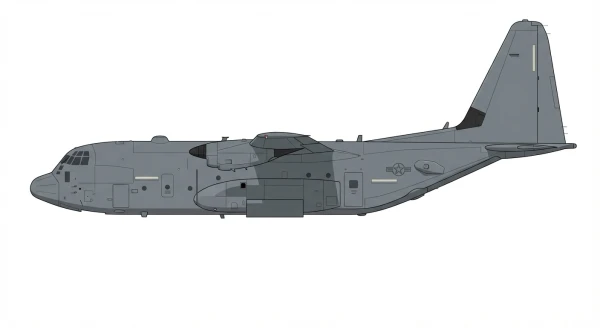
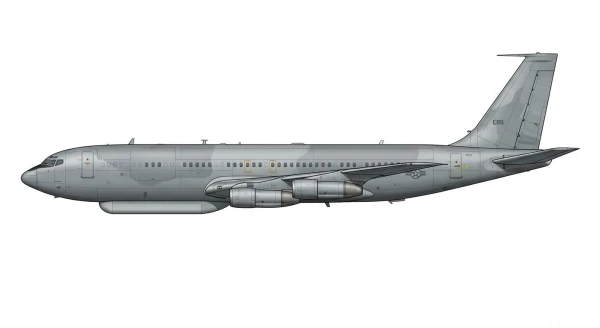
| AC-130 | E-8 Joint STARS | |
|---|---|---|
| Origin country | 🇺🇸 United States | 🇺🇸 United States |
| Category | Military Special Mission Aircraft | Military Special Mission Aircraft |
| Manufacturer | Lockheed Martin | Northrop Grumman |
| First flight | 1 January 1967 | 1 January 1994 |
| Year introduced | 1968 | 1996 |
| Number produced | 21 units | 17 units |
| Average unit price | $150 million | $250 million |
| Wing area | 162.2 m² | 283.4 m² |
| Wingspan | 40.4 m | 44.4 m |
| Height | 11.7 m | 13.0 m |
| Length | 29.8 m | 46.6 m |
| Maximum speed | 669 km/h | 853 km/h |
| Operational range | 4,800 km | 6,821 km |
| Service ceiling | 9,144 m | 12,802 m |
| Max. takeoff weight | 70,307 kg | 152,407 kg |
| Empty weight | 33,063 kg | 77,564 kg |
| Total thrust | 4 x 3,661 kW | 4 x 8,709 kgf |
Detailed Comparison
The E-8C Joint STARS detects and manages armored movements from standoff ranges using synthetic aperture radar, while the AC-130 operates at the tactical edge, delivering kinetic effects directly through side-firing artillery. Both platforms emerged from specific conflict requirements—Vietnam for the AC-130 and the late-Cold War Fulda Gap scenario for the E-8—and both face structural limitations in contested, anti-access/area denial (A2/AD) environments.
Development and Design
Project Gunship II initiated the AC-130 in 1967 as a hardware solution to the Douglas AC-47's payload and endurance limitations in Vietnam. The airframe mounts analog and later digital fire-control systems linked to 40 mm, 105 mm, and 30 mm cannons, designed specifically for low-altitude pylon turns over localized targets.
The E-8 Joint STARS originated in 1982 from the Tacit Blue program to track Soviet armor. Built on refurbished Boeing 707-300 commercial airframes, the E-8 incorporates a 12-meter canoe radome housing the AN/APY-7 radar. Unlike the AC-130, the E-8 processes data via 18 onboard operator workstations, functioning as an airborne command post rather than a strike asset.
Specifications and Performances
The physical metrics dictate their respective operating envelopes:
- The E-8C utilizes a 152,407 kg maximum takeoff weight and four Pratt & Whitney TF33-102C turbojets to operate at high altitudes (12,802 m) and speeds (853 km/h). This facilitates a 6,821 km range and 9-hour on-station time for theater-wide surveillance.
- The AC-130 is restricted to a 9,144 m ceiling and 669 km/h maximum speed by its four Allison T56 turboprops. Its 70,307 kg max takeoff weight limits unrefueled endurance to 7 hours.
This lower altitude and speed profile forces the AC-130 to trade standoff survivability for proximity to ground targets.
Deployment and usage
The E-8 tracked Iraqi armor across 49 developmental sorties during Operation Desert Storm in 1991. It subsequently managed ground operations in Kosovo, Iraq, and Afghanistan. The USAF retired the fleet in 2023, concluding that the 707 airframe and APY-7 radar emit a signature too vulnerable to modern long-range surface-to-air missiles.
The AC-130 has a longer combat record, suppressing logistics during the 1968 Tet Offensive and executing close air support in Fallujah. Its vulnerability was exposed during the 1991 Battle of Khafji when an Iraqi MANPADS downed the aircraft designated Spirit 03, resulting in the loss of 14 crew members. Consequently, AC-130s operate strictly during nighttime in permissive airspace.
Conclusion
For direct kinetic support in permissive environments, the AC-130 holds the edge. Its capacity to deliver sustained artillery fire within meters of friendly forces cannot be replicated by fast jets or drones. However, for theater-level conventional warfare, the E-8 Joint STARS provides superior utility. An AC-130 cannot survive against a mechanized division advancing under a layered SAM umbrella. While the E-8 airframe is now retired in favor of distributed sensors, its doctrinal concept—standoff radar tracking deep into enemy territory—remains viable for peer conflict, whereas the AC-130's profile restricts it entirely to asymmetric counter-insurgency operations.