An-225 Cossack vs C-5 Galaxy
An-225 Cossack vs C-5 Galaxy at a glance — top speed 850 vs 932 km/h, range 15,400 vs 8,900 km, max takeoff weight 640,000 vs 381,017 kg, built 1 vs 131 units.
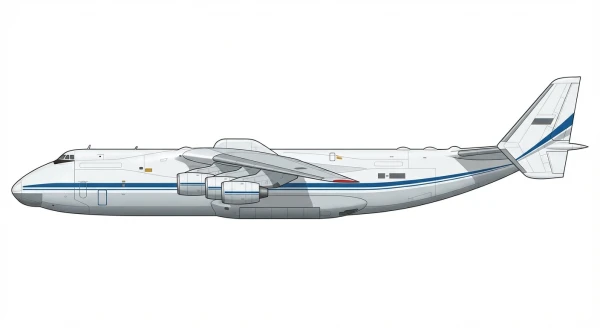
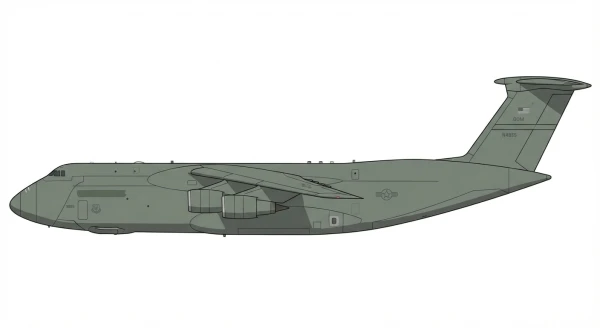
| An-225 Cossack | C-5 Galaxy | |
|---|---|---|
| Origin country | 🇺🇦 Ukraine🇷🇺 Ex-USSR | 🇺🇸 United States |
| Category | Military Transport Aircraft | Military Transport Aircraft |
| Manufacturer | Antonov | Lockheed |
| First flight | 21 December 1988 | 30 June 1968 |
| Year introduced | 1989 | 1971 |
| Number produced | 1 units | 131 units |
| Average unit price | $250 million | $168 million |
| Wing area | 905.0 m² | 576.0 m² |
| Wingspan | 88.4 m | 67.9 m |
| Height | 18.1 m | 19.8 m |
| Length | 84.0 m | 75.3 m |
| Maximum speed | 850 km/h | 932 km/h |
| Operational range | 15,400 km | 8,900 km |
| Service ceiling | 12,000 m | 10,600 m |
| Max. takeoff weight | 640,000 kg | 381,017 kg |
| Empty weight | 285,000 kg | 172,365 kg |
| Total thrust | 6 x 23,405 kgf | 4 x 19,674 kgf |
Detailed Comparison
The C-5 Galaxy was developed as a mass-produced strategic airlifter to meet a specific US Army requirement for transporting outsized equipment, while the sole An-225 Mriya was engineered for the highly specialized mission of externally carrying the Soviet Buran space shuttle. This fundamental difference in purpose—a versatile military workhorse versus a niche program-specific carrier—drove every aspect of their design, performance, and operational history. The C-5's production of 131 units contrasts sharply with the single completed An-225, highlighting their distinct roles in aviation.
Development and Design
The C-5 Galaxy's design resulted from a US Air Force requirement for a "Heavy Logistics System" (CX-HLS). It features a conventional high-wing, T-tail configuration, but its key innovations were its scale and operational flexibility. The inclusion of both nose and aft cargo doors allows for "drive-through" loading and unloading, a critical tactical advantage for rapid deployment. Its development was protracted, marked by significant cost overruns and technical issues, such as wing-strength deficiencies that required later modification programs.
The An-225 was a derivative design, created by extending the fuselage and wings of the successful An-124 Ruslan. The addition of two more engines, for a total of six, and a distinctive twin-tail empennage were necessary adaptations to manage the aerodynamic wake of massive external loads like the Buran orbiter. To save weight for its primary mission, the rear cargo ramp of the An-124 was omitted, making the An-225 a front-loading-only aircraft and limiting its internal cargo flexibility compared to the C-5.
Specifications and Performances
The An-225 was unparalleled in sheer scale, with a Maximum Takeoff Weight (MTOW) of 640,000 kg compared to the C-5's 381,017 kg. It holds the record for the heaviest payload ever airlifted at 253.8 tonnes. However, this capability came at the cost of operational constraints; the An-225 required a 3,500 m takeoff distance, restricting it to a limited number of well-equipped airfields. The C-5, while having a smaller payload capacity of 127,459 kg, is more versatile with a shorter takeoff run of 2,600 m and a 28-wheel landing gear designed for operation from semi-prepared surfaces. The C-5's "kneeling" capability, which lowers the fuselage to align the cargo deck with truck beds, further enhances its logistical efficiency in forward operating locations.
Deployment and usage
The C-5 Galaxy has been a cornerstone of US strategic airlift for over five decades, serving in every major military operation from Vietnam to Afghanistan. It has been instrumental in deploying heavy equipment, such as M1 Abrams tanks and helicopters, and supporting humanitarian aid missions worldwide. Its fleet has undergone continuous modernization, culminating in the C-5M Super Galaxy, which features new engines and avionics to extend its service life. The An-225's planned military role with the Soviet space program was brief. Following the program's cancellation, it was repurposed for commercial service with Antonov Airlines, where it found a niche carrying unique, indivisible oversized cargo that no other aircraft could handle. Its operational career ended with its destruction during the 2022 Russian invasion of Ukraine.
Conclusion
The C-5 Galaxy represents a successful, enduring military system. Despite a difficult development, its design for operational flexibility and its production in significant numbers have made it an indispensable asset for US power projection. The An-225 Mriya, by contrast, was a magnificent engineering achievement built for a singular purpose. Its immense size and lift capability were a testament to its designers, but its specialization and single-unit status made it a historical anomaly rather than a practical military transport. The C-5 is a tool of strategy, continuously adapted and deployed; the An-225 was a record-breaking marvel whose potential was ultimately limited by its specialized origins.