208 Caravan vs 210 Centurion
| American utility aircraft, primarily deployed for passenger and cargo transportation, known for its operational history since the 1980s. | |
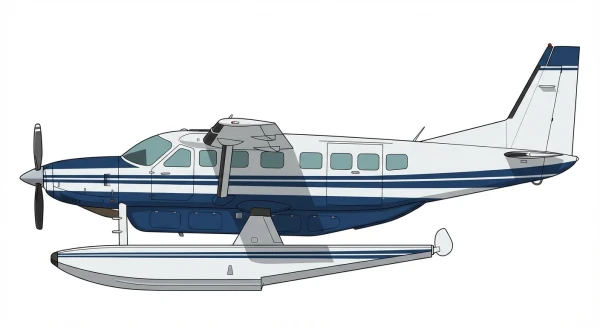
|
|
| Origin country | 🇺🇸 United States |
| Category | Military Transport Aircraft |
| Manufacturer | Cessna |
| First flight | 9 December 1982 |
| Year introduced | 1984 |
| Number produced | 3000 units |
| Average unit price | $2.1 million |
| American single-engine six-seat light aircraft, produced from 1957 to 1986, used by several air forces for liaison and light transport. | |
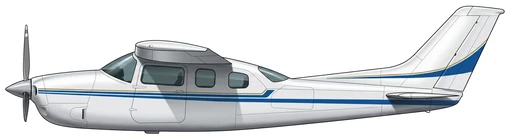
|
|
| Origin country | 🇺🇸 United States |
| Category | Military Transport Aircraft |
| Manufacturer | Cessna |
| First flight | -- |
| Year introduced | 1957 |
| Number produced | 9240 units |
| Average unit price | -- |
| Wing area | 26.0 m² ◉ |
| Wingspan | 15.9 m ◉ |
| Height | 4.3 m ◉ |
| Length | 12.7 m ◉ |
| Maximum speed | 344 km/h ◉ |
| Operational range | 1,980 km ◉ |
| Service ceiling | 7,600 m ◉ |
| Max. takeoff weight | 3,970 kg ◉ |
| Empty weight | 2,073 kg ◉ |
| Total thrust | 1 x 505 kW ◉ |
| Wing area | 16.3 m² ◉ |
| Wingspan | 11.2 m ◉ |
| Height | 3.0 m ◉ |
| Length | 8.6 m ◉ |
| Maximum speed | 378 km/h ◉ |
| Operational range | 1,667 km ◉ |
| Service ceiling | 8,230 m ◉ |
| Max. takeoff weight | 1,814 kg ◉ |
| Empty weight | 1,045 kg ◉ |
| Total thrust | 1 x 231 kW ◉ |
Performance Radar Chart
Detailed Comparison
Loading analysis...
Generating comparison analysis...
Unable to generate comparison at this time.
Frequently Asked Questions
Which is faster, the 208 Caravan or 210 Centurion?
The 210 Centurion is faster with a maximum speed of 378 km/h compared to the 208 Caravan's 344 km/h, a difference of 34 km/h.
Which has longer range, the 208 Caravan or 210 Centurion?
The 208 Caravan has a longer range at 1,980 km compared to the 210 Centurion's 1,667 km.
Which can fly higher, the 208 Caravan or 210 Centurion?
The 210 Centurion has a higher service ceiling at 8,230 meters (27,001 ft) compared to the 208 Caravan's 7,600 meters (24,934 ft).
Which is heavier, the 208 Caravan or 210 Centurion?
The 208 Caravan has a higher maximum takeoff weight at 3,970 kg compared to the 210 Centurion's 1,814 kg.
Which is larger, the 208 Caravan or 210 Centurion?
The 208 Caravan is longer at 12.7 meters compared to the 210 Centurion's 8.6 meters.
Which entered service first, the 208 Caravan or 210 Centurion?
The 210 Centurion entered service first in 1957, 27 years before the 208 Caravan which entered service in 1984.
Which has been built in greater numbers, the 208 Caravan or 210 Centurion?
The 210 Centurion has been produced in greater numbers with 9,240 units compared to 3,000 units of the 208 Caravan.