RQ-20 Puma vs ScanEagle
RQ-20 Puma vs ScanEagle at a glance — top speed 83 vs 148 km/h, range 15 vs 100 km, max takeoff weight 6 vs 22 kg, built 1,000 vs 1,000 units.
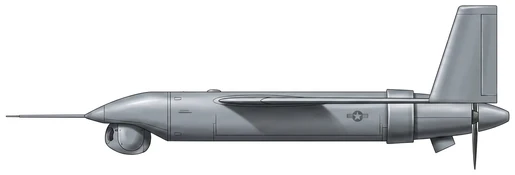
| RQ-20 Puma | ScanEagle | |
|---|---|---|
| Origin country | 🇺🇸 United States | 🇺🇸 United States |
| Category | Military Drones | Military Drones |
| Manufacturer | AeroVironment | Insitu |
| First flight | 1 January 2007 | 1 January 2000 |
| Year introduced | 2008 | 2005 |
| Number produced | 1000 units | 1000 units |
| Average unit price | $250K | $3 million |
| Wingspan | 2.8 m | 3.1 m |
| Length | 1.4 m | 1.6 m |
| Maximum speed | 83 km/h | 148 km/h |
| Operational range | 15 km | 100 km |
| Service ceiling | 3,200 m | 5,944 m |
| Max. takeoff weight | 6 kg | 22 kg |
| Empty weight | 6 kg | 13 kg |
| Total thrust | -- | 1 x 1 kW |
Detailed Comparison
At $250,000 per unit, the AeroVironment RQ-20 Puma operates as a disposable, squad-level organic asset relying on a hand-launched, battery-powered architecture. The $3.0 million Insitu ScanEagle functions at the battalion or task-force level, requiring a mechanized catapult and recovery system to sustain a combustion-powered, persistent overhead presence. These platforms serve entirely separate echelons of unmanned intelligence, surveillance, and reconnaissance (ISR).
Development and Design
AeroVironment designed the Puma around infantry mobility. The baseline 6 kg airframe breaks down into man-portable components, prioritizing rapid deployment by frontline troops over aerodynamic efficiency. It utilizes modular sensor payloads, such as the Mantis i45 gimbal, relying on field-swapped batteries to maintain sortie generation. Insitu originally engineered the ScanEagle for commercial tuna fleets, dictating a requirement for extended maritime loiter times and deck-based recovery. This resulted in a high-aspect-ratio wing, a 1.9-horsepower two-stroke gasoline engine, and the proprietary "Skyhook" wire-capture system, eliminating the need for a traditional runway or arresting net.
Specifications and Performances
The metric gap dictates their employment doctrines. The ScanEagle’s 22 kg maximum takeoff weight and liquid-fuel propulsion yield an endurance of up to 20 hours and a 100 km range. It operates at altitudes up to 5,944 meters, keeping it outside the engagement envelope of most small arms and short-range surface-to-air missiles. The Puma’s electric motor restricts it to a 15 km radius and 2 to 5.5 hours of endurance, capping its service ceiling at 3,200 meters. The Puma provides immediate, over-the-hill visibility for moving infantry, whereas the ScanEagle provides continuous pattern-of-life analysis over a fixed target area.
Deployment and usage
Since 2008, the Puma has saturated NATO infantry formations. Combat data from Ukraine indicates high attrition rates against Russian electronic warfare and short-range air defenses. By late 2023, Russian forces had downed dozens of Ukrainian Pumas, validating the necessity of its low unit cost and the modern doctrine of treating tactical drones as consumable assets. ScanEagle operations require higher-echelon support but yield theater-level intelligence. Its operational footprint centers on:
- Counter-piracy surveillance off the coast of Somalia
- Shipborne ISR aboard US Navy Flight I Arleigh Burke-class destroyers and patrol craft in the Persian Gulf
- Persistent route overwatch from established forward operating bases in Iraq and Afghanistan
Conclusion
The ScanEagle has the absolute edge for maritime deployments and static forward operating bases where infrastructure supports its pneumatic launcher and Skyhook recovery. Its 20-hour endurance renders it superior for continuous route overwatch, wide-area pattern analysis, and naval screening. The RQ-20 Puma dictates dismounted, dynamic warfare. Its lack of launch infrastructure, combined with a fraction of the cost, makes it the requisite platform for infantry elements requiring immediate, localized ISR in contested environments where high airframe attrition is a tactical certainty.