RQ-20 Puma
American battery-powered, small hand-launched unmanned aircraft system for surveillance and intelligence gathering. Key figures: top speed 83 km/h, range 15 km, service ceiling 3,200 m, max takeoff weight 6 kg, unit price $0.25M, built 1,000.
| Length | 1.4 m (4.6 ft) |
| Wingspan | 2.8 m (9.2 ft) |
| Empty weight | 6 kg (13 lbs) |
| Max. takeoff weight | 6 kg (13 lbs) |
| Maximum speed | 83 km/h (52 mph) |
| Operational range | 15 km (9 mi) |
| Endurance | 2 hours |
| Service ceiling | 3,200 m (10,499 ft) |
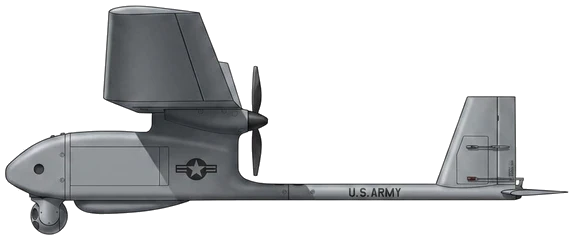
Description
The AeroVironment RQ-20 Puma is an American small unmanned aircraft system, battery powered and hand-launched, produced by AeroVironment for surveillance and intelligence gathering with an electro-optical/infrared camera. Adopted by United States Special Operations Command in 2008 and designated RQ-20A by the US Army in March 2012, it is known for its all-environment capability, including water landings on later variants, and for being one of the first UAVs cleared by the FAA for commercial operations over US land.
Development
United States Special Operations Command selected the Puma in 2008. In March 2012 the US Army ordered the Puma All Environment variant as the RQ-20A, followed in April by similar orders from the US Marine Corps and US Air Force. On 26 July 2013 the type became one of the first unmanned aircraft granted FAA certification to fly in US airspace for commercial purposes, and on 8 June 2014 a Puma AE flew for BP at Prudhoe Bay, Alaska, the first authorised unmanned commercial flight over land. In 2018 commercial certification followed military certification and the Congressionally mandated opening of much of Alaskan airspace to small UAVs; three individual aircraft were certified under restrictions limiting operations to one airborne aircraft at a time, excluding cloud and icing conditions, and barring takeoff and landing in certain gust and wind conditions. The US Army fields 325 systems, one per infantry company and 18 per brigade.
Design
Each military RQ-20A system comprises three air vehicles and two ground stations. The aircraft is 1.4 m long with a 2.8 m wingspan and a maximum takeoff weight of 5.9 kg. Maximum speed is 83 km/h with a minimum control speed of 37 km/h, range 15 km and endurance two hours. It operates between −29 and 49 °C, in winds up to 25 knots and in 25 mm of rain per hour. The sensor payload includes a fifty-times optical zoom and streams live video to the ground station; Block 2 aircraft use the Mantis i45 EO/IR gimbal suite with a precision inertial navigation system.
Operational History
The United Kingdom tested ISR packages compatible with the Puma AE aboard the trials vessel M80 Stiletto in November 2014; as of 2024, 700X Naval Air Squadron had nine qualified Puma teams, six supporting 40 and 45 Commando. On 20 January 2016 the Turkish army captured RQ-20 units from the PKK, thought to have been obtained from Syrian affiliates. In August 2016 AeroVironment announced US Navy testing and deployment of the RQ-20B aboard a Flight I guided missile destroyer using the Precision Recovery System for autonomous shipboard recovery, with further use on patrol craft in the Persian Gulf. In December 2021 the United States allocated $5 million for Puma drones for the Peshmerga, and on 1 April 2022 included Pumas in a $300 million aid package to Ukraine. Oryx recorded at least 10 shot down by Russian forces by 19 September 2023. Export operators include Albania, Australia, Belgium, Canada, Costa Rica, the Czech Republic, Denmark, Egypt, Estonia, France, Germany, Greece, Kosovo, Latvia, the Netherlands, New Zealand, Norway, the Philippines, Portugal, Spain, Sweden and Turkey, where ALTOY produces the Puma 3 AE under licence.
Variants
- RQ-20A Puma: Military designation for the Puma All Environment variant.
- Enhanced Puma: RQ-20A with more powerful propulsion, new batteries raising endurance 75 percent to 3.5 hours, an auxiliary payload bay and a reinforced fuselage, available in early 2014.
- Solar Puma: Puma AE with thin solar cells increasing endurance to nine hours.
- RQ-20B: Block 2 aircraft with lighter propulsion and airframe, long-endurance battery, precision inertial navigation and the Mantis i45 sensor suite.
- Puma 3 AE: Maritime variant released in 2021, capable of landing on water or ground with the Mantis i45 EO/IR suite and extended range.
Frequently Asked Questions
What type of aircraft is the RQ-20 Puma?
What is the maximum speed of the RQ-20 Puma?
What is the range of the RQ-20 Puma?
When did the RQ-20 Puma first fly?
How many RQ-20 Puma have been built?
Which countries operate the RQ-20 Puma?
How much does a RQ-20 Puma cost?
What is the service ceiling of the RQ-20 Puma?
- AUG 302026 Updated Description updated
- APR 82026 Updated Empty weight added
- APR 72026 Updated Sources and cross-references refreshed
- MAR 172026 Updated Description updated
- FEB 72026 Updated Ceiling added