Kilo vs Sōryū
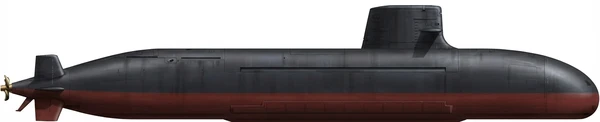
The Kilo and the Sōryū are both Submarine classes. Displacement is 2,325 tons for the Kilo vs 2,900 tons for the Sōryū. The Kilo reaches 17 knots vs 13 knots for the Sōryū. Operational range is 6,000 nautical miles for the Kilo vs 6,100 for the Sōryū. The Kilo carries a crew of 52 vs 65 for the Sōryū. Submerged displacement is 3,075 tons for the Kilo vs 4,200 tons for the Sōryū. The Kilo was produced in 75 units vs 12 for the Sōryū. Cost per hull is $200M for the Kilo vs $540M for the Sōryū. The Kilo was commissioned in 1980, 29 years before the Sōryū (2009).
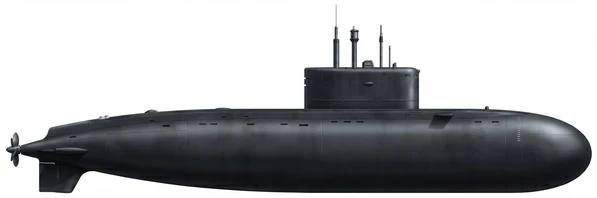
| Displacement | 2,325 tons ◉ |
| Maximum speed | 17.0 knots ◉ |
| Range | 6,000 nm at 7 knots ◉ |
| Length | 72.6 m ◉ |
| Beam | 9.9 m ◉ |
| Crew | 52 ◉ |
| Max depth | 300 m |
| Propulsion | Diesel-electric propulsion, 2 × 1000 kW diesel generators, 1 × 5,500–6,800 shp propulsion motor, 1 × fixed-pitch 6-bladed or 7-bladed propeller |
| Armament |
|
| Displacement | 2,900 tons ◉ |
| Maximum speed | 13.0 knots ◉ |
| Range | 6,100 nm at 6 knots ◉ |
| Length | 84.0 m ◉ |
| Beam | 9.1 m ◉ |
| Crew | 65 ◉ |
| Max depth | NA |
| Propulsion | 1-shaft 2× Kawasaki 12V 25/25 SB-type diesel engines, 4× Kawasaki Kockums V4-275R Stirling engines (3,900 hp surfaced, 8,000 hp submerged) |
| Armament |
|
Performance Radar Chart
Frequently Asked Questions
Which has greater displacement, the Kilo-class or Sōryū-class?
The Sōryū-class has greater displacement at 2,900 tons compared to the Kilo-class's 2,325 tons.
Which is faster, the Kilo-class or Sōryū-class?
The Kilo-class is faster with a maximum speed of 17 knots compared to the Sōryū-class's 13 knots.
Which has longer range, the Kilo-class or Sōryū-class?
The Sōryū-class has a longer range at 6,100 nautical miles compared to the Kilo-class's 6,000 nautical miles.
Which is longer, the Kilo-class or Sōryū-class?
The Sōryū-class is longer at 84.0 meters compared to the Kilo-class's 72.6 meters.
How many crew members do the Kilo-class and Sōryū-class have?
The Sōryū-class has a larger crew complement of 65 compared to the Kilo-class's 52 crew members.
Which is more expensive, the Kilo-class or Sōryū-class?
The Sōryū-class is more expensive at approximately $540 million per unit compared to the Kilo-class at $200 million.
Which has been built in greater numbers, the Kilo-class or Sōryū-class?
The Kilo-class has been built in greater numbers with 75 vessels compared to 12 vessels of the Sōryū-class.