Kilo vs Type 039A
Kilo vs Type 039A at a glance — displacement 2,325 vs 2,300 tons, length 72 vs 77 m, speed 17 vs 12 knots, crew 52 vs 36.
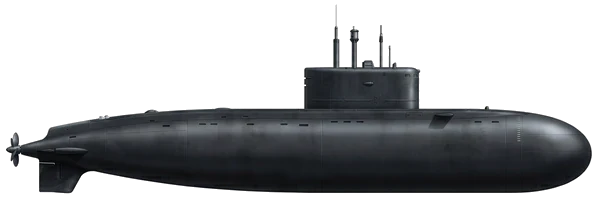
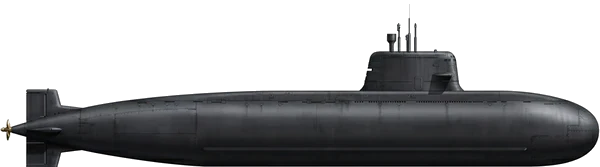
| Kilo | Type 039A | |
|---|---|---|
| Origin | 🇷🇺 Ex-USSR | 🇨🇳 China |
| Category | Submarine | Submarine |
| Type | Attack submarine | Diesel-electric submarine |
| Manufacturer | Rubin Design Bureau | Wuchang Shipbuilding |
| Year introduced | 1980 | 2006 |
| Number built | 75 units | 21 units |
| Estimated unit price | $200 million | NA |
| Displacement | 2,325 tons | 2,300 tons |
| Maximum speed | 17.0 knots | 12.0 knots |
| Range | 6,000 nm at 7 knots | 12,000 nm |
| Length | 72.6 m | 77.6 m |
| Beam | 9.9 m | 8.4 m |
| Crew | 52 | 36 |
| Max depth | 300 m | 250 m |
| Kilo | Type 039A | |
|---|---|---|
| Armament |
|
|
| Propulsion | Diesel-electric propulsion, 2 × 1000 kW diesel generators, 1 × 5,500–6,800 shp propulsion motor, 1 × fixed-pitch 6-bladed or 7-bladed propeller | Diesel-electric, 1 shaft, AIP (Stirling engine) |
Detailed Comparison
The Kilo-class (Project 877/636) is a Soviet-designed diesel-electric attack submarine initially fielded in 1980, widely exported to Warsaw Pact and non-aligned nations. The Type 039A (NATO: Yuan-class) is a Chinese-indigenous diesel-electric platform introduced in 2006, incorporating Air-Independent Propulsion (AIP). While the Kilo represents a late Cold War design modernized for anti-access/area denial (A2/AD), the Type 039A utilizes domestic and imported technologies to maximize submerged endurance for the People's Liberation Army Navy (PLAN).
Development and Design
Designed by the Rubin Design Bureau, the Kilo-class comprises over 75 completed units. The hull features a classic teardrop shape covered in anechoic tiles, displacing 2,325 tons surfaced and 3,075 tons submerged. The Type 039A, manufactured by Wuchang Shipbuilding, succeeded the Type 039 with a larger 3,600-ton submerged displacement and a double-hull configuration. The Type 039A measures 77.6 meters in length, exceeding the Kilo's 72.6 meters. Recent Type 039C variants incorporate stealth shaping features, including an angled sail and X-shaped stern control planes, differing from the Kilo's traditional cruciform tail and fixed-pitch propellers.
Weapons and Sensors
Both platforms utilize six 533mm bow torpedo tubes. The Kilo-class magazine holds 18 torpedoes or 24 mines. Project 636 and 636.3 variants are integrated with the Kalibr/Club missile complex, capable of anti-ship and land-attack roles. Kilo units also carry Strela-3 or Igla-1 MANPADS for air defense. The Type 039A carries Yu-6 wake-homing torpedoes, YJ-18 anti-ship cruise missiles, and long-range land-attack cruise missiles. The Kilo relies on the MGK-400 sonar suite (upgraded to MGK-400EM in later blocks), while the Type 039A employs systems derived from French and Russian imports, with the Type 039B variant adding flank sonar arrays.
Propulsion and Performance
The Kilo employs a conventional diesel-electric drive with two 1000 kW generators, achieving 20 knots submerged and a diving depth of 300 meters. Its range is limited to 6,000 nautical miles at 7 knots, necessitating regular snorkeling. The Type 039A integrates a closed-cycle Stirling engine AIP system, allowing extended submerged operations without surfacing to recharge batteries. While matching the Kilo's 20-knot top speed, the Type 039A lists a range of 12,000 nautical miles. Automation reduces the Type 039A crew complement to 36, compared to 52 personnel aboard the Kilo.
Deployment and Combat Record
Russia, China, India, Iran, and Algeria are primary operators of the Kilo-class. Russian Black Sea Fleet units have executed combat launches of Kalibr missiles in Syria (2015) and Ukraine (2022–present). Operational losses include the Indian Navy's Sindhurakshak (2013 explosion) and the Russian Navy's Rostov-na-Donu (destroyed in drydock, 2024). The Type 039A serves exclusively with the PLAN, with 21 units built. Pakistan has contracted for the Hangor-class export variant, and Thailand ordered the S26T model. The Type 039A has no confirmed combat record.
Conclusion
The Kilo-class remains the primary conventional subsurface asset for the Russian Navy, providing verified deep-strike capability via cruise missiles despite lacking AIP. The Type 039A represents a generational shift in Chinese naval capabilities, prioritizing submerged endurance through AIP and extended operational range. While the Kilo possesses a combat-proven history, the Type 039A offers superior stealth potential through reduced snorkeling requirements and reduced crew sizing.