Sōryū vs Type 212
Sōryū vs Type 212 at a glance — displacement 2,900 vs 1,524 tons, length 84 vs 56 m, speed 13 vs 12 knots, crew 65 vs 27.
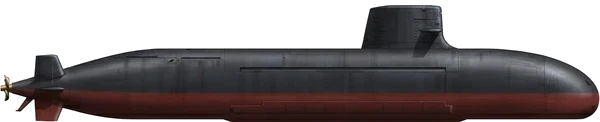
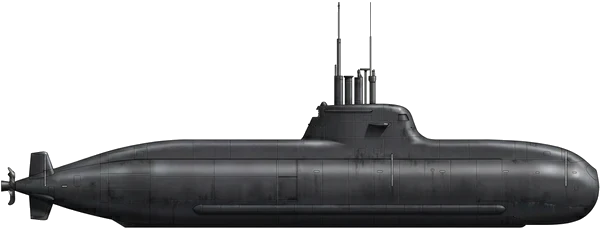
| Sōryū | Type 212 | |
|---|---|---|
| Origin | 🇯🇵 Japan | 🇩🇪 Germany |
| Category | Submarine | Submarine |
| Type | Attack submarine | Diesel-electric attack submarine |
| Manufacturer | Mitsubishi Heavy Industries | Howaldtswerke-Deutsche Werft GmbH (HDW) |
| Year introduced | 2009 | 2005 |
| Number built | 12 units | 10 units |
| Estimated unit price | $540 million | $450 million |
| Displacement | 2,900 tons | 1,524 tons |
| Maximum speed | 13.0 knots | 12.0 knots |
| Range | 6,100 nm at 6 knots | 8,000 nm at 8 knots |
| Length | 84.0 m | 56.0 m |
| Beam | 9.1 m | 6.8 m |
| Crew | 65 | 27 |
| Max depth | NA | 200 m |
| Sōryū | Type 212 | |
|---|---|---|
| Armament |
|
|
| Propulsion | 1-shaft 2× Kawasaki 12V 25/25 SB-type diesel engines, 4× Kawasaki Kockums V4-275R Stirling engines (3,900 hp surfaced, 8,000 hp submerged) | 1 × MTU 16V 396 marine diesel engine; 9 × HDW/Siemens PEM fuel cells (30–40 kW each) or 2 × HDW/Siemens PEM fuel cells (120 kW each); 1 × Siemens Permasyn electric motor (1700 kW) driving a single seven-bladed skewback propeller |
Detailed Comparison
The Type 212A is a diesel-electric attack submarine developed by Howaldtswerke-Deutsche Werft (HDW) for the German and Italian navies, entering service in 2005. The Sōryū class, manufactured by Mitsubishi Heavy Industries for the Japan Maritime Self-Defense Force (JMSDF), entered service in 2009. Both platforms integrate air-independent propulsion (AIP) systems to extend submerged operations, though they utilize different technologies and operate in distinct maritime environments.
Development and Design
The Sōryū class is a significantly larger vessel, displacing 4,200 tons submerged compared to the Type 212’s 1,830 tons. The Japanese platform measures 84.0 meters in length, exceeding the German design by 28 meters. While both designs utilize an X-configuration for stern planes to facilitate maneuverability in littoral zones, the Type 212 features a prismatic hull cross-section utilizing non-magnetic steel to reduce detection probability. The Sōryū is an evolution of the preceding Oyashio class. Germany and Italy operate ten Type 212 units, whereas Japan operates twelve Sōryū class vessels.
Weapons and Sensors
Both classes mount six 533mm torpedo tubes. The Type 212 utilizes a water ram expulsion system to deploy DM2A4 or Black Shark heavy-weight torpedoes and IDAS fiber-optic guided missiles, with a typical loadout of 13 weapons. The Sōryū class fires Type 89 torpedoes and UGM-84 Harpoon anti-ship missiles. Japanese units employ the ZQQ-7 sonar suite (upgraded to ZQQ-7B in later hulls) and ZPS-6F surface search radar. The Type 212 integrates a sonar suite and navigation radar, with later German units modified to accept a reconnaissance mast.
Propulsion and Performance
The Type 212 employs a Siemens proton-exchange membrane (PEM) fuel cell AIP system alongside a single MTU diesel engine. This configuration allows for operation without snorkeling and eliminates moving parts in the AIP section, reducing acoustic output. The first ten Sōryū vessels use four Kawasaki Kockums V4-275R Stirling engines for AIP; the final two units, Ōryū and Tōryū, replaced the Stirling systems and lead-acid batteries with lithium-ion batteries to increase electrical storage capacity. Both classes achieve 20 knots submerged. The Type 212 reports a range of 8,000 nm at 8 knots, while the Sōryū lists 6,100 nm at 6 knots.
Deployment and Combat Record
Neither class has engaged in combat. The Type 212 has demonstrated long-duration submerged capabilities; in 2013, the German vessel U-32 completed an 18-day submerged transit to the United States. Italian units have deployed to the Gulf of Aden and Indian Ocean. Sōryū operations focus on the Pacific theater, with deployments including exercises in Pearl Harbor and Guam. While the Type 212 design serves both Germany and Italy, with variants planned for Norway, the Sōryū remains exclusively operated by the JMSDF.
Conclusion
The Type 212 utilizes fuel cell technology and compact dimensions for operations in the Baltic and Mediterranean Seas. The Sōryū provides a larger platform with greater displacement suited for Pacific patrols, incorporating Stirling engines in early units and pioneering lithium-ion energy storage in later production models.