Bahamas Military Forces
Open-source order of battle for 2026: 1,300 active troops, 2 aircraft.
Armed Forces in 2026
| Domain | Strength | Composition |
|---|---|---|
| Royal Bahamas Defence Force Air Wing | 2 aircraft | +1 on order |
| Personnel | 1,300 active |
Global Military Index
Full ranking →| Pillar | Weight | Score | Basis |
|---|---|---|---|
| Manpower | 15% | 30.9 | Active, reserve & paramilitary personnel |
| Ground forces | 20% | 0.0 | Tanks, armor & artillery weighted by type |
| Naval power | 20% | 0.0 | Weighted by hull type: carrier tiers, nuclear vs conventional submarines |
| Air power | 25% | 3.7 | Weighted by aircraft type and fleet age |
| Nuclear deterrent | 10% | 0.0 | No declared nuclear capability |
| Defense budget | 10% | 18.1 | Annual spending, purchasing-power adjusted |
| Readiness | modifier | ×1.06 | Budget per soldier: proxy for training, maintenance & technology |
Country File
| Population | 401K (2024) |
| GDP | $15.8 billion (2024) |
| GDP per capita | $39,455 |
| Military budget | $110.8 million (2024) |
| Share of GDP | 0.7% (2024) |
| Military spending per capita | $276 (2024) |
| Inflation rate | 0.41% (2024) |
| Capital | Nassau |
| Region | America |
| Land area | 10,010 km² |
| Coastline | 3,542 km |
| Currency | BSD |
Strategic Overview in 2026
Strategic Position
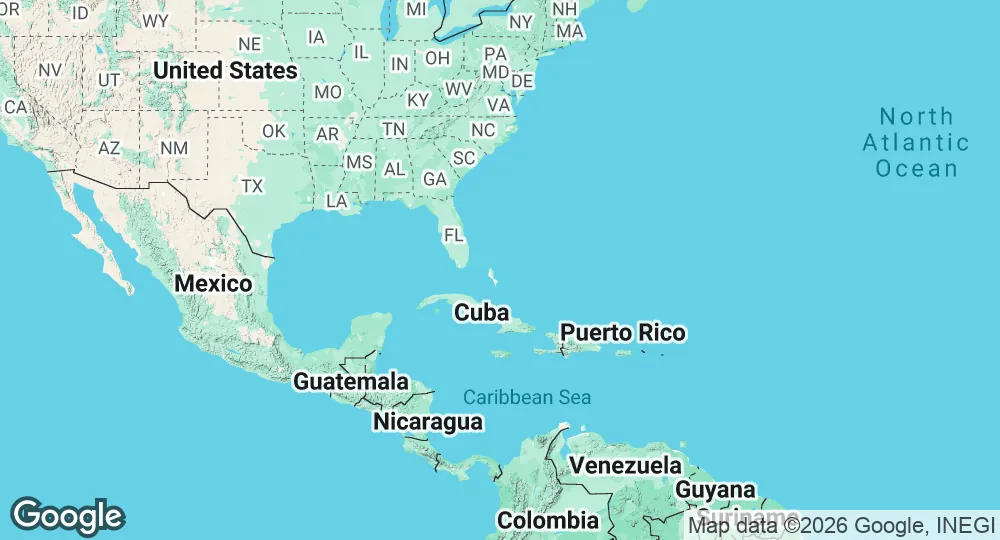
The Commonwealth of The Bahamas occupies an archipelago of approximately 700 islands and cays, positioned between the southeastern coast of the United States and the northern Caribbean. This geography places the state along primary transit routes for maritime commerce and transnational criminal activity. The primary security concerns include the trafficking of narcotics and small arms, illegal migration from regional neighbors—specifically Haiti and Cuba—and illegal, unreported, and unregulated (IUU) fishing within the Exclusive Economic Zone (EEZ).
The defense doctrine of The Bahamas is centered on maritime law enforcement and territorial sovereignty. As a member of the Caribbean Community (CARICOM), The Bahamas participates in regional security initiatives, including the Caribbean Basin Security Initiative (CBSI). While not a member of the Regional Security System (RSS), the state maintains close operational ties with the organization and participates in the annual Tradewinds multinational exercises.
A foundational element of Bahamian defense is the bilateral relationship with the United States. This is formalized through Operation Bahamas, Turks and Caicos (OPBAT), a multi-agency cooperation agreement involving the U.S. Coast Guard, the U.S. Drug Enforcement Administration (DEA), and Bahamian authorities. This partnership facilitates joint interdiction operations and intelligence sharing to counter maritime smuggling. The Bahamas also maintains a memorandum of understanding with the Turks and Caicos Islands regarding maritime border security.
Military Forces
The Royal Bahamas Defence Force (RBDF) is a specialized maritime force and the sole military organization of the state. It is organized as a single-branch service under the Ministry of National Security. The force is commanded by the Commodore of the RBDF. Total personnel strength is approximately 1,600 active-duty members.
The RBDF is organized into several distinct operational commands:
- Maritime Command: This is the primary component of the force, responsible for patrolling the state’s waters. The fleet consists of offshore patrol vessels and coastal patrol craft. The inventory includes Bahamas-class offshore patrol vessels and a series of Damen-designed Stan Patrol vessels, including the 4207 and 3007 variants. These vessels are equipped for long-endurance patrols and rapid interception.
- Air Wing: Provides aerial surveillance and search and rescue (SAR) capabilities. The air wing operates a fleet of fixed-wing aircraft, including Beechcraft Super King Air 350, Cessna 208 Caravan, and Vulcanair P68 platforms. These assets are utilized for maritime reconnaissance and transport of personnel.
- Commando Squadron: Acts as the infantry and special operations component. It is trained for amphibious operations, counter-narcotics missions, and tactical boarding of vessels. The squadron also provides land-based security for government installations and supports disaster relief operations.
- Harbour Patrol Unit: Responsible for the security of Nassau Harbour and other primary ports of entry, focusing on the protection of cruise ship terminals and commercial shipping lanes.
The RBDF maintains its primary headquarters and naval base at Coral Harbour on New Providence Island. Additional bases and forward operating bases are situated in the northern and southern islands to facilitate decentralized operations.
Strategic Trends
The current defense posture of The Bahamas is defined by a shift toward decentralization to address the challenges of monitoring a fragmented maritime territory. The RBDF is expanding its physical presence in the southern islands, with 2025 and 2026 seeing the continued development of bases at Inagua and Ragged Island. These locations are intended to intercept northbound migration and smuggling traffic before it reaches the central archipelago.
Modernization efforts are governed by a long-term strategy to integrate multi-domain awareness technology. This includes the acquisition of long-range maritime radar systems and the integration of unmanned aerial vehicles (UAVs) for persistent surveillance. The goal of these programs is to transition from reactive patrolling to intelligence-led interdiction.
Defense spending typically accounts for less than 1% of the national GDP. Financial constraints are a persistent factor in force planning, particularly the high maintenance costs associated with a maritime fleet operating in corrosive tropical environments. The RBDF also faces operational strain from increasing climate-related events; hurricane response and recovery missions frequently divert assets and personnel from primary security duties.
In 2026, the force remains focused on personnel recruitment and training to meet the manning requirements of its expanded fleet and the new forward operating bases. Cooperation with international partners for training, specifically with the United States and the United Kingdom, continues to be a priority for professional development and tactical standardization.
Frequently Asked Questions
How large is Bahamas's military?
What is Bahamas's defense budget?
How does Bahamas rank militarily in the world?
Does Bahamas have nuclear weapons?
How many aircraft does Bahamas's air force have?
What percentage of GDP does Bahamas spend on defense?
What is Bahamas's military personnel per capita?
Military Expenditure: CIA World Factbook. Suggest a change