Ecuador Military Forces
Ecuador ranks #65 of 170 militaries worldwide in 2026, with 40,250 active troops. The Ecuadorian Army fields 608 ground vehicles, including 54 main battle tanks; the Air Force flies 103 aircraft, including 17 combat aircraft; the Navy operates 34 warships, including 2 submarines. Ecuador has no nuclear weapons.
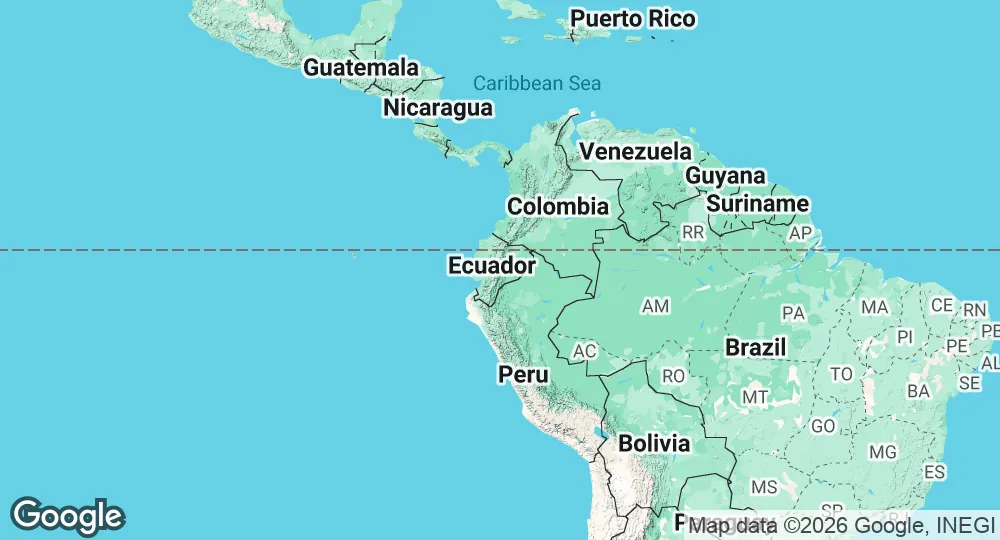

Armed Forces in 2026
| Domain | Strength | Composition |
|---|---|---|
| Air Force | 103 aircraft | 17 combat 44 helicopters 4 air bases +14 on order |
| Ecuadorian Navy | 34 warships | 4 major combatants 2 submarines |
| Ground Forces | 608 vehicles | 54 main battle tanks |
| Personnel | 40,250 active | 118,000 reserve 500 paramilitary |
ATLAS Index (Aggregate Total of Land, Air and Sea strength)
Full ranking →| Pillar | Weight | Score | Basis |
|---|---|---|---|
| Manpower | 10% | 42.3 | Active, reserve & paramilitary personnel |
| Ground forces | 20% | 21.0 | ARMS inventory power: armour & artillery by type and era, attack helicopters, armament |
| Naval power | 20% | 27.9 | SEAS inventory power: hulls by type, size and era, air wing, sustainment, armament |
| Air power | 25% | 23.4 | AIRS inventory power: aircraft by type and generation, enablers, armament |
| Nuclear deterrent | 10% | 0.0 | No declared nuclear capability |
| Defense budget | 15% | 23.4 | Annual spending, purchasing-power adjusted |
| Availability | modifier | ground ×1.01 · naval ×0.94 · air ×0.99 | Budget per point of each force, from the branch indexes |
Country File
| Population | 18.3M (2025) |
| GDP | $130.3 billion (2025) |
| GDP per capita | $7,125 |
| Military budget | $2.7B (2024) |
| Share of GDP | 2.2% (2024) |
| Military spending per capita | $150 (2024) |
| Inflation rate | 0.71% (2025) |
| Capital | Quito |
| Region | America |
| Land area | 256,369 km² |
| Coastline | 2,237 km |
| Land borders | 2,010 km |
| Bordering countries | 2 |
| Currency | USD |
Strategic Overview in 2026
Strategic Position
Ecuador’s defense posture is characterized by a transition from traditional territorial defense to addressing internal security crises and transnational organized crime. The state operates under a standing declaration of "Internal Armed Conflict," which designates over 20 criminal organizations as terrorist entities. This doctrine prioritizes the neutralization of non-state actors involved in narcotics trafficking, illegal mining, and maritime illicit activities.
Geopolitically, Ecuador maintains a security relationship with the United States, formalized through a Status of Forces Agreement (SOFA). This cooperation facilitates intelligence sharing and logistical support for counter-narcotics missions. While a 2025 referendum upheld a constitutional ban on permanent foreign military bases, the government utilizes temporary deployments of U.S. personnel at facilities such as the Manta air base for regional surveillance. Regionally, Ecuador is a member of the Organization of American States (OAS) and the Andean Community (CAN), focusing on border security cooperation with Colombia and Peru to mitigate the spillover of insurgent and criminal activity from neighboring territories.
Military Forces
The Ecuadorian Armed Forces (Fuerzas Armadas del Ecuador) are organized into three primary branches under the command of the President and the Ministry of National Defense. Total active personnel are approximately 41,000, supported by a reserve force exceeding 100,000.
Army (Ejército Ecuatoriano): With approximately 25,000 personnel, the army is the largest branch and focuses on urban warfare and border control. The force operates AMX-13 light tanks and Leopard 1V main battle tanks. Procurement has prioritized mobility for counter-insurgency, including David 4x4 armored vehicles, Mbombe 6x6 vehicles, and Cobra II tactical vehicles. These assets are deployed primarily in conflict-prone coastal provinces and along the northern border.
Navy (Armada del Ecuador): Comprising roughly 9,000 personnel, the navy secures a maritime zone including the Galápagos Islands. The surface fleet includes Leander-class frigates and Esmeraldas-class corvettes. Underwater capabilities consist of Type 209/1300 submarines, which have undergone modernization to extend their service life. The branch also maintains a Marine Corps of approximately 1,700 personnel for coastal defense and special operations.
Air Force (Fuerza Aérea Ecuatoriana): The air force maintains approximately 6,000 personnel. The primary combat platform is the Super Tucano turboprop, utilized for light attack and border surveillance. A 2025 revitalization program is underway to restore the Super Tucano fleet to full operational readiness. The transport wing operates C-130 Hercules and C-295 aircraft, while the rotary fleet is transitioning to Airbus H225M helicopters, the first of which were delivered in 2025 to replace aging Soviet-era airframes.
Defense Industry
Ecuador maintains a domestic defense industry centered on state-owned enterprises. Astilleros Navales Ecuatorianos (ASTINAVE) is the principal shipyard, capable of constructing patrol vessels and auxiliary ships. Notable projects include the construction of a 75-meter multipurpose vessel and the development of the ORION naval command-and-control system. Santa Bárbara EP serves as the primary manufacturer of ammunition and small arms. In 2025, these entities established a cooperation agreement to integrate manufacturing capabilities for land and maritime defense requirements. Despite these domestic efforts, the military remains dependent on imports and donations for advanced platforms such as armored vehicles and radar systems.
Strategic Trends
Defense spending in Ecuador is approximately 2.2% of GDP, reflecting sustained investment in internal security infrastructure. Strategic priorities are directed by "Plan Fénix," a modernization initiative emphasizing electronic surveillance, drone integration, and the acquisition of armored tactical vehicles to combat organized crime.
The military faces operational constraints, including fiscal deficits and the strain of performing domestic policing roles in prisons and high-conflict urban areas. Throughout 2025 and into 2026, the force structure has shifted toward specialized units capable of rapid deployment in diverse environments. Reliance on external technology for cyber defense and ISR (Intelligence, Surveillance, and Reconnaissance) remains a core feature of the modernization trajectory.
Military Expenditure: CIA World Factbook. Last updated on 25 September 2026. Suggest a change
Frequently Asked Questions
How large is Ecuador's military?
What is Ecuador's defense budget?
How does Ecuador rank militarily in the world?
Does Ecuador have nuclear weapons?
How many aircraft does Ecuador's air force have?
How large is Ecuador's navy?
How many tanks does Ecuador have?
What percentage of GDP does Ecuador spend on defense?
What is Ecuador's military personnel per capita?
Does Ecuador have submarines?
Does Ecuador have paramilitary forces?
- SEP 252026 Updated Population, GDP and inflation added for 2025; GDP series revised
- AUG 42026 Updated Global Military Index updated in a site-wide editorial pass
- AUG 32026 Updated Global Military Index updated
- JUL 162026 Updated Global Military Index updated in a site-wide editorial pass
- JUN 162026 Updated Yearly statistics, military spending and 2 more fields updated
- JAN 172026 Updated Main battle tank count and Global Military Index updated
- JAN 132026 Updated Description updated