Puerto Rico Military Forces 🇵🇷
Military Strength Overview
Geography
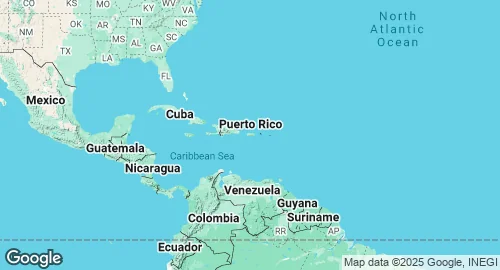
| Capital | San Juan |
| Land Area | 8,959 km² |
| Coastline Length | 501 km |
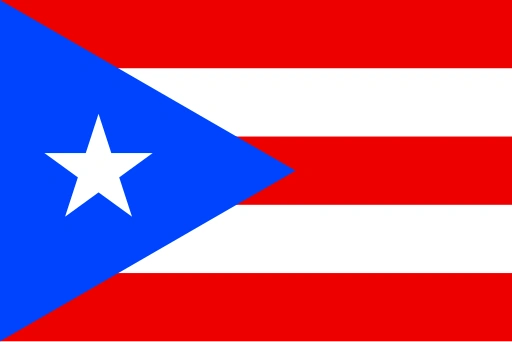
National Flag
Defense Statistics & Key Metrics
| Population | 3.2 million (2022) |
| GDP | $113.6 billion (2022) |
| GDP per capita | $35268 (2022) |
Population and Military Personnel Trends
GDP and Inflation Rate Trends
Strategic Overview in 2026
Puerto Rico serves as a primary forward operating location for United States Southern Command (SOUTHCOM) and is integrated into the national defense architecture of the United States. As of early 2026, the island's strategic role has transitioned from a logistical and training hub to a primary strike and surveillance launchpad for operations in the Caribbean Basin and South America.
Strategic Position
Puerto Rico is situated at the northeastern periphery of the Caribbean Sea, providing a geographical advantage for controlling maritime access to the Atlantic. Primary security concerns include maritime border integrity, illicit trafficking interdiction, and regional stabilization. Since late 2025, the island has functioned as a central staging ground for U.S.-led regional initiatives, notably Operation Southern Spear and Operation Absolute Resolve, which focused on counter-narcotics and direct action in the southern Caribbean.
The defense posture is defined by its status as an unincorporated territory of the United States. It is part of the U.S. domestic defense perimeter and is covered by the collective defense provisions of the North Atlantic Treaty Organization (NATO) and the Inter-American Treaty of Reciprocal Assistance (Rio Treaty). Relations are dominated by federal military integration, while regional cooperative efforts are managed through the Caribbean Basin Security Initiative (CBSI).
Military Forces
Military forces in Puerto Rico consist of federal components, the Puerto Rico National Guard (PRNG), and the Puerto Rico State Guard.
Structure and Personnel The Puerto Rico National Guard comprises approximately 8,500 personnel. This includes the Puerto Rico Army National Guard (PRARNG), with a strength of 7,500, and the Puerto Rico Air National Guard (PRANG), with approximately 1,000. The Puerto Rico State Guard maintains roughly 1,500 volunteers to support civil authorities during domestic emergencies. Federal forces include U.S. Army Reserve units and U.S. Coast Guard (USCG) Sector San Juan, which oversees an area of responsibility exceeding 1.3 million square miles.
Army and Ground Force Capabilities The PRARNG is organized into several major subordinate commands, including the 92nd Military Police Brigade, the 101st Troop Command, and the 191st Regional Support Group. Notable units include the 1st Battalion, 65th Infantry Regiment and the 1st Battalion, 296th Infantry Regiment. Equipment consists of standard U.S. Army small arms, High Mobility Multipurpose Wheeled Vehicles (HMMWVs), and Family of Medium Tactical Vehicles (FMTV). Aviation support is provided by UH-60 Black Hawk helicopters.
Air and Maritime Capabilities The 156th Wing of the PRANG is based at Muñiz Air National Guard Base and operates C-130 Hercules transport aircraft. As of January 2026, the air component is supplemented by a significant federal surge, including F-35A Lightning II fighters and MQ-9 Reaper unmanned aerial vehicles (UAVs) configured for both surveillance and strike missions.
USCG Sector San Juan maintains a fleet of Fast Response Cutters (WPC), including the Richard Dixon, Heriberto Hernandez, and Joseph Napier. These vessels are supported by MH-60 Jayhawk helicopters from Air Station Borinquen.
Installations - Fort Buchanan: The primary federal installation, serving as a logistics and administrative center for U.S. Army Reserve and National Guard operations. - Camp Santiago: A major training site for ground maneuvers and marksmanship. - Naval Station Roosevelt Roads: Reactivated for operational use in late 2025 to support naval and air deployments in the southern Caribbean. - Muñiz Air National Guard Base: Primary hub for PRANG airlift and federal fighter detachments.
Strategic Trends
The defense posture of Puerto Rico is currently characterized by rapid modernization and infrastructure reactivation. The 2026 National Defense Authorization Act (NDAA) allocated substantial funding for military construction, specifically targeting the hardening of maritime security and the upgrading of facilities at Fort Buchanan and Roosevelt Roads.
Procurement and deployment priorities have shifted toward fifth-generation fighter capabilities and networked maritime strike operations. The use of MQ-9 UAVs equipped with Hellfire missiles has increased, reflecting a broader shift toward persistent surveillance and precision strike readiness in the region.
A major constraint remains the friction between federal military expansion and local environmental and political sensitivities. The reactivation of historical military sites has prompted domestic debate regarding land use and environmental impact. However, the current doctrinal shift emphasizes Puerto Rico as a permanent high-readiness theater for Caribbean and South American contingencies.
Frequently Asked Questions
Does Puerto Rico have nuclear weapons?
Military Expenditure: SIPRI Milex. Suggest a change