Seawolf-class (SSN-21)
Summary
| Origin country | 🇺🇸 United States |
| Category | Submarine |
| Subtype | Nuclear attack submarine |
| Manufacturer | General Dynamics Electric Boat |
| Year commissioned | 1997 |
| Approx. unit cost | $3000 million |
| Units |
SSN-21 USS Seawolf SSN-22 USS Connecticut SSN-23 USS Jimmy Carter |
Operators
Technical specifications
| Displacement | 8600 tons |
| Displacement submerged | 9138 tons |
| Range | Unlimited, except by food supplies |
| Crew | 140 members |
| Width | 12.0 m (39.4 ft) |
| Length | 108.0 m (354.3 ft) |
| Max. depth | 490 m (1607.6 ft) |
| Propulsion | 1 S6W PWR 220 MW (300,000 hp), 1 secondary propulsion submerged motor, 2 steam turbines 57,000 shp (43 MW), 1 shaft, 1 pump-jet propeller |
| Armament |
|
| Maximum speed | 18 knots |
| Max. speed submerged | 35 knots |
Further Reading
As an Amazon Associate, we may earn from qualifying purchases.
Description
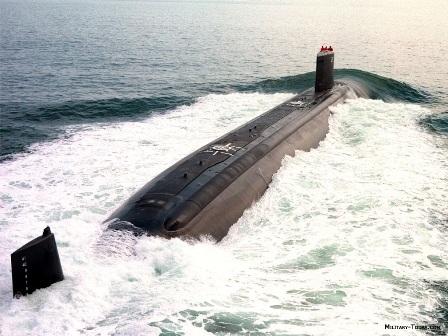
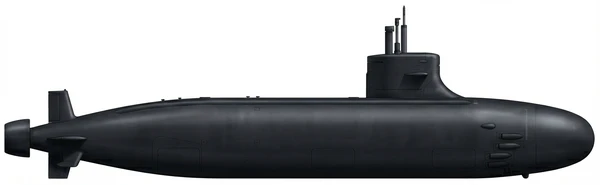
The Seawolf class is a series of nuclear-powered fast attack submarines operated by the United States Navy. Design work began in 1983 as a successor to the Los Angeles class. The Navy originally planned to construct 29 vessels over a ten-year period, but this figure was later reduced to 12. Following the end of the Cold War and the implementation of budget constraints, the program was terminated in 1995. This resulted in a final production run of three submarines. The class was succeeded by the Virginia-class design.
The class was developed to engage Soviet ballistic missile and attack submarines, such as the Typhoon and Akula classes, in deep-ocean environments. To facilitate operations at increased depths, the hulls are constructed from HY-100 steel. The design features a greater weapon capacity and more torpedo tubes than the preceding Los Angeles class. The submarines are equipped for both deep-water and shallow-water operations. Internal systems include the ARCI Modified AN/BSY-2 combat system, which utilizes a spherical sonar array, a wide aperture array, and a towed-array sonar. Propulsion is provided by an S6W nuclear reactor and a low-noise pump-jet.
The three boats in the class—USS Seawolf, USS Connecticut, and USS Jimmy Carter—were built by General Dynamics Electric Boat and entered commission between 1997 and 2005. The third vessel, USS Jimmy Carter, was modified with a hull extension known as the Multi-Mission Platform. This section allows for the launch and recovery of remotely operated underwater vehicles and Navy SEALs. The platform also provides the capability to tap undersea fiber optic cables, a role formerly held by the decommissioned USS Parche. All three vessels remain in active service.