Type 212-class
Summary
| Origin country | 🇩🇪 Germany |
| Category | Submarine |
| Subtype | Diesel-electric attack submarine |
| Manufacturer | Howaldtswerke-Deutsche Werft GmbH (HDW) |
| Year commissioned | 2005 |
| Approx. unit cost | $450 million |
| Units | U-31, U-32, U-33, U-34, U-35, U-36, Salvatore Todaro, Scirè, Pietro Venuti, Romeo Romei |
Technical specifications
| Displacement | 1524 tons |
| Displacement submerged | 1830 tons |
| Range | 8000 km at 8 knots |
| Endurance | 84 |
| Crew | 27 members |
| Width | 6.8 m (22.3 ft) |
| Length | 56.0 m (183.7 ft) |
| Max. depth | 200 m (656.2 ft) |
| Propulsion | 1 × MTU 16V 396 marine diesel engine; 9 × HDW/Siemens PEM fuel cells (30–40 kW each) or 2 × HDW/Siemens PEM fuel cells (120 kW each); 1 × Siemens Permasyn electric motor (1700 kW) driving a single seven-bladed skewback propeller |
| Armament |
|
| Maximum speed | 12 knots |
| Max. speed submerged | 20 knots |
Description
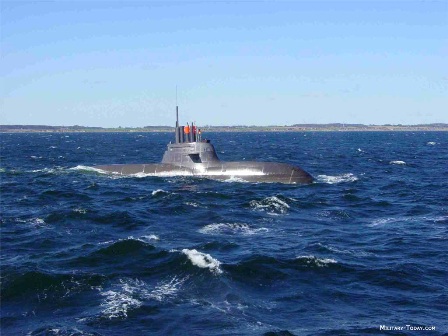
The Type 212A is a diesel-electric attack submarine developed by Howaldtswerke-Deutsche Werft AG for the German Navy and the Italian Navy, which designates the vessel as the Todaro class. Development originated in the early 1990s to replace the Type 206. In 1994, Germany and Italy merged their respective requirements for Baltic Sea and Mediterranean operations into a joint program. A 1996 Memorandum of Understanding established a bilateral agreement to build identical vessels and collaborate on logistics. Initial orders were placed in 1998, with construction shared between the German Submarine Consortium and Fincantieri.
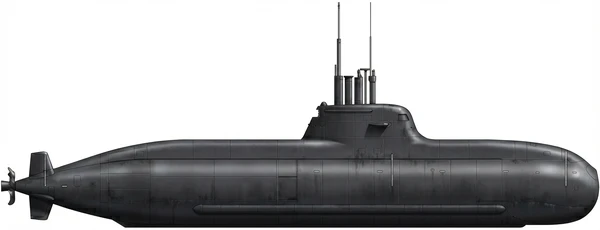
The design incorporates diesel propulsion and an air-independent propulsion (AIP) system utilizing Siemens proton-exchange membrane fuel cells. For safety, hydrogen and oxygen tanks are located outside the pressure hull. This configuration allows for submerged transit without snorkeling and reduces the vessel's thermal signature. The hull features a prismatic cross-section and faired transitions from the hull to the sail to manage acoustic and stealth characteristics. Stern planes are configured in an "X" arrangement to facilitate operation in shallow waters. Sensors include a sonar suite, navigation radar, and an electronic warfare suite. Weapons are discharged through a water ram expulsion system capable of launching torpedoes and fiber-optic guided missiles. Second-batch German vessels included hull extensions to accommodate a reconnaissance mast. Recent technical updates include the development of a lithium-ion battery system and masts capable of deploying unmanned aerial vehicles.
The class entered commission in 2005. Operational history includes several recorded long-duration submerged transits. In 2006, the German vessel U-32 traveled from the Baltic Sea to Spain without surfacing or snorkeling. In 2013, the same vessel completed an 18-day submerged transit to the United States, establishing a record for non-nuclear submarines. Italian vessels have participated in international exercises in U.S. waters, including deployments by the Salvatore Todaro and the Scirè. The Salvatore Todaro also operated in the Gulf of Aden, Arabian Sea, and Indian Ocean between 2012 and 2013. The program has expanded to include the Type 212CD, a common design variant for the German and Royal Norwegian navies, and the U212 NFS (Near Future Submarine) for Italy. Under these agreements, additional hulls are planned for delivery through 2030.