Osan Air Base
Summary
| Operating Country | 🇰🇷 South Korea |
| Location | 🇰🇷 South Korea |
| Status | ◉ Active |
| Usage | Dual |
| Year built | 1951 |
| Operating Organization | US Air Force, Republic of Korea Air Force |
| Units |
|
Location & Details
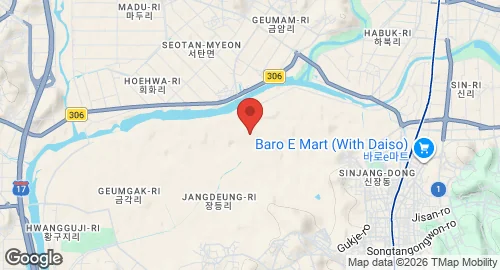
| Coordinates | 37.0906°N, 127.0297°E |
| Elevation | 12 m (39 ft) |
| IATA code | OSN |
| ICAO code | RKSO |
| Runways |
|
Description
Osan Air Base is located near Songtan station in Pyeongtaek, Gyeonggi Province, South Korea, approximately 64 kilometers south of Seoul. Established in November 1951 as Osan-Ni Air Base (K-55), it was the only airfield on the Korean peninsula designed and constructed by aviation engineer units during the Korean War. The 18th Fighter-Bomber Wing began operations at the site in December 1952 with F-51 Mustangs and later F-86 Sabres. In 1954, the installation became the primary operations hub for U.S. air power in South Korea following the relocation of the Fifth Air Force advanced headquarters. The base received its current designation in September 1956.
The installation is operated by the United States Air Force and the Republic of Korea Air Force (ROKAF). It serves as the headquarters for the Seventh Air Force, the 51st Fighter Wing, and the ROKAF Operations Command. The 51st Fighter Wing, acting as the host unit, operates squadrons of F-16C/D Fighting Falcons and A-10C Thunderbolt IIs. Geographically separate units include the 5th Reconnaissance Squadron, operating U-2S Dragon Lady aircraft, and a detachment of the 33rd Rescue Squadron with HH-60G Pave Hawks. The U.S. Army’s 35th Air Defense Artillery Brigade is also stationed at the base, operating MIM-104 Patriot missile systems.
Infrastructure includes hardened aircraft shelters, an on-base munitions storage area, and a terminal for Patriot Express flights connecting the installation to the United States and Japan. Following the 1968 Pueblo crisis, the base underwent expansion, including the construction of a new control tower and reinforced aircraft shelters. Between 1998 and 2004, the Fix Korea Initiative funded the modernization of water, sewage, and electrical distribution systems. Realignment under the 2002 Land Partnership Plan and 2003 Security Policy Initiative led to further facility growth. Recent developments include the introduction of RQ-170 Sentinel unmanned aerial vehicles and the ongoing replacement of Korean War-era structures with modern industrial and residential facilities to accommodate a shift toward accompanied tours.