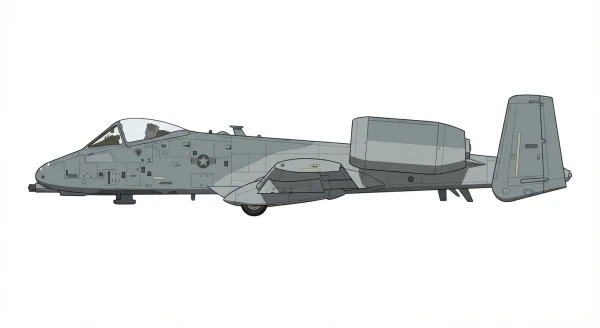
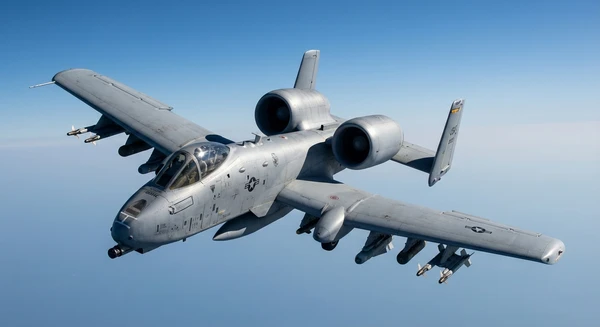
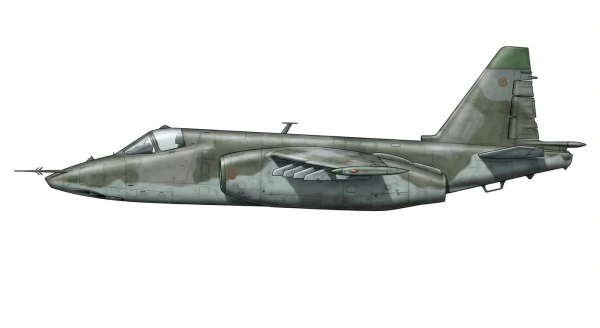
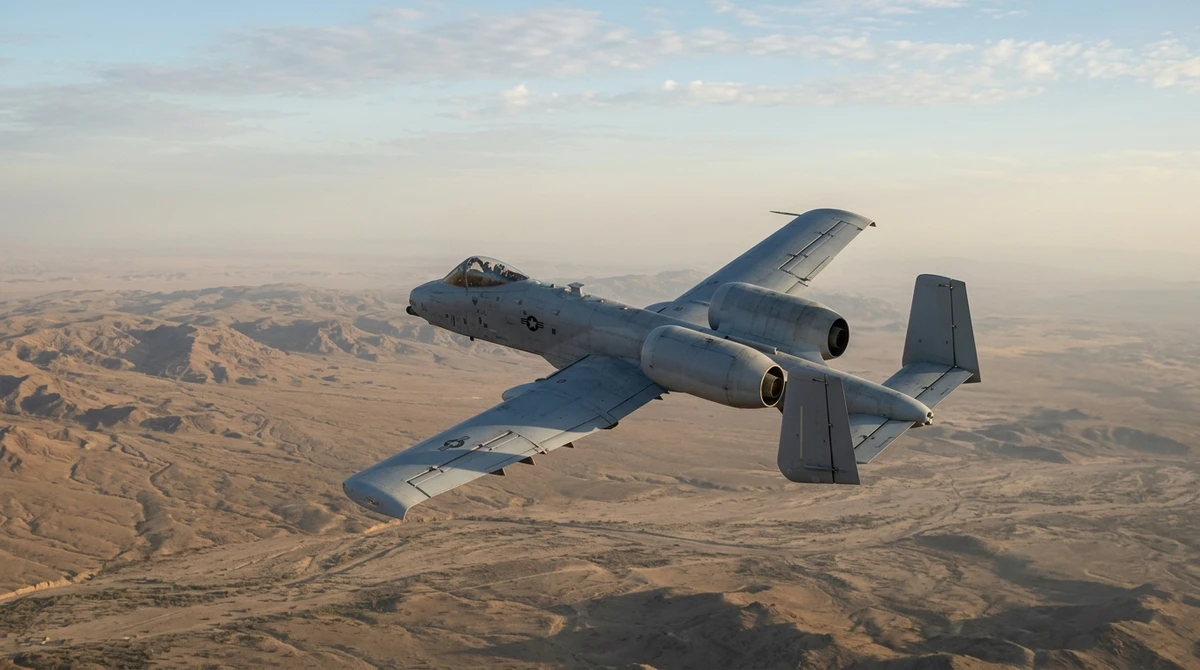
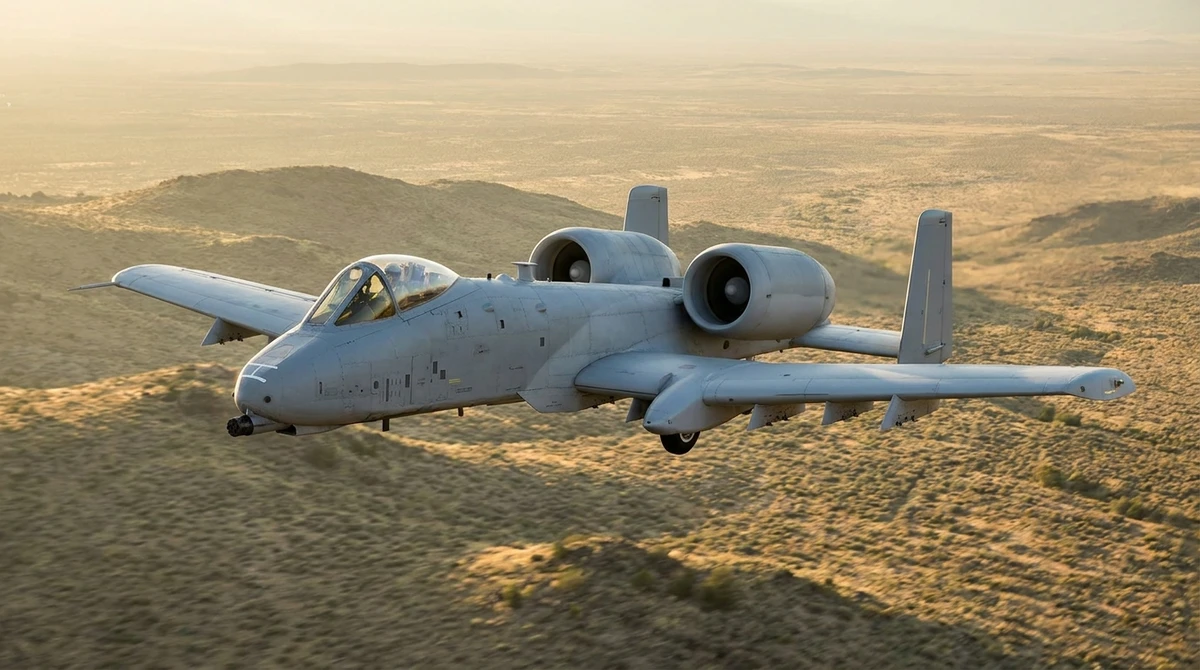
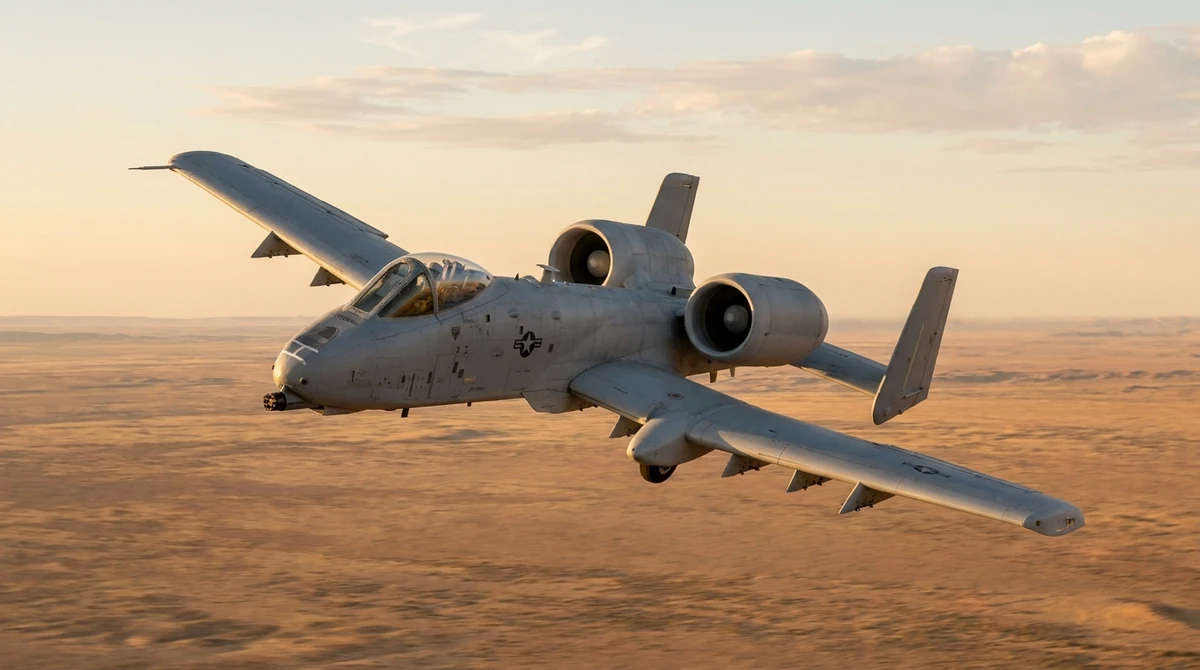
The Fairchild Republic A-10 Thunderbolt II, nicknamed "Warthog," is a single-seat, twin-turbofan, straight-wing subsonic attack aircraft developed for the United States Air Force (USAF). It entered service in 1977 as the only production aircraft designed solely for close air support to serve with the USAF. The aircraft is designed around the 30 mm GAU-8 Avenger rotary autocannon and features high airframe durability.
Development
The USAF established the Attack Experimental (A-X) program in 1966 to replace the Douglas A-1 Skyraider with a dedicated anti-tank platform. Fairchild Republic and Northrop built the YA-10A and YA-9A prototypes to meet the requirement. The YA-10A made its first flight on 10 May 1972, and the USAF selected it for production in January 1973. A total of 715 aircraft were delivered by 1984, after which various wing-replacement and avionics modernization programs were implemented to extend airframe life.
Design
The A-10 uses a low-wing monoplane configuration with wide chord wings, split-aileron decelerons, and interchangeable left and right tailplanes and landing gear. The pilot and flight control systems are enclosed in a 1,200-pound (540 kg) titanium armor titanium tub capable of resisting hits from 23 mm cannon rounds. Two General Electric TF34-GE-100 turbofan engines are mounted above the rear fuselage to shield exhaust heat signatures and permit operations from unpaved forward runways. Flight controls feature double-redundant hydraulic systems supported by a mechanical manual reversion mode. Avionics include the Integrated Flight & Fire Control Computer, digital communications, and targeting pods such as the LITENING AT or Sniper XR.
Armament
The primary internal weapon is the 30 mm GAU-8/A Avenger seven-barrel rotary autocannon, which fires at a fixed rate of 3,900 rounds per minute and carries an ammunition drum holding up to 1,174 rounds. The aircraft has 11 external hardpoints (eight wing and three fuselage) capable of carrying up to 16,000 pounds (7,260 kg) of payload. Munitions include AGM-65 Maverick missiles, AIM-9 Sidewinder air-to-air missiles, Hydra 70 rocket pods, Joint Direct Attack Munitions, and Paveway laser-guided bombs.
Operational History
The A-10 has been operated exclusively by the USAF, Air Force Reserve Command, and Air National Guard. First deployed during Operation Urgent Fury in 1983, it saw initial major combat in the 1991 Gulf War, flying 8,100 sorties and recording two air-to-air helicopter kills. Additional combat deployments include operations in Bosnia, Kosovo, Afghanistan, Iraq, Libya, Syria, and the 2026 Iran war.
Variants
-
YA-10A: Pre-production prototype variant, of which 12 were built.
-
A-10A: Initial single-seat production variant built for close air support and ground attack.
-
OA-10A: Designation applied to A-10A aircraft used primarily for airborne forward air control.
-
YA-10B: Single experimental two-seat prototype converted from an A-10A to test night and adverse weather operations.
-
A-10C: Modernized variant updated under the Precision Engagement program with digital avionics, modern communications, and precision weaponry support.