Upavon Airfield
Upavon Airfield (ICAO EGDJ) is an inactive military air base in the United Kingdom, operated by the British Army. It has 3 runways. Home to Central Flying School, No. 3 Squadron RAF, No. 17 Squadron RAF, No. 622 Volunteer Gliding Squadron.
Facility Details
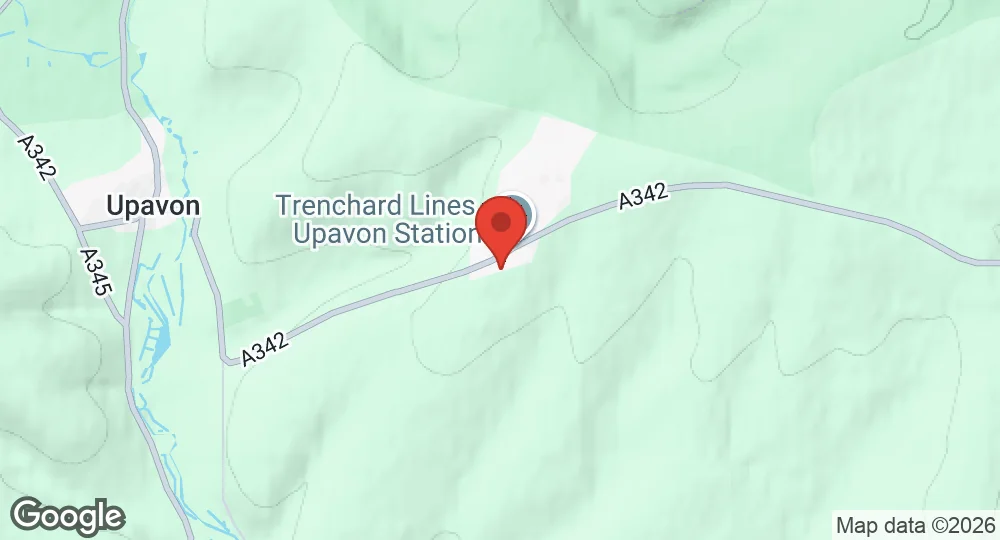
51.2906°N, 1.7783°W · 175 m elevation
| Operating Country | 🇬🇧 United Kingdom |
| Location | 🇬🇧 United Kingdom |
| Status | Inactive |
| Usage | Military only |
| Year built | 1912 |
| Year closed | 1993 |
| Operating Organization | British Army |
| Units |
Central Flying SchoolNo. 3 Squadron RAFNo. 17 Squadron RAFNo. 622 Volunteer Gliding Squadron
|
| Elevation | 175 m (574 ft) |
| IATA code | UPV |
| ICAO code | EGDJ |
| Runways |
05/23 · Grass08/26 · Grass18/36 · Grass
|
- 15 km MOD Boscombe Down Aircraft Test and Evaluation Centre
- 21 km Middle Wallop Flying Station 2 (Training) Regiment AAC
- 23 km Keevil Airfield aircraft from RAF Brize Norton
- 33 km RAF Welford 420th Munitions Squadron
- 44 km RAF Fairford 99th Expeditionary Reconnaissance Squadron
- 53 km RAF Brize Norton No. 10 Squadron

Description
RAF Upavon was a former Royal Air Force station located in Wiltshire, England. It operated as a grass airfield, military flight training school, and administrative headquarters. Construction began in 1912, and it was originally established for pilots of the military and naval wings of the Royal Flying Corps (RFC), becoming home to the Army Central Flying School. Notable early developments included the first night landing in England in 1913, the development of the bomb sight between 1914 and 1915, and the testing of the first Unmanned Aerial Target aircraft in 1917. On April 1, 1918, the RFC amalgamated with the Royal Naval Air Service to form the Royal Air Force, and the station was renamed RAF Upavon.
The Central Flying School moved from Upavon in 1926 but returned in August 1935, remaining until April 1942. During the 1920s, No. 17 (Fighter) Squadron RAF and No. 3 (Fighter) Squadron RAF were stationed at Upavon, focusing on night flying and aviation fighting techniques. In 1927, a transatlantic flight attempt by the St. Raphael departed from the airfield. During the Second World War, the Central Flying School's primary role was to train and supply flight instructors to military flying schools.
Post-war, Upavon became home to headquarters No. 38 Group in 1946 and headquarters RAF Transport Command in 1951. Transport Command was renamed Air Support Command in 1967 and was later absorbed into Strike Command in 1972. Due to the grass runway not being suitable for heavy fixed-wing or jet aircraft, the airfield transitioned to primarily an administrative base and hosted No. 622 Volunteer Gliding Squadron. The RAF permanently withdrew from Upavon on August 3, 1993, when the site was transferred to the British Army and renamed Trenchard Lines. It subsequently housed Headquarters Doctrine & Training, then Headquarters Adjutant General, and is now home to the headquarters of Army Recruiting and Initial Training Command.