BQM-167 Skeeter
American subscale aerial target drone, developed in the early 2000s, used for weapon systems evaluation and training by the United States Air Force and international partners. Key figures: top speed 1,100 km/h, service ceiling 15,000 m, max takeoff weight 930 kg, unit price $0.57M, built 37.
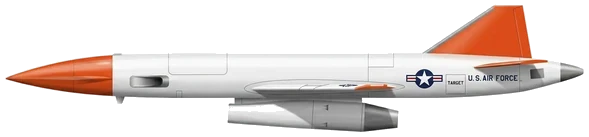
| Length | 6.1 m (20.0 ft) |
| Wingspan | 3.2 m (10.5 ft) |
| Height | 1.2 m (3.9 ft) |
| Empty weight | 313 kg (690 lbs) |
| Max. takeoff weight | 930 kg (2,050 lbs) |
| Powerplant | 1 × MicroTurbo Tri 60-5+ turbojet 449 kgf each |
| Maximum speed | 1100 km/h (684 mph) |
| Service ceiling | 15,000 m (49,213 ft) |
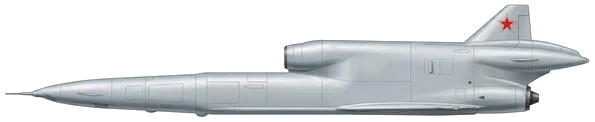
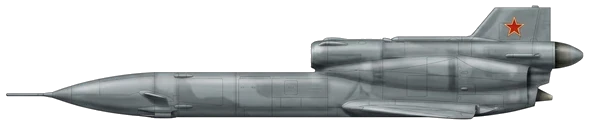
Description
The Composite Engineering BQM-167 Skeeter is a subscale aerial target drone manufactured by Composite Engineering Inc. (later acquired by Kratos Defense & Security Solutions) to replace the Beechcraft MQM-107 Streaker. Two prototype targets were test flown in 2001, and the USAF selected the BQM-167A as its next-generation subscale aerial target in July 2002. Six flight performance demonstration (FPD) targets were constructed, with the first flight occurring on 8 December 2004. Following 13 FPD launches through March 2006 and acceptance testing in August 2006, pre-operational testing completed in June 2007. The first air-to-air missile live-fire mission occurred on 7 February 2007, and the system achieved Initial Operational Capability in 2008. Each target costs US$570,000.
Design
Constructed of carbon fiber and epoxy-based materials, the drone is 20 feet (6.1 m) long with a wingspan of 10 feet 6 inches (3.2 m) and a maximum takeoff weight of 2,050 pounds (930 kg). It is powered by a single MicroTurbo Tri 60-5+ turbojet engine producing 990 lbf (4.4 kN) of thrust, yielding a maximum sea-level speed of 600 knots (1,100 km/h) and a cruise speed of 230 knots (430 km/h). The aircraft has a service ceiling of 50,000 feet (15,000 m), can execute 9 G turns, and operates down to 50 feet (15 m) above ground level. Its specialized payloads and avionics include infrared and radio frequency tow targets and wing pods, chaff and flare dispensers, and vector and scalar scoring systems.
Operational History
The United States Air Force operates 37 BQM-167 targets in its inventory, assigned to the 82nd Aerial Targets Squadron at Tyndall Air Force Base, Florida. The drone is rail-launched from land using a rocket-assisted takeoff and recovered by parachute on land or water for refurbishment and reuse. During a weapon systems evaluation, an off-course target washed ashore in Boynton Beach, Florida, on 19 March 2021. Export operators include the Republic of Singapore Air Force and the Swedish Defence Materiel Administration.
Variants
- BQM-167i: The export designation of the aerial target drone operated by international air forces.
- UTAP-22 Mako: A turbojet-powered unmanned combat aerial vehicle developed from the BQM-167A designed for collaborative operations with manned aircraft and capable of carrying a 159 kg internal payload, a 227 kg external payload, and wing-hardpoint weaponry.
Frequently Asked Questions
What type of aircraft is the BQM-167 Skeeter?
What is the maximum speed of the BQM-167 Skeeter?
When did the BQM-167 Skeeter first fly?
How many BQM-167 Skeeter have been built?
Which countries operate the BQM-167 Skeeter?
How much does a BQM-167 Skeeter cost?
What is the service ceiling of the BQM-167 Skeeter?
- AUG 12026 Updated Manufacturer updated
- JUL 62026 Created Page created: BQM-167 Skeeter