FT5 Łoś
Polish twin-engine tactical reconnaissance and strike-support unmanned aerial vehicle, developed in the mid-2010s and used within the GLADIUS reconnaissance-and-strike system. Key figures: top speed 180 km/h, range 300 km, service ceiling 5,000 m, max takeoff weight 85 kg, unit price $1.5M, built 20. In service with 1 air force as of 2026 — Poland (20).
| Length | 3.1 m (10.2 ft) |
| Wingspan | 6.4 m (21.0 ft) |
| Empty weight | 55 kg (121 lbs) |
| Max. takeoff weight | 85 kg (187 lbs) |
| Powerplant | 2 × EFI-controlled piston engine |
| Maximum speed | 180 km/h (112 mph) |
| Operational range | 300 km (186 mi) |
| Endurance | 10 hours |
| Service ceiling | 5,000 m (16,404 ft) |
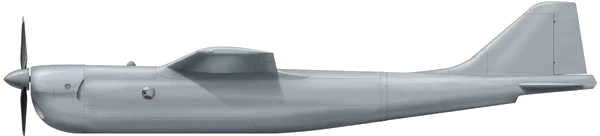

Description
The FT5-Łoś (also marketed as the FT-5 Tactical Aerial Platform) is a Polish twin-engine, fixed-wing unmanned aerial vehicle developed by Flytronic, a Gliwice-based subsidiary of WB Group (WB Electronics), for short-range tactical reconnaissance and, in later configurations, as a weapon carrier. It forms the reconnaissance element of the Polish GLADIUS reconnaissance-and-strike system, entering Polish Armed Forces service with the first system deliveries on 20 December 2023.
Development
The FT5-Łoś was developed against the requirements of the Polish "Orlik" short-range tactical UAV programme for the Polish Land Forces. It was first shown publicly at the MSPO arms fair in Kielce in 2016 and has been developed continuously since. The original launch method used a mobile ramp/rail launcher with belly landing recovery; the manufacturer later showed a wheeled-undercarriage variant capable of autonomous take-off and landing from a flat runway section about 100 m long. As of late 2024, 20 airframes had been built.
Design
The FT5 is a high-wing airframe in twin-engine pusher configuration, with a wingspan of 6.4 m and a length of 3.1 m. Maximum take-off weight is 85 kg and empty weight about 55 kg. Power comes from two EFI-controlled piston engines, giving engine-out redundancy uncommon in this weight class. Maximum speed is 180 km/h, service ceiling 5,000 m AMSL and endurance up to 10 hours. The data link reaches 150 km line-of-sight from a fixed ground station, or about 300 km with a vehicle-mounted moving ground station. The airframe is modular and can be disassembled for transport. Flight modes include automated flight-plan following, camera-directed tracking, manual control, automatic emergency return, and fully automatic take-off and landing. The standard payload is a gyro-stabilised electro-optical/infrared gimbal with daylight and thermal cameras plus a laser rangefinder, used for battlefield surveillance and artillery fire cueing. The modular sensor bay also accepts COMINT/ELINT sensors and CBRN contamination detectors.
Armament
The modular payload bay can be fitted with armament in addition to reconnaissance sensors. Within the Gladius system, however, the FT-5 does not normally carry the strike warhead used by the Warmate family; it locates, identifies and tracks targets and cues the BSP-U/Warmate loitering munitions that engage them.
Operational History
Poland's Armaments Agency (Agencja Uzbrojenia) signed a contract with WB Electronics on 6 May 2022 worth PLN 2 billion gross (about USD 500 million) for four GLADIUS BSP-U battery modules comprising FT-5-family reconnaissance UAVs, BSP-U strike drones, vehicles, and training and logistics packages, with no optional elements. The systems were destined for the Wojska Rakietowe i Artylerii stationed in eastern Poland. First elements were delivered on 20 December 2023, 19 months after contract signature, and WB Group announced completion of deliveries of the first Gladius battery in December 2024. All Gladius elements are networked through the Topaz battle-management system. Poland is the sole operator.
Variants
- FT-5 (baseline): Rail-launched reconnaissance version with EO/IR gimbal and laser rangefinder, recovered by belly landing.
- FT-5 wheeled undercarriage variant: Fitted with landing gear for autonomous take-off and landing from a runway section of about 100 m.
- FT-5 SAR: Introduced from 2023–2024 with a synthetic aperture radar for all-weather ground-surveillance imaging.
- FT-5 ELINT: Carries radio-electronic-emission reconnaissance equipment to build an electromagnetic map of enemy emitters; flight-tested in November 2024.
Frequently Asked Questions
What type of aircraft is the FT5 Łoś?
What is the maximum speed of the FT5 Łoś?
What is the range of the FT5 Łoś?
When did the FT5 Łoś first fly?
How many FT5 Łoś have been built?
Which countries operate the FT5 Łoś?
How much does a FT5 Łoś cost?
What is the service ceiling of the FT5 Łoś?
- AUG 202026 Created FT5 Łoś page created (specs, description, Poland origin/operator, 5 related aircraft)