DHC-2 Beaver vs E-7 Wedgetail
Overview
The DHC-2 Beaver and the E-7 Wedgetail are both Military Special Mission Aircraft, manufactured by De Havilland Canada and Boeing respectively.
The E-7 Wedgetail reaches 853 km/h — 3.4x the DHC-2 Beaver's 254 km/h. The DHC-2 Beaver has an operational range of 732 km vs 6,500 km for the E-7 Wedgetail. The E-7 Wedgetail operates at altitudes up to 12,500 m compared to 5,486 m for the DHC-2 Beaver.
The DHC-2 Beaver has been produced in 1,657 units vs 15 for the E-7 Wedgetail. Unit cost is $0.4M for the DHC-2 Beaver vs $400M for the E-7 Wedgetail. The DHC-2 Beaver first flew 57 years before the E-7 Wedgetail (1947 vs 2004).
| Canadian utility aircraft, renowned for bush flying since the mid-20th century, widely deployed for civilian and military operations. | |
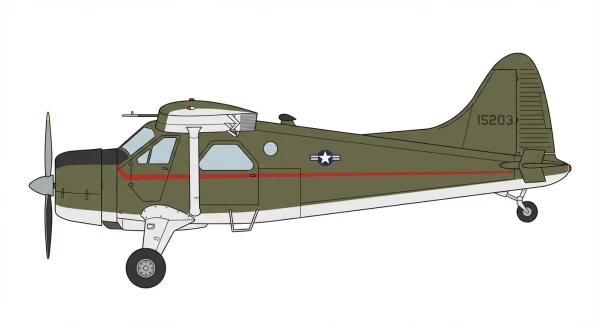
|
|
| Origin country | 🇨🇦 Canada |
| Category | Military Special Mission Aircraft |
| Manufacturer | De Havilland Canada |
| First flight | 16 August 1947 |
| Year introduced | 1948 |
| Number produced | 1657 units |
| Average unit price | $400K |
| American twin-engine airborne early warning and control aircraft, developed in the early 21st century, deployed for tactical battle management and surveillance. | |
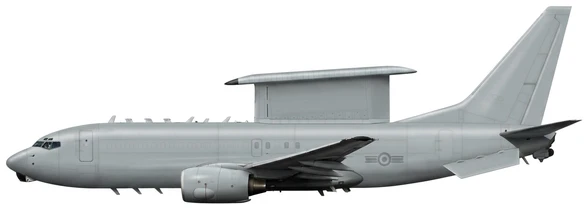
|
|
| Origin country | 🇺🇸 United States |
| Category | Military Special Mission Aircraft |
| Manufacturer | Boeing |
| First flight | 1 January 2004 |
| Year introduced | 2010 |
| Number produced | 15 units |
| Average unit price | $400 million |
| Wing area | 23.0 m² ◉ |
| Wingspan | 15.0 m ◉ |
| Height | 2.7 m ◉ |
| Length | 9.2 m ◉ |
| Maximum speed | 254 km/h ◉ |
| Operational range | 732 km ◉ |
| Service ceiling | 5,486 m ◉ |
| Max. takeoff weight | -- kg |
| Empty weight | 1,361 kg ◉ |
| Total thrust | 1 x 336 kW ◉ |
| Wing area | 91.0 m² ◉ |
| Wingspan | 35.8 m ◉ |
| Height | 12.5 m ◉ |
| Length | 33.6 m ◉ |
| Maximum speed | 853 km/h ◉ |
| Operational range | 6,500 km ◉ |
| Service ceiling | 12,500 m ◉ |
| Max. takeoff weight | 77,600 kg |
| Empty weight | 46,606 kg ◉ |
| Total thrust | 2 x 61 kN ◉ |
Performance Radar Chart
Detailed Comparison
Loading analysis...
Generating comparison analysis...
Unable to generate comparison at this time.
Frequently Asked Questions
Which is faster, the DHC-2 Beaver or E-7 Wedgetail?
The E-7 Wedgetail is faster with a maximum speed of 853 km/h compared to the DHC-2 Beaver's 254 km/h, a difference of 599 km/h.
Which has longer range, the DHC-2 Beaver or E-7 Wedgetail?
The E-7 Wedgetail has a longer range at 6,500 km compared to the DHC-2 Beaver's 732 km.
Which can fly higher, the DHC-2 Beaver or E-7 Wedgetail?
The E-7 Wedgetail has a higher service ceiling at 12,500 meters (41,010 ft) compared to the DHC-2 Beaver's 5,486 meters (17,998 ft).
Which is heavier, the DHC-2 Beaver or E-7 Wedgetail?
The E-7 Wedgetail has a higher maximum takeoff weight at 77,600 kg compared to the DHC-2 Beaver's 0 kg.
Which is larger, the DHC-2 Beaver or E-7 Wedgetail?
The E-7 Wedgetail is longer at 33.6 meters compared to the DHC-2 Beaver's 9.2 meters.
Which is more expensive, the DHC-2 Beaver or E-7 Wedgetail?
The E-7 Wedgetail is more expensive at approximately $400 million per unit compared to the DHC-2 Beaver at $0.4 million.
Which entered service first, the DHC-2 Beaver or E-7 Wedgetail?
The DHC-2 Beaver entered service first in 1948, 62 years before the E-7 Wedgetail which entered service in 2010.
Which has been built in greater numbers, the DHC-2 Beaver or E-7 Wedgetail?
The DHC-2 Beaver has been produced in greater numbers with 1,657 units compared to 15 units of the E-7 Wedgetail.