Grob G-120 vs Tecnam P2002
Grob G-120 vs Tecnam P2002 at a glance — top speed 435 vs 250 km/h, range 1,540 vs 1,092 km, max takeoff weight 1,490 vs 598 kg.
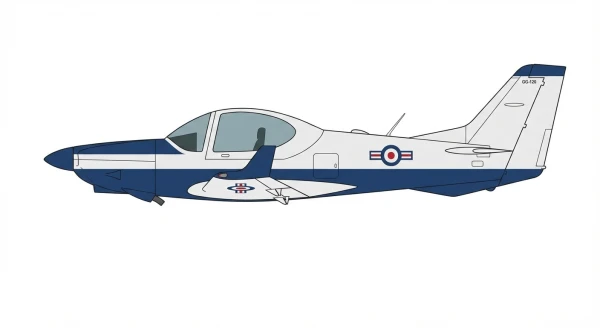
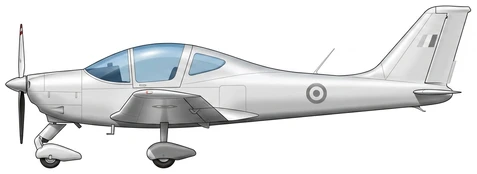
| Grob G-120 | Tecnam P2002 | |
|---|---|---|
| Origin country | 🇩🇪 Germany | 🇮🇹 Italy |
| Category | Military Training Aircraft | Military Training Aircraft |
| Manufacturer | Grob | Tecnam |
| First flight | 1 January 1999 | -- |
| Year introduced | 1999 | 2002 |
| Number produced | 215 units | N/A |
| Average unit price | -- | -- |
| Wing area | 13.3 m² | 11.5 m² |
| Wingspan | 10.2 m | 8.6 m |
| Height | 2.7 m | 2.4 m |
| Length | 8.1 m | 6.6 m |
| Maximum speed | 435 km/h | 250 km/h |
| Operational range | 1,540 km | 1,092 km |
| Service ceiling | 5,486 m | 3,995 m |
| Max. takeoff weight | 1,490 kg | 598 kg |
| Empty weight | 1,080 kg | 331 kg |
| Total thrust | 1 x 194 kW | 1 x 74 kW |
Detailed Comparison
The German-built Grob G-120 and the Italian Tecnam P2002 occupy adjacent but strictly segregated nodes in the modern military pilot training pipeline. While both serve as primary trainers, the carbon-composite G-120 operates as a dedicated military ab-initio and basic trainer, preparing aircrew for high-performance jets. The all-metal P2002, originally a civilian Light Sport Aircraft (LSA), functions exclusively as a low-cost screening tool to filter out candidates before air forces invest in heavy turbine flight hours.
Development and Design
Grob Aircraft developed the G-120 from its G-115TA, prioritizing physiological conditioning and military cockpit familiarization. Its carbon fiber reinforced plastic airframe is stressed to +6/-4g, allowing for sustained aerobatic training. The cockpit layout accommodates students wearing standard-issue G-suits and helmets, integrating HOTAS-style dual thrust levers on specific variants to replicate fast-jet environments.
Conversely, Luigi Pascale designed the Tecnam P2002 in 2002 for the civilian LSA market. The P2002-JF military variant retains the standard all-metal construction and bubble canopy, with a lower structural limit of +6/-3g. Tecnam’s design optimizes for manufacturing simplicity and extreme fuel efficiency using a fixed-pitch propeller, rather than military-grade systems redundancy.
Specifications and Performances
A direct comparison reveals the different operational envelopes dictated by their airframes. The G-120 out-masses the P2002 by nearly a metric ton, with a Maximum Takeoff Weight of 1,490 kg versus the Tecnam's 598 kg. This disparity is matched by powerplant output. The piston-engine G-120A utilizes a 260-hp Lycoming AEIO-540, achieving a top speed of 435 km/h. The P2002 relies on a 98-hp Rotax 912 S2, capping its speed at 250 km/h.
While climb rates are statistically similar (6.5 m/s for the Grob against 6.2 m/s for the Tecnam), the G-120 maintains energy through vertical aerobatic maneuvers. The P2002 bleeds airspeed rapidly during high angle-of-attack profiles, restricting its syllabus strictly to basic aircraft handling.
Deployment and usage
Procurement patterns confirm their split roles. High-budget air arms utilize the G-120 for structured military syllabi:
- The Israeli Air Force operates 17 units (designated "Snunit") to sort fast-jet from transport and helicopter tracks.
- The French Air and Space Force and German Luftwaffe use the airframe to introduce students to formal military airmanship.
- The RCAF contracted KF Defence Programs to train candidates on 14 G-120s before transitioning to the CT-156 Harvard II.
The P2002 is relegated to early candidate screening. The Hellenic Air Force deployed the P2002-JF to Tatoi solely to evaluate spatial orientation and basic air-sickness resistance at a fraction of the cost of operating their heavier T-6A Texan IIs.
Conclusion
The Grob G-120 holds the edge in military ab-initio training. Its aerobatic capability, military-spec cockpit, and +6/-4g envelope adequately bridge the gap between initial flight and advanced turboprop trainers like the PC-21. The Tecnam P2002 wins only on cost-per-flight-hour. It is strictly a financial asset for air forces needing a cheap screening filter, lacking the kinetic energy, instrumentation, and structural fatigue life required to train a combat pilot.