Orlan-10 vs ZALA Lancet
Orlan-10 vs ZALA Lancet at a glance — top speed 150 vs 300 km/h, range 110 vs 40 km, max takeoff weight 16 vs 12 kg, built 1,000 vs 6,000 units.
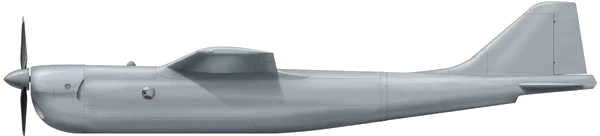
| Orlan-10 | ZALA Lancet | |
|---|---|---|
| Origin country | 🇷🇺 Russia | 🇷🇺 Russia |
| Category | Military Drones | Military Drones |
| Manufacturer | STC | ZALA Aero |
| First flight | 1 January 2011 | 1 June 2019 |
| Year introduced | 2011 | 2020 |
| Number produced | 1000 units | 6000 units |
| Average unit price | $50K | $37K |
| Wingspan | 3.1 m | 2.4 m |
| Length | 2.0 m | 1.7 m |
| Maximum speed | 150 km/h | 300 km/h |
| Operational range | 110 km | 40 km |
| Service ceiling | 5,000 m | 5,000 m |
| Max. takeoff weight | 16 kg | 12 kg |
| Empty weight | 9 kg | 5 kg |
Detailed Comparison
Russian ground forces doctrine integrates the Orlan-10 and ZALA Lancet as complementary nodes in a reconnaissance-strike loop. The Orlan-10 acts as a persistent intelligence, surveillance, and reconnaissance (ISR) and artillery spotting platform, relying on an internal combustion engine for endurance. The ZALA Lancet functions as an electrically powered loitering munition, designed for terminal strikes against tactical armor, air defense, and artillery systems.
Development and Design
The Orlan-10, developed by the Special Technology Center (STC) in 2011, relies heavily on Commercial Off-The-Shelf (COTS) components to maintain a unit cost of $50,000. It utilizes a Japanese Saito FA-62B glow fuel engine alongside consumer-grade Canon EOS cameras and Lynred thermal imagers. This architecture prioritizes mass production and cost-efficiency over survivability.
ZALA Aero’s Lancet, introduced in 2019 at approximately $35,000 per unit, operates as an expendable precision-guided munition. The Lancet integrates Western microelectronics—specifically NVIDIA Jetson TX2 modules and Xilinx Zynq SoCs—for terminal phase optical-electronic guidance. Its electric motor and catapult launch system generate lower acoustic and thermal signatures compared to the combustion-powered Orlan-10.
Specifications and Performances
The performance metrics dictate their distinct operational envelopes:
- The Orlan-10’s combustion engine provides up to 16 hours of endurance, enabling prolonged observation at 1,000 to 1,500 meters altitude over a 110 km radius.
- The Lancet is restricted by its battery capacity to a maximum one-hour endurance but accelerates to 300 km/h during its terminal dive, double the Orlan-10's 150 km/h top speed.
- The Lancet allocates up to 5 kg of its 12 kg maximum takeoff weight to modular warheads (HEAT, HE-fragmentation, thermobaric), whereas the 16 kg Orlan-10 dedicates its 6 kg payload to ISR arrays or electronic warfare suites, such as the Moskit variant.
Recent Lancet strikes on Dolgintsevo airfield confirmed an extended operational radius of at least 70 km, upgrading its baseline 40 km reach.
Deployment and usage
In the Russo-Ukrainian War, the integration of these platforms defines Russian tactical targeting. The Orlan-10 operates in pairs or triads to identify targets and relay coordinates to artillery batteries or Lancet operators. Combat data indicates high attrition rates for the Orlan-10 due to MANPADS and electronic warfare, but its low production cost enables rapid replacement.
The Lancet executes the terminal phase of this kill chain. Open-source data recorded 1,163 Lancet strikes by February 2024, prioritizing Ukrainian M777 howitzers, S-300 batteries, and CAESAR self-propelled artillery. Defensive adaptations against the Lancet consist primarily of physical barriers, including wire mesh screens, and interception by first-person view (FPV) drones.
Conclusion
For operational continuity and theater-wide situational awareness, the Orlan-10 is the superior platform. Its 16-hour endurance makes it the exact tool required for sustaining the artillery-centric Russian doctrine, maintaining persistent overwatch that a battery-powered drone cannot match. However, for immediate counter-battery fire and eliminating time-sensitive, entrenched targets, the Lancet holds the definitive edge. When layered air defenses preclude traditional close air support, the Lancet provides a localized, terminal precision strike mechanism that the Orlan-10 cannot deliver, even in its experimental armed iterations.

