ZALA Lancet
Russian loitering munition and unmanned aerial vehicle, developed in the late 2010s, utilized for reconnaissance and precision strike operations in modern conflicts. Key figures: top speed 300 km/h, range 40 km, service ceiling 5,000 m, max takeoff weight 12 kg, unit price $0.037M, built 6,000.
| Length | 1.7 m (5.6 ft) |
| Wingspan | 2.4 m (7.9 ft) |
| Empty weight | 5 kg (11 lbs) |
| Max. takeoff weight | 12 kg (26 lbs) |
| Powerplant | 1 × Electric motor |
| Maximum speed | 300 km/h (186 mph) |
| Operational range | 40 km (25 mi) |
| Endurance | 1 hours |
| Service ceiling | 5,000 m (16,404 ft) |
- Guided Bomb High Explosive (HE)
- Guided Bomb HE-fragmentation
- Guided Bomb Shaped charge
- Guided Bomb High-explosive anti-tank (HEAT)
- Guided Bomb Thermobaric
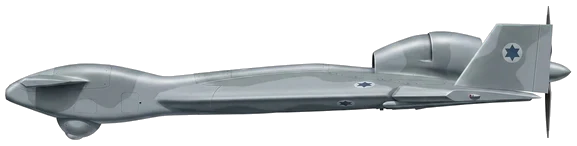
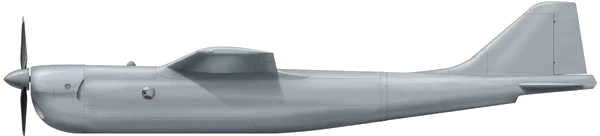

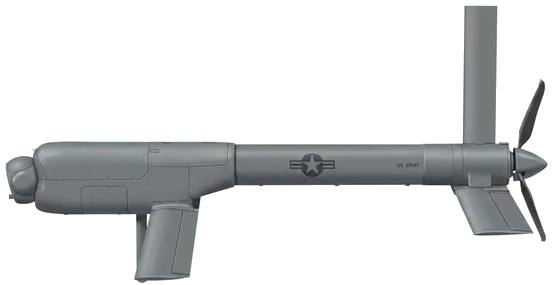
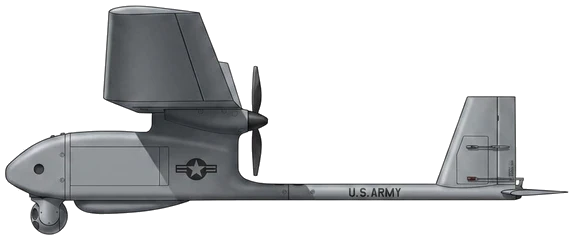
Description
The ZALA Lancet, designated Item 52 and Item 51, is a loitering munition and unmanned aerial vehicle (UAV) developed by ZALA Aero Group, a subsidiary of Kalashnikov Concern. First unveiled at the ARMY-2019 military expo, the system is a further development of the ZALA Kub-BLA. Production takes place in a dedicated facility that expanded capacity in 2023. Unit cost is estimated at 3 million rubles (approximately $35,000).
Design
The Lancet is powered by an electric motor and launched via catapult from ground or maritime platforms, such as Raptor-class patrol boats. A portable, single-person launcher entered series production in early 2026. The aircraft features optical-electronic and TV guidance for terminal phase control. Avionics integrate Western electronic components, including the NVIDIA Jetson TX2 module for control and Xilinx Zynq SoC for programmable logic. Communications utilize radio frequencies in the 868-870 MHz and 902-928 MHz bands, employing two primary channels and a reserve frequency to resist jamming. The airframe supports a maximum takeoff weight (MTOW) of 12 kg and can operate in an "air mining" role, diving at 300 km/h to strike enemy UCAVs mid-flight.
Armament
Armament consists of high explosive (HE), HE-fragmentation, shaped charge (HEAT), or thermobaric warheads. Payload capacity varies by version, ranging from 1 kg to over 5 kg.
Operational History
Operational testing began in Syria in November 2020, including strikes against targets in Idlib in April 2021. The Russian Armed Forces deployed the Lancet during the 2022 invasion of Ukraine, where it was utilized for precision strikes against high-value military assets. Documented targets include S-300 and Buk-M1 air defense systems, M777 and FH70 howitzers, and self-propelled artillery such as the M109, AHS Krab, and CAESAR. Naval operations include a November 2022 strike on a Gyurza-M-class gunboat. Although initially specified with a 40 km range, a September 2023 strike on a MiG-29 at Dolgintsevo airfield confirmed an operational radius of at least 70 km. By February 28, 2024, open-source data recorded 1,163 Lancet strikes, resulting in 363 destroyed and 615 damaged targets. Countermeasures employed against the system include wire mesh cages, inflatable decoys, and interception by FPV drones. Russia authorized the system for export in February 2026.
Variants
- Lancet-1: A light variant with a 1 kg payload, 5 kg MTOW, and 30-minute endurance.
- Lancet-3: The standard larger variant featuring a 3 kg payload, 12 kg MTOW, and 40-minute endurance.
- Izdeliye-53: An upgraded version featuring a four-cell tube launcher and autonomous target selection capabilities.
- Izdeliye-51: An enhanced version with a one-hour flight endurance and a warhead exceeding 5 kg.
- Izdeliye-52: A modernized version of the 3 kg payload variant equipped with an updated EO guidance system.
Frequently Asked Questions
What type of aircraft is the ZALA Lancet?
What is the maximum speed of the ZALA Lancet?
What is the range of the ZALA Lancet?
When did the ZALA Lancet first fly?
How many ZALA Lancet have been built?
Which countries operate the ZALA Lancet?
How much does a ZALA Lancet cost?
What is the service ceiling of the ZALA Lancet?
- MAR 282026 Created Page created: ZALA Lancet