Akula vs Los Angeles
Akula vs Los Angeles at a glance — displacement 8,140 vs 6,082 tons, length 110 vs 110 m, speed 10 vs 15 knots, crew 73 vs 129.
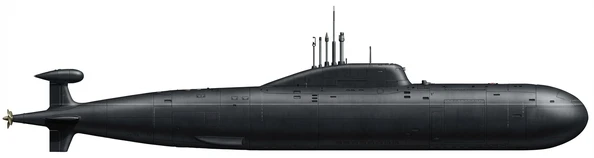
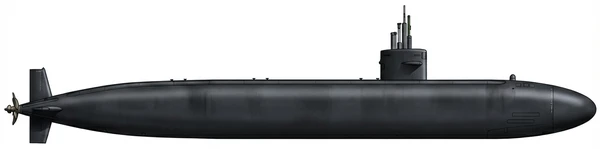
| Akula | Los Angeles | |
|---|---|---|
| Origin | 🇷🇺 Ex-USSR | 🇺🇸 United States |
| Category | Submarine | Submarine |
| Type | Nuclear-powered attack submarine | Nuclear-powered attack submarine |
| Manufacturer | Komsomolsk-on-Amur | Newport News Shipbuilding |
| Year introduced | 1984 | 1976 |
| Number built | 15 units | 62 units |
| Estimated unit price | $1,550 million | $900 million |
| Displacement | 8,140 tons | 6,082 tons |
| Maximum speed | 10.0 knots | 15.0 knots |
| Range | Unlimited | Unlimited |
| Length | 110.3 m | 110.0 m |
| Beam | 13.6 m | 10.0 m |
| Crew | 73 | 129 |
| Max depth | 600 m | 450 m |
| Akula | Los Angeles | |
|---|---|---|
| Armament |
|
|
| Propulsion | one 190 MW OK-650B/OK-650M pressurized water nuclear reactor, 1 OK-7 steam turbine 43,000 hp (32 MW), 2 OK-2 Turbo generators producing 2 MW, 1 seven-bladed propeller, 2 OK-300 retractable electric propulsors | 1 × S6G nuclear reactor (150–165 MW), 2 × steam turbines (30,000–33,500) shp, 1 × shaft, 1 × secondary propulsion motor 325 hp (242 kW) |
Detailed Comparison
The Los Angeles class (Project 688) and the Akula class (Project 971 Shchuka-B) constitute the primary nuclear attack submarine (SSN) platforms for the United States Navy and the Russian Navy, respectively, during the late Cold War and post-Soviet periods. Commissioned in 1976, the Los Angeles class was produced in large numbers to support carrier battle groups. The Akula class, entering service in 1984, introduced fourth-generation characteristics to Soviet naval architecture, specifically targeting acoustic signature reduction.
Development and Design
The Los Angeles class utilizes a single-hull design with a submerged displacement of 6,927 tons. Construction spanned 62 units across three flights, with Flight 688i incorporating bow planes and improved ice capabilities. In contrast, the Akula class employs a double-hull configuration, separating the pressure hull from the outer light hull. This design results in a significantly larger submerged displacement of 12,770 tons and higher reserve buoyancy. While hull lengths are comparable at approximately 110 meters, the Akula is wider (13.6m vs 10.0m). Akula production was limited to 15 units, incorporating imported nine-axis milling technology for propeller manufacturing to reduce cavitation noise.
Weapons and Sensors
The Los Angeles class is armed with four 533mm torpedo tubes. Flight II and 688i variants integrated a 12-tube Vertical Launch System (VLS) for Tomahawk cruise missiles, separate from the 37-weapon internal magazine. The Akula class lacks a VLS but possesses heavier tube armament: four 533mm and four 650mm tubes. This configuration accommodates larger ordnance, including Type 65 torpedoes and multiple anti-ship/anti-submarine missile types (RPK-2, RPK-6, RPK-7), with a total internal load of 40 weapons. Akula units also deploy Igla-M SAMs and Kalibr cruise missiles. Sensor suites differ fundamentally; the U.S. platform relies on the BQQ-5/10 sonar complex, while the Akula incorporates the SOKS wake detection system to track thermal and salinity variance.
Propulsion and Performance
Propulsion for the Los Angeles class is provided by a 165 MW S6G reactor, achieving a listed submerged speed of 25.0 knots. The Akula utilizes a 190 MW OK-650 series reactor, driving the vessel to 35.0 knots submerged. The double-hull steel construction of the Soviet vessel allows for a maximum depth of 600 meters, 150 meters deeper than the Los Angeles class limit of 450 meters. Automation in the Akula design reduced the crew requirement to 73, compared to 129 personnel on the American submarine. The Akula also features retractable electric propulsors for low-speed maneuvering.
Deployment and Combat Record
The Los Angeles class has served exclusively with the United States, conducting strike operations in multiple theaters. The Akula class is operated by Russia and India (via lease of the INS Chakra). Operational history includes the 1996 detection of a U.S. ballistic missile submarine by the Akula-class Tigr and patrols off the U.S. coast in 2009 and 2012. Safety records vary; the USS Miami was lost to arson during overhaul, while the Akula-class Nerpa suffered 20 fatalities due to accidental fire suppression activation during trials.
Conclusion
The Los Angeles class prioritizes fleet integration and land-attack volume through VLS and high production numbers. The Akula class emphasizes individual platform performance, possessing greater diving depth, higher submerged speed, and larger caliber torpedo tubes. While the Los Angeles maintains a lighter displacement and larger crew complement, the Akula leverages a larger displacement and automation to achieve kinetic advantages in ship-to-ship engagement scenarios.