Type 093 vs Type 094
Type 093 vs Type 094 at a glance — displacement 6,000 vs 8,000 tons, length 108 vs 135 m, speed 15 vs 20 knots, crew 100 vs 140.
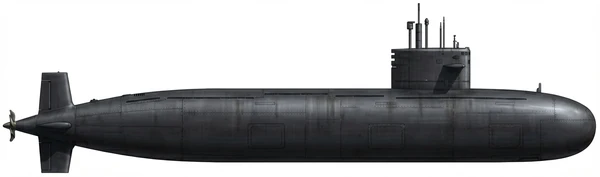
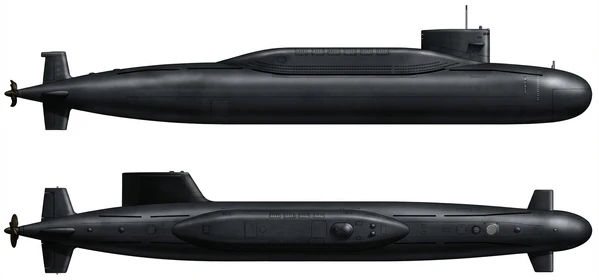
| Type 093 | Type 094 | |
|---|---|---|
| Origin | 🇨🇳 China | 🇨🇳 China |
| Category | Submarine | Submarine |
| Type | Nuclear-powered attack submarine | Nuclear-powered ballistic missile submarine |
| Manufacturer | Bohai Shipyard | Bohai Shipyard |
| Year introduced | 2006 | 2007 |
| Number built | 14 units | 6 units |
| Estimated unit price | NA | $750 million |
| Displacement | 6,000 tons | 8,000 tons |
| Maximum speed | 15.0 knots | 20.0 knots |
| Range | Unlimited | Unlimited |
| Length | 108.5 m | 135.0 m |
| Beam | 11.0 m | 13.0 m |
| Crew | 100 | 140 |
| Max depth | 400 m | 400 m |
| Type 093 | Type 094 | |
|---|---|---|
| Armament |
|
|
| Propulsion | 2 x 70-75 megawatt pressurized water nuclear reactors, 1 x pump-jet (Type 093B) | Nuclear, 1 shaft |
Detailed Comparison
The People's Liberation Army Navy (PLAN) relies on the Type 093 and Type 094 classes for its modern nuclear submarine fleet. Built concurrently at the Bohai Shipyard, these vessels execute completely different doctrines: the Type 093 (Shang-class) serves as the fast attack and cruise missile platform, while the Type 094 (Jin-class) constitutes China's first credible sea-based nuclear deterrent.
Development and Design
Originating in the 1990s with Russian design assistance, the Type 093 displaced 6,675 tons submerged and underwent continuous iterative modifications to address acoustic flaws. The fleet expanded from the baseline 093 to the 093A (adding a towed array and redesigned sail) and the heavily modified 110-meter 093B. The 11,000-ton Type 094 utilizes the Type 093's propulsion and acoustic baseline but inserts a large missile compartment behind the sail. This structural addition creates a prominent hump, increasing hydrodynamic drag and acoustic signatures.
Weapons and Sensors
The platforms diverge entirely in armament:
- The Type 093 mounts six 533mm tubes for Yu-6 torpedoes and YJ-18 anti-ship missiles. The latest 093B variant integrates a 24-cell vertical launch system (VLS) for land-attack cruise missiles.
- The Type 094 carries 12 submarine-launched ballistic missiles (SLBMs).
The Type 094 fleet initially deployed with the 7,200km-range JL-2, requiring the submarines to transit into the open Pacific to target the continental United States. By 2022, the PLAN rearmed the Type 094s with the 10,000km-range JL-3, enabling strikes on the US mainland from coastal Chinese waters.
Propulsion and Performance
Both classes utilize pressurized water reactors, but the Type 093 achieves superior tactical mobility and stealth. The 093 reaches 30 knots submerged, and the 093B variant introduces a pump-jet propulsor alongside advanced pneumatic isolation mounts. The Type 094's acoustic profile remains a severe vulnerability. US Office of Naval Intelligence assessments characterize the Type 094 as noisier than late-1970s Soviet Delta III SSBNs, limiting its survivability outside protected waters.
Deployment and Combat Record
The Type 094 fleet initiated continuous nuclear deterrence patrols in December 2015. Due to their acoustic vulnerability, PLAN doctrine confines these SSBNs to the South China Sea "bastion," shielded by artificial island bases and surface fleets. Conversely, Type 093s execute hunter-killer and anti-surface patrols beyond the First Island Chain, routinely tracking US and Japanese surface groups in the Philippine Sea and conducting deployments into the Indian Ocean.
Conclusion
The Type 093B holds a decisive edge in tactical utility and survivability. Its integration of a pump-jet and 24-cell VLS provides the PLAN with a stealthy, long-range conventional strike asset capable of penetrating contested waters. The Type 094 functions adequately as a strategic deterrent but fails as an independent stealth platform. Bound to the South China Sea bastion by its high acoustic signature, the Type 094 relies entirely on the geographic and military protection of the broader PLAN surface and air fleets to survive a conflict.