Curaçao Military Forces
Curaçao has no standing army and no nuclear weapons.
Country File
| Population | 156K (2025) |
| GDP | $3.6 billion (2024) |
| GDP per capita | $22,790 |
| Inflation rate | 2.62% (2019) |
| Capital | Willemstad |
| Region | America |
| Land area | 444 km² |
| Coastline | 364 km |
| Currency | ANG |
Strategic Overview in 2026
Strategic Position
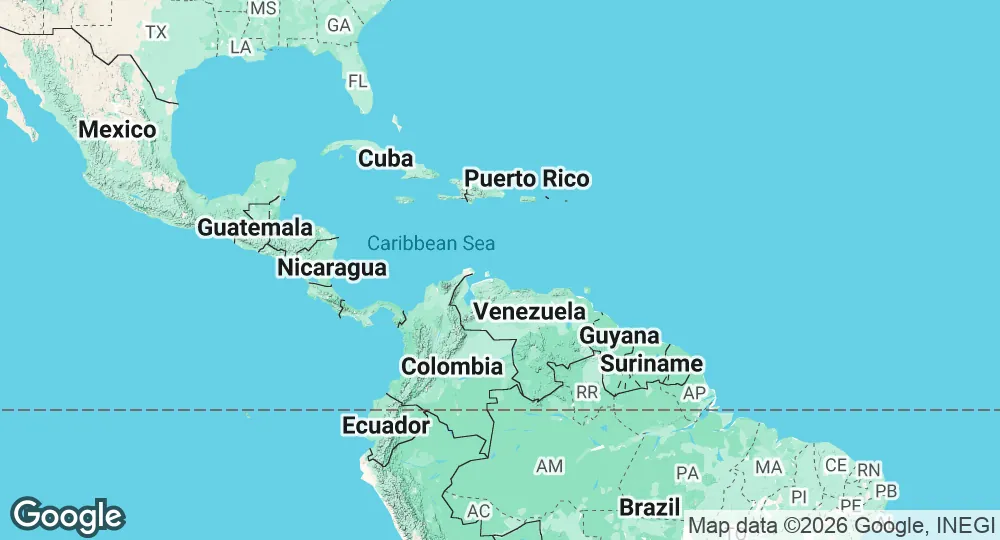
Curaçao is a constituent country of the Kingdom of the Netherlands, which retains sovereign responsibility for the island's defense and foreign policy. Located approximately 65 kilometers off the coast of Venezuela, the island serves as the primary operational hub for the Commander Netherlands Forces in the Caribbean (COMNLFORCAS), who also functions as the Director of the Dutch Caribbean Coast Guard (DCCG).
The primary security concerns center on regional instability, specifically the socio-political crisis in Venezuela. In early 2026, the geopolitical environment became more complex following U.S. military actions in the region under Operation Southern Spear. While the Kingdom of the Netherlands maintains a long-standing defense relationship with the United States, including a bilateral agreement for a Cooperative Security Location (CSL)—formerly known as a Forward Operating Location (FOL)—at Hato International Airport, Dutch policy in 2026 has shifted to prioritize legal proportionality and sovereignty.
The Kingdom is a member of NATO, though the North Atlantic Treaty’s Article 5 collective defense provisions do not formally extend to the Caribbean territories. Defense policy is governed by the Kingdom Act on the Coast Guard and various bilateral treaties, including counter-narcotics agreements with the United States and regional partners through Joint Interagency Task Force South (JIATF-S).
Military Forces
The military presence in Curaçao is comprised of permanent Dutch Caribbean units and rotating elements from the Royal Netherlands Navy, Army, and Marine Corps. Total Dutch military personnel in the Caribbean region is approximately 1,000, with a major concentration at the Parera and Suffisant naval bases in Curaçao.
Royal Netherlands Navy and Marine Corps The Navy maintains a permanent presence through a station ship, typically a Holland-class ocean-going patrol vessel (OPV), and the strategic support vessel HNLMS Pelikaan. These assets are supported by a detachment of the Netherlands Marine Corps, which maintains amphibious and raiding capabilities. Specialized units include a Fast Raiding Interception and Special Forces Craft (FRISC) troop.
Royal Netherlands Army The Army maintains a rotating presence in Curaçao, typically a company-sized element that cycles every four months. In 2025 and early 2026, this has included the 11th Engineer Company, providing specialized capabilities in explosive ordnance disposal (EOD) and terrain conditioning to support regional security and disaster relief operations.
Curaçao Militia (ARMIL) The Curaçao Militia is a local force responsible for the security of military installations and supporting civil authorities during emergencies. It operates under the functional command of COMNLFORCAS.
Dutch Caribbean Coast Guard (DCCG) The DCCG is a joint organization serving the entire Caribbean part of the Kingdom. It operates a fleet of Damen Stan Patrol cutters, Metal Shark 38 Defiant interceptors, and high-speed inshore boats. Its aerial component, based at Hato, includes Dash-8 maritime patrol aircraft and AW139 helicopters.
Air Presence and ISR The Royal Netherlands Air Force manages Hato Air Base, which hosts Dutch MQ-9 Reaper Unmanned Aerial Vehicles (UAVs) for Intelligence, Surveillance, and Reconnaissance (ISR). The base also accommodates U.S. Air Force and Coast Guard aircraft, including E-3 Sentry AWACS and P-3 Orion patrol planes, under the CSL agreement.
Strategic Trends
In 2026, the Dutch government adjusted its Caribbean defense posture by distancing itself from U.S.-led lethal interdiction operations in international waters. This policy shift followed the intensified U.S. campaign against Venezuelan-linked maritime targets. Dutch forces now confine counter-narcotics participation to missions within territorial waters or those adhering strictly to international law and non-lethal apprehension protocols.
Modernization of the DCCG is a priority through 2026. This includes the transition from AW139 helicopters to AW189 rotorcraft to enhance search-and-rescue and pursuit capabilities. Additionally, a program to upgrade shore-based radar chains across the Dutch Caribbean is underway, with the first hurricane-proof installations scheduled for 2026.
Defense spending for the Kingdom has moved toward 2% of GDP, facilitating increased readiness and the deployment of advanced ISR assets like the MQ-9 Reaper Block 5 to the Caribbean. Operational focus has transitioned from general maritime security to a high-readiness border security posture, driven by the requirement to monitor Venezuelan military movements and manage potential mass migration events. Internal challenges include the recruitment of specialized personnel for expanded Coast Guard roles within the local labor market.
Military Expenditure: information from the Stockholm International Peace Research Institute (SIPRI) Military Expenditure Database. Last updated on 25 September 2026. Suggest a change
Frequently Asked Questions
Does Curaçao have nuclear weapons?
- SEP 252026 Updated Population added for 2025; population and GDP series revised
- JUN 162026 Updated Economic and demographic series refreshed (3 yearly records)
- JAN 132026 Updated Description added