Papua New Guinea Military Forces
Papua New Guinea ranks #151 of 170 militaries worldwide in 2026, with 3,600 active troops. The Air Force flies 3 aircraft. Papua New Guinea has no nuclear weapons.
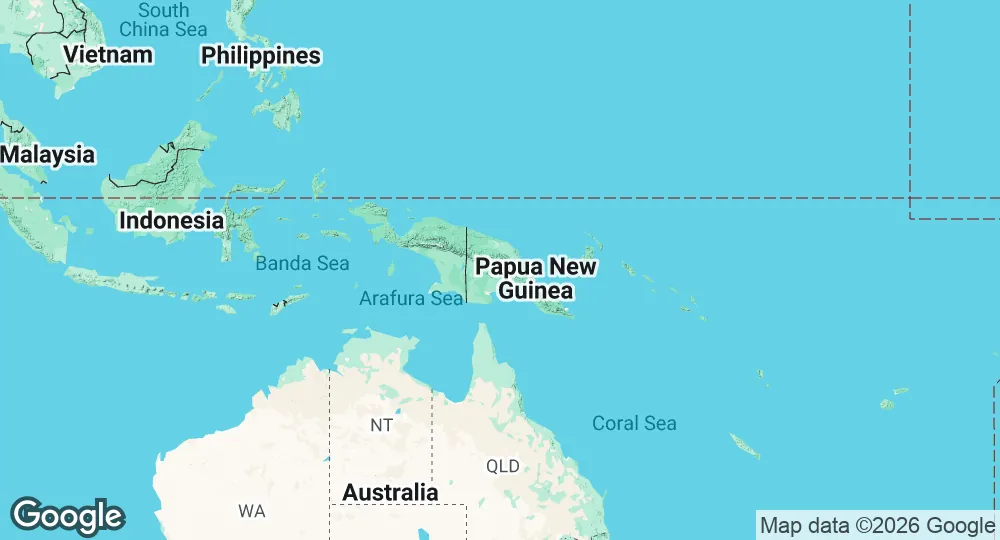
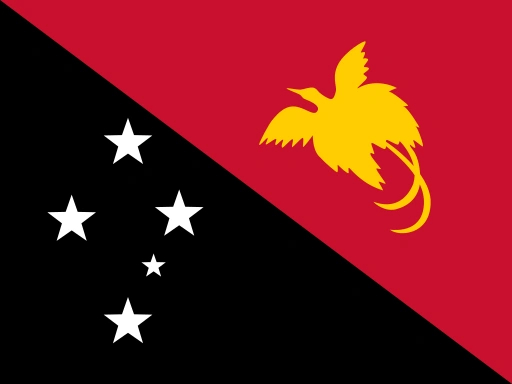
Armed Forces in 2026
| Domain | Strength | Composition |
|---|---|---|
| Papua New Guinea Air Wing | 3 aircraft | |
| Personnel | 3,600 active |
ATLAS Index (Aggregate Total of Land, Air and Sea strength)
Full ranking →| Pillar | Weight | Score | Basis |
|---|---|---|---|
| Manpower | 10% | 17.4 | Active, reserve & paramilitary personnel |
| Ground forces | 20% | 0.0 | ARMS inventory power: armour & artillery by type and era, attack helicopters, armament |
| Naval power | 20% | 0.0 | SEAS inventory power: hulls by type, size and era, air wing, sustainment, armament |
| Air power | 25% | 10.7 | AIRS inventory power: aircraft by type and generation, enablers, armament |
| Nuclear deterrent | 10% | 0.0 | No declared nuclear capability |
| Defense budget | 15% | 10.1 | Annual spending, purchasing-power adjusted |
| Availability | modifier | ground ×0.80 · naval ×1.00 · air ×0.95 | Budget per point of each force, from the branch indexes |
Country File
| Population | 10.8M (2025) |
| GDP | $32.5 billion (2025) |
| GDP per capita | $3,020 |
| Military budget | $95M (2024) |
| Share of GDP | 0.3% (2024) |
| Military spending per capita | $9 (2024) |
| Inflation rate | 4.42% (2025) |
| Capital | Port Moresby |
| Region | Oceania |
| Land area | 452,860 km² |
| Coastline | 5,152 km |
| Land borders | 820 km |
| Bordering countries | 1 |
| Currency | PGK |
Strategic Overview in 2026
Strategic Position
Papua New Guinea occupies a central role in the security architecture of the Southwest Pacific, maintaining a defense posture focused on territorial integrity, maritime sovereignty, and internal stability. The primary security concerns for the state include the management of porous land borders, the protection of vast maritime exclusive economic zones from illegal, unreported, and unregulated (IUU) fishing, and the mitigation of internal civil unrest, particularly in the Autonomous Region of Bougainville and the Highlands.
The nation’s defense policy is defined by its relationships with Australia and the United States. In October 2025, Papua New Guinea and Australia signed the Pukpuk Treaty, a mutual defense pact that elevates the bilateral relationship to an alliance level. This agreement mandates that both nations consult and act in the event of an armed attack on either party. It also facilitates deep integration between the two militaries, including the potential for personnel to serve within each other’s forces and a pathway for Papua New Guinean citizens to join the Australian Defence Force.
The bilateral Defense Cooperation Agreement with the United States remains a cornerstone of the national strategy in 2026. This agreement grants U.S. forces access to several key ports and airports, including the Lombrum Naval Base on Manus Island. These facilities are utilized for joint training, disaster response, and maritime surveillance. Regionally, Papua New Guinea maintains a policy of "friend to all, enemy to none," though its strategic alignment has shifted toward closer integration with Western security partners to counter regional geopolitical competition and improve domestic military capacity.
Military Forces
The Papua New Guinea Defence Force (PNGDF) is a joint military organization under the command of a Rear Admiral, with its headquarters at Murray Barracks in Port Moresby. The force is currently transitioning its organizational structure to establish more distinct service branches—Army, Navy, and Air Force—pending a comprehensive review of the Defense Act in 2026.
Personnel Active personnel numbers are approximately 4,000, though the government has established a directive to expand the force to 7,000 active members and 3,000 reserves by 2027. Recruitment has been modernized in 2025 and 2026 through the introduction of a digital portal to streamline intake and reduce administrative bottlenecks.
Land Element The Land Element is the largest component, organized around three light infantry battalions of the Royal Pacific Islands Regiment (RPIR). These units are based in Port Moresby, Wewak, and a newly planned location in Hela Province. Supporting units include an engineer battalion, a signal squadron, and a preventive medicine platoon. Equipment consists primarily of small arms and light vehicles, with a program currently underway to standardize service rifles with Australian-made combat rifles.
Maritime Element The Maritime Element focuses on coastal patrol and sovereignty protection. It maintains a fleet of Guardian-class patrol boats, provided through the Australian Pacific Patrol Boat Program, and several landing craft for amphibious transport and logistical support. The force operates primarily out of the modernized Lombrum Naval Base and the Basilisk Naval Base.
Air Element The Air Element is a specialized wing tasked with transport, medical evacuation, and surveillance. It operates light transport aircraft, including the PAC-750XL and CN-235, along with a small number of rotary-wing assets. A priority for 2026 is the establishment of a joint Air Wing to improve interoperability and disaster response capabilities. Pilot and aircrew training is heavily supported by the Australian "Flights of Excellence" program, which trains a cohort of PNGDF pilots annually.
Strategic Trends
The PNGDF is undergoing a significant transformation guided by a 20-year roadmap announced in 2025. This strategy emphasizes self-reliance, modernization of infrastructure, and the restoration of internal logistical capabilities to reduce dependence on external contractors. Key procurement and development priorities for 2026 include the upgrading of barracks, the expansion of armories, and the enhancement of digital command-and-control systems.
Defense spending is approximately 0.3% of GDP, with the 2025 national budget allocating roughly $109 million to the sector. However, the force’s operational capacity is substantially augmented by foreign investment. The United States has committed to a 10-year infrastructure and training package valued at over $800 million, while Australia provides significant annual bilateral assistance for training, equipment maintenance, and the construction of new military facilities.
Future force structure shifts include the activation of a formal Reserve Force and the introduction of a National Volunteer Service, modeled on international civilian-military reserve programs. Challenges remain, particularly regarding funding constraints and the need for stricter disciplinary standards within the ranks. The 2026 review of the Defense Act is expected to provide the legal framework necessary for the planned expansion of personnel and the full reorganization of the service branches.
Military Expenditure: CIA World Factbook. Last updated on 25 September 2026. Suggest a change
Frequently Asked Questions
How large is Papua New Guinea's military?
What is Papua New Guinea's defense budget?
How does Papua New Guinea rank militarily in the world?
Does Papua New Guinea have nuclear weapons?
How many aircraft does Papua New Guinea's air force have?
What percentage of GDP does Papua New Guinea spend on defense?
What is Papua New Guinea's military personnel per capita?
- SEP 252026 Updated Population, GDP and inflation added for 2025; GDP series revised
- AUG 42026 Updated Global Military Index updated in a site-wide editorial pass
- JUL 162026 Updated Global Military Index updated in a site-wide editorial pass
- JUN 162026 Updated Yearly statistics, military spending and 2 more fields updated
- JAN 132026 Updated Description added