Sierra Leone Military Forces
Open-source order of battle for 2026: 8,500 active troops, 1 aircraft.
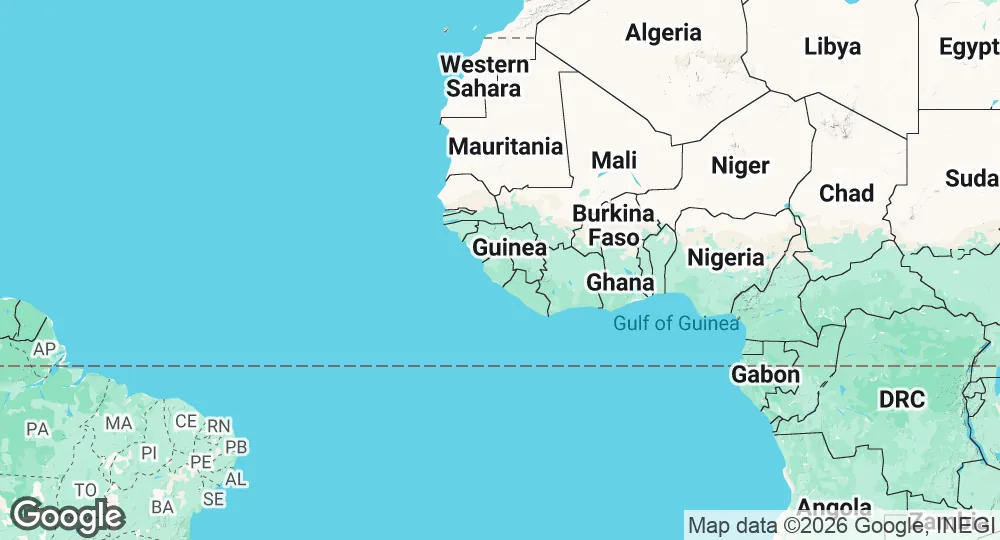
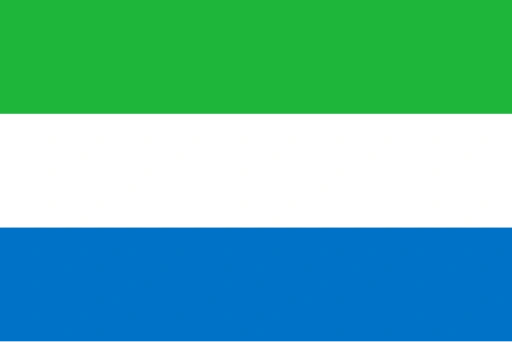
Armed Forces in 2026
| Domain | Strength | Composition |
|---|---|---|
| Sierra Leone Defence Force Air Force | 1 aircraft | 1 helicopters |
| Personnel | 8,500 active |
Global Military Index
Full ranking →| Pillar | Weight | Score | Basis |
|---|---|---|---|
| Manpower | 15% | 44.8 | Active, reserve & paramilitary personnel |
| Ground forces | 20% | 0.0 | Tanks, armor & artillery weighted by type |
| Naval power | 20% | 0.0 | Weighted by hull type: carrier tiers, nuclear vs conventional submarines |
| Air power | 25% | 2.8 | Weighted by aircraft type and fleet age |
| Nuclear deterrent | 10% | 0.0 | No declared nuclear capability |
| Defense budget | 10% | 11.6 | Annual spending, purchasing-power adjusted |
| Readiness | modifier | ×0.85 | Budget per soldier: proxy for training, maintenance & technology |
Country File
| Population | 8.6M (2024) |
| GDP | $7.0 billion (2024) |
| GDP per capita | $807 |
| Military budget | $35M (2024) |
| Share of GDP | 0.5% (2024) |
| Military spending per capita | $4 (2024) |
| Inflation rate | 28.63% (2024) |
| Capital | Freetown |
| Region | Africa |
| Land area | 71,620 km² |
| Coastline | 402 km |
| Land borders | 958 km |
| Bordering countries | 2 |
| Currency | SLL |
Strategic Overview in 2026
Strategic Position
Sierra Leone maintains a defensive posture focused on internal stability, maritime security, and regional cooperation within West Africa. The country is a member of the Economic Community of West African States (ECOWAS) and the Mano River Union (MRU). Since June 2025, Sierra Leone has held the chairmanship of ECOWAS, emphasizing regional security cooperation and the restoration of constitutional order in neighboring states.
The primary security concerns involve the management of porous borders with Guinea and Liberia, particularly regarding the long-standing border dispute over the town of Yenga. Additionally, the government prioritizes the mitigation of maritime threats, including illegal, unreported, and unregulated (IUU) fishing, piracy, and drug trafficking in the Gulf of Guinea.
Bilateral defense relations are most established with the United Kingdom and the United States. In September 2025, Sierra Leone signed an Acquisition and Cross Servicing Agreement (ACSA) with the United States Africa Command (AFRICOM), facilitating logistical support, joint training, and disaster response. The Republic of Sierra Leone Armed Forces (RSLAF) also maintains a State Partnership Program with the Michigan National Guard, focusing on professional military education and vehicle fleet management. Following internal unrest in late 2023, the ECOWAS Security Mission in Sierra Leone (ECOMIFOR) was deployed to provide stabilization support, a mission that continues to influence the national defense architecture through 2025 and 2026.
Military Forces
The Republic of Sierra Leone Armed Forces (RSLAF) is a unified force under the Ministry of Defence, with the President serving as Commander-in-Chief. The professional head of the military is the Chief of Defence Staff. The RSLAF comprises approximately 11,000 active personnel across three primary branches: the Army, the Navy, and the Air Wing.
Army
The Army is the dominant branch and is organized into several regional infantry brigades:
-
3rd Infantry Brigade: Headquartered at Murray Town Barracks, Freetown (Western Region).
-
4th Infantry Brigade: Headquartered at Teko Barracks, Makeni (Northern Region).
-
2nd Infantry Brigade: Headquartered in Kenema (Eastern Region).
-
5th Infantry Brigade: Headquartered at Gondama Barracks, Bo (Southern Region).
-
15th Infantry Battalion: Based at Lungi (North-Western Region).
The Army operates a fleet of aging Soviet-era and Western-sourced armored vehicles, including BTR-60 and BTR-80 armored personnel carriers, and Casspir mine-resistant ambush protected (MRAP) vehicles. Infantry units are primarily equipped with small arms such as AK-47, FN FAL, and Heckler & Koch G3 rifles. Specialist units utilize L85 bullpup rifles.
Navy
The Navy is responsible for patrolling the Exclusive Economic Zone (EEZ) and conducting search and rescue operations. It operates several small patrol craft, including Shanghai-class boats and high-speed interceptors provided by international partners. The force focuses on littoral operations and coastal surveillance to protect maritime resources.
Air Wing
The Air Wing maintains a limited inventory of utility and transport aircraft. While the RSLAF has historically operated Mi-24 and Mi-8 helicopters, current operational capacity is restricted. Modernization efforts involve the integration of light utility helicopters and the establishment of an unmanned aerial vehicle (UAV) capability.
Strategic Trends
The RSLAF is currently undergoing a modernization program centered on technological upgrades and personnel expansion. For the 2026 fiscal year, the Ministry of Defence proposed a budget estimate of NLe 412 million to support these initiatives. A primary focus of this funding is a recruitment drive to enlist 1,500 new personnel in 2026, intended to bolster the infantry and specialist corps.
Procurement priorities for 2025 and 2026 emphasize the acquisition of ISTAR (Intelligence, Surveillance, Target Acquisition, and Reconnaissance) capabilities, specifically drones and computer-based communication systems, to enhance border monitoring and internal security. The government also approved the purchase of new military vehicles in late 2025 to improve logistics and troop mobility.
Administrative modernization includes the 2025 digital transformation of the Armed Forces Endowment and Loan Scheme (AFELS), which automates financial services for over 11,000 members. Despite these efforts, the military remains constrained by limited domestic funding and a heavy reliance on foreign military financing and training programs to sustain its operational readiness. Defense spending typically fluctuates between 0.5% and 0.9% of GDP.
Frequently Asked Questions
How large is Sierra Leone's military?
What is Sierra Leone's defense budget?
How does Sierra Leone rank militarily in the world?
Does Sierra Leone have nuclear weapons?
How many aircraft does Sierra Leone's air force have?
What percentage of GDP does Sierra Leone spend on defense?
What is Sierra Leone's military personnel per capita?
Military Expenditure: CIA World Factbook. Suggest a change