Nuclear weapons of Pakistan
An estimated 170 warheads, delivered by air, land forces.
Overview
Pakistan's stockpile is estimated at about 170 warheads, a figure SIPRI assesses stayed unchanged through 2025, including about eight warheads stored for future Shaheen-III missiles, and expects to grow over the next decade on the strength of one of the fastest-expanding fissile-material programs. The arsenal answers India's conventional superiority: under its posture of full-spectrum deterrence, Pakistan explicitly declines a no-first-use commitment and fields short-range systems such as the Nasr, with a range of about 70 km, alongside its strategic forces.
Delivery rests on land and air vectors: Shaheen and Ghauri ballistic missiles, the Shaheen-III, with a 2,750 km range, able to reach all of India; the Babur family of ground-launched cruise missiles; and aircraft. SIPRI lists the Mirage III/V as the air leg, and the FAS Nuclear Notebook assesses both the F-16 and the Mirage III/V as dual-capable. The Ra'ad air-launched cruise missile was tested from the Mirage III and had not been shown deployed as of July 2025; a nuclear role for the JF-17 rests on photographs from 2023 and is unconfirmed. Warheads are assessed to be stored apart from their launchers. A sea leg based on a submarine-launched version of the Babur, the Babur-3, is in development and expected around 2027.
Pakistan tested at Chagai in May 1998, about two weeks after India's second test series, and is party to neither the NPT nor the CTBT, though it declared a unilateral testing moratorium in 1998. The May 2025 clash with India underlined how quickly a conventional exchange between the two can raise nuclear risk. On 13 August 2025 Pakistan created an Army Rocket Force Command for its conventional Fatah-series missiles, a body separate from the Army Strategic Forces Command that holds the nuclear missiles.
Washington sanctioned entities of Pakistan's long-range missile program in late 2024, assessing its ambitions now reach beyond India, a charge Islamabad rejects. The Ababeel MIRV program continues development: unconfirmed reports describe a failed test in August 2025, and SIPRI considers it not deployed as of January 2026. On 17 September 2025 Pakistan and Saudi Arabia signed a Strategic Mutual Defence Agreement; its text does not mention nuclear weapons, and the Pakistani defence minister's remarks on the point contradicted each other, so any nuclear dimension remains unconfirmed. On 7 August 2026 Türkiye joined it through the Mecca Joint Defence Agreement, under which an attack on one party is an attack on all. Growth of the arsenal is constrained mainly by fissile-material production.
Delivery systems
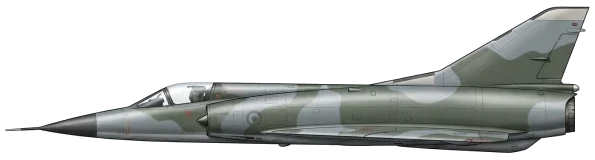
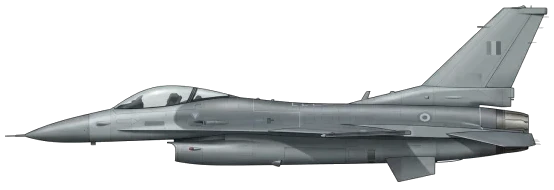
| Non-Proliferation Treaty | Never joined |
| Test-Ban Treaty (CTBT) | Not signed, test moratorium |
| Prohibition Treaty (TPNW) | Not party |
Frequently Asked Questions
How many nuclear weapons does Pakistan have?
Pakistan is estimated to hold 170 nuclear warheads in its total inventory, with none of them believed permanently deployed. The figure is an estimate from the Federation of American Scientists — no current official count exists.
When did Pakistan first test a nuclear weapon?
Pakistan conducted its first nuclear test in 1998.
What delivery systems does Pakistan use?
The arsenal is delivered by air and land forces, including Shaheen II, Ghauri, Ghaznavi, Abdali I. Each system is documented in the equipment database linked on this page.
Is the arsenal of Pakistan growing?
See the stockpile history chart on this page: it tracks the estimated warhead count year by year since the first weapons were fielded, based on the FAS series published through Our World in Data.
- OCT 72026 Updated Nuclear overview updated through October 2026
- AUG 112026 Updated Historical warhead stockpile series updated (29 yearly values)
- MAR 162026 Updated Nuclear overview updated
- JAN 202026 Updated Nuclear overview updated