Mike-class
Ex-USSR nuclear-powered attack submarine, introduced in 1983, utilized a 190 MW OK-650 b-3 PWR. Key figures: displacement 4,400 tons, length 118 m, top speed 14 knots, crew 64, built 1. No longer in service; operated by 1 navy over its career.
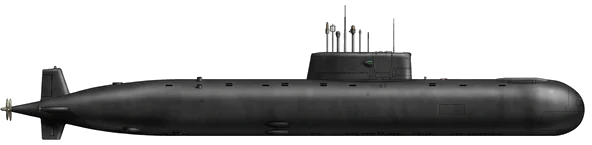
| Subtype | Nuclear-powered attack submarine |
| Displacement | 4400 tons |
| Displacement submerged | 6400 tons |
| Crew | 64 members |
| Width | 10.7 m (35.1 ft) |
| Length | 117.5 m (385.5 ft) |
| Max. depth | 1020 m (3346.5 ft) |
| Propulsion | One 190 MW OK-650 b-3 PWR, two 45000 shp steam turbines, one shaft |
| Units | K-278 Komsomolets |
| Range | Unlimited, except by food supplies |
| Maximum speed | 14 knots |
| Max. speed submerged | 26 knots |
- SS-N-15 Starfish anti-submarine missiles
- 6 x 533 mm (21-inch) torpedo tubes for 53-65 torpedo and VA-111 Shkval torpedoes
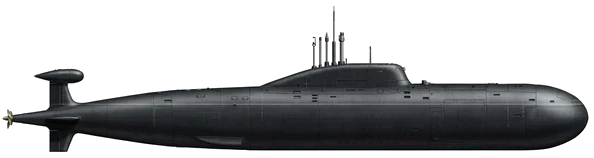
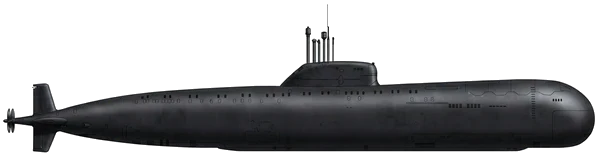
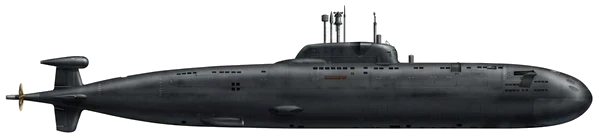
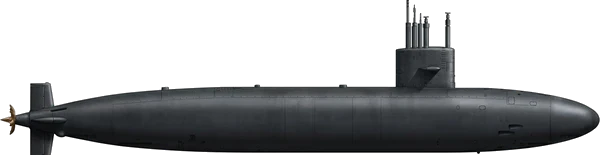
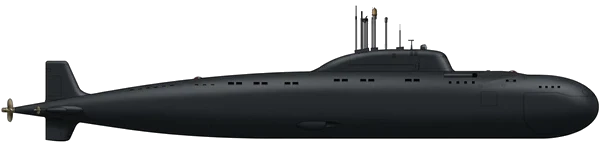
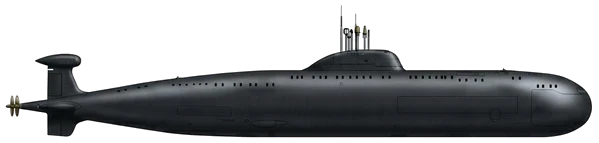
Description
Project 685 Plavnik, designated by NATO as the Mike class, was a Soviet nuclear-powered attack submarine. Developed by the Rubin Design Bureau, the project originated from a 1966 requirement for a vessel capable of carrying both torpedoes and cruise missiles with conventional or nuclear warheads. Design work was completed in 1974, and the keel of the sole vessel of the class, K-278, was laid at the Sevmash shipyard on 22 April 1978. The vessel was launched in June 1983 and commissioned on 28 December 1983.
The submarine was constructed with a double hull, utilizing titanium for the internal pressure hull to facilitate deep-submergence operations. The structure was divided into seven compartments, with the second and third compartments reinforced by bulkheads to serve as a safety zone. An emergency escape capsule was integrated into the fin to permit crew evacuation from depth. Propulsion was provided by an OK-650 b-3 pressurized-water reactor. The design incorporated automated systems, with a standard complement of 64 personnel consisting of 30 officers, 22 warrant officers, and 12 petty officers and enlisted men.
K-278 was utilized to evaluate technology for fourth-generation Soviet nuclear submarines while maintained for active combat deployment. In August 1984, the submarine reached a depth of 1,020 meters in the Norwegian Sea. In October 1988, the vessel received the name Komsomolets.
On 7 April 1989, during its third operational patrol, the submarine suffered a short circuit that initiated a fire in an engineering compartment. At the time, the vessel was submerged at a depth of 335 meters in the Barents Sea. The fire spread through bulkhead cable penetrations, leading to a loss of propulsion and electrical failures. Following an emergency ballast blow, the vessel surfaced but eventually sank after several hours. Of the 69 personnel on board, 42 died and 27 survived.
The wreck remains on the seabed at a depth of approximately 1,700 meters. The hull contains the nuclear reactor and two torpedoes equipped with nuclear warheads. Expeditions conducted between 1994 and 1996 applied sealants to fractures in the first compartment and covered the nuclear warheads. Annual monitoring by Norwegian and Russian agencies has identified localized caesium-137 emissions near the wreck, though current levels are not classified as a threat to the environment.
Frequently Asked Questions
What type of ship is the Mike-class?
What is the displacement of the Mike-class?
What is the maximum speed of the Mike-class?
What is the range of the Mike-class?
How many crew members serve on the Mike-class?
How many Mike-class ships have been built?
Which countries operate the Mike-class?
- JUL 232026 Updated Sources and cross-references refreshed
- APR 72026 Updated Description updated in a site-wide editorial pass
- JAN 242026 Updated Mike: max depth updated; Mike: range added
- JAN 182026 Updated Number built added; type, manufacturer and 8 more fields updated