Walrus-class
Dutch diesel-electric submarine, introduced in 1990, powered by three SEMT Pielstick diesel engines. Key figures: displacement 2,450 tons, length 68 m, top speed 12 knots, crew 49, built 4. In service with 1 navy — Netherlands (3).
| Subtype | Diesel-electric attack submarine |
| Displacement | 2450 tons |
| Displacement submerged | 2800 tons |
| Crew | 49 members |
| Width | 8.4 m (27.6 ft) |
| Length | 67.725 m (222.2 ft) |
| Max. depth | 300 m (984.3 ft) |
| Propulsion | 1 shaft (5 blades), 3 x SEMT Pielstick PA4 200 VG diesel engines 6,300 hp (4,700 kW), 1 x HOLEC electric motor, 420-cell VARTA batteries |
| Range | 10,000 nm at 9 knots |
| Maximum speed | 12 knots |
| Max. speed submerged | 21 knots |
- 4 x 21-inch (533 mm) torpedo tubes
- 20 x Honeywell Mk 48 torpedoes or Honeywell NT 37 C/D/E torpedoes
- UGM-84 Harpoon SSM
- 40 mines
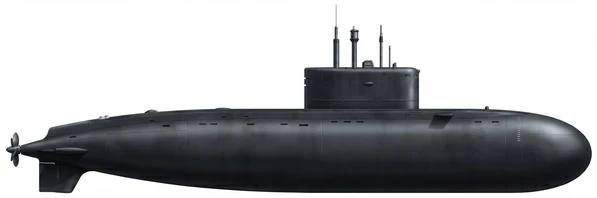
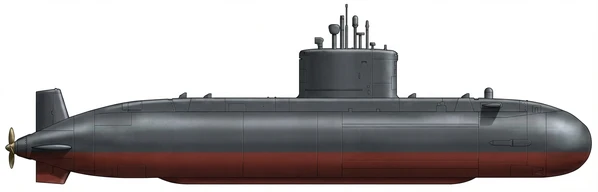
Description
The Walrus class is the submarine class in service with the Royal Netherlands Navy, ordered to replace the Dolfijn class after the Ministry of Defence set out the requirement in the Defensienota 1974. Dutch studies conducted from the 1960s concluded that conventional diesel-electric boats were the only practical option, nuclear propulsion being restricted to larger navies such as those of the United States, France and the United Kingdom. The design was largely settled between 1975 and 1978, and on 19 June 1979 Minister of Defence Willem Scholten signed a 425-million-guilder contract with the Rotterdamsche Droogdok Maatschappij (RDM) for the first two boats. Walrus was laid down on 11 October 1979 and Zeeleeuw on 24 September 1981.
Construction was repeatedly disrupted. RDM's parent company Rijn-Schelde-Verolme went bankrupt on 19 February 1983, prompting the navy to order two further boats early to support the re-established yard. Specifications were only frozen in 1984, requiring the first two hulls to be lengthened by one metre at 10 million guilders each. On 14 August 1986 a five-hour fire gutted the command centre of Walrus while she was still on the slipway; the 225-million-guilder loss was covered by insurance, but equipment intended for later boats was diverted to complete her. As a result Zeeleeuw, the second hull, entered service first, followed by Walrus two years later, then Dolfijn and Bruinvis. The cost growth and delays were labelled the "Walrus-affair" in the Dutch parliament. All four boats were built by RDM.
The class was designed by Jan Jaap van Rijn, head of the Submarine Bureau at the Directorate of Materiel. The hull uses a French-produced steel of greater elasticity, permitting deeper diving than earlier Dutch boats, and automation was used to reduce crew numbers. In place of a cruciform stern the Walrus class carries four combined rudders and diving planes in an X configuration, an arrangement first tested on USS Albacore in 1960 and later used by the Swedish Sjöormen class, the Australian Collins class, the German Type 212A and the Japanese Sōryū class. The boats were conceived for hunting Soviet submarines, and are employed for anti-surface and anti-submarine warfare, intelligence gathering, early warning and special forces support.
A 2007 upgrade covered migration from the Mk 48 mod 4 to the mod 7 torpedo, replacement of one periscope with an L-3 KEO non-hull-penetrating optronic mast, a mine and obstacle avoidance sonar, pressure hull refurbishment, a new combat management system and modifications for special operations forces. The 2013 IP-W conservation contract, valued at about 94 million euros, replaced the sonar, navigation periscope and GIPSY combat system and upgraded communications. Zeeleeuw was modernised first, completing in 2016, followed by Dolfijn, Bruinvis and Walrus. Plans to arm the boats with torpedo-tube-launched Tomahawk missiles were abandoned in May 2025.
Operationally the submarines enforced sanctions during the Yugoslav Wars and have deployed to the North Atlantic, Mediterranean, Persian Gulf and Caribbean, often at allied request. One boat was committed to counter-piracy operations off Somalia in June 2010. In November 2016 the Russian Navy claimed to have driven off a Walrus-class boat shadowing the Admiral Kuznetsov group. The class hosts the Submarine Command Course for Dutch, British, Australian and Canadian candidates. Walrus was decommissioned in October 2023; Naval Group was selected on 15 March 2024 to build the four replacement Orka-class boats.
Frequently Asked Questions
What type of ship is the Walrus-class?
What is the displacement of the Walrus-class?
What is the maximum speed of the Walrus-class?
What is the range of the Walrus-class?
How many crew members serve on the Walrus-class?
How many Walrus-class ships have been built?
Which countries operate the Walrus-class?
- AUG 302026 Updated Description updated
- JUL 292026 Updated Description updated
- JAN 242026 Updated Max speed updated
- JAN 182026 Created Page created: Walrus