Götland-class
Swedish diesel-electric submarine, 1,494 tons displacement, utilizes Stirling air-independent propulsion. Key figures: displacement 1,494 tons, length 60 m, top speed 11 knots, crew 32, built 3. In service with 1 navy — Sweden (3).
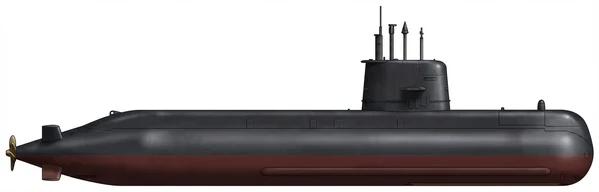
| Subtype | Diesel-electric submarine |
| Displacement | 1494 tons |
| Displacement submerged | 1599 tons |
| Crew | 32 members |
| Width | 6.2 m (20.3 ft) |
| Length | 60.4 m (198.2 ft) |
| Max. depth | 300 m (984.3 ft) |
| Propulsion | 2 × Diesel-electric MTU engines; 2 × Kockums v4-275R Stirling AIP units |
| Range | 1,700 nm at 5 knots |
| Maximum speed | 11 knots |
| Max. speed submerged | 20 knots |
- 4 × 533 mm (21.0 in) torpedo tubes
- 2 × 400 mm (15.7 in) torpedo tubes
- 48 × Externally mounted naval mines
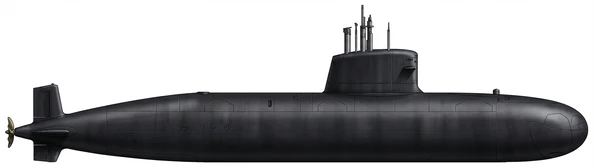
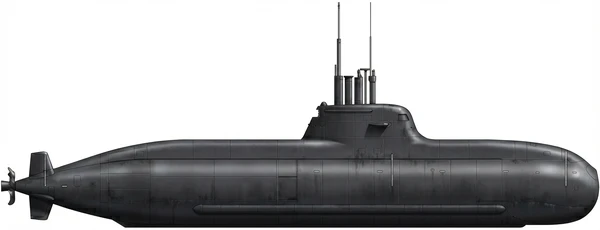
Description
The Gotland-class attack submarines were designed and built by the Kockums shipyard for the Swedish Navy. Replacing the Västergötland class, three units—HSwMS Gotland, HSwMS Uppland, and HSwMS Halland—were constructed between 1992 and 1996. These vessels were the first to utilize a Stirling engine air-independent propulsion (AIP) system, which extends submerged endurance to several weeks by using liquid oxygen. This system drives a generator for propulsion or battery charging, while conventional diesel engines are used for surface operations.
The design features an X-rudder configuration with four control surfaces, supplemented by two sail-mounted surfaces, to enable maneuvering in close proximity to the seabed. Shipboard automation allows a single operator to control course and depth. To reduce acoustic and electronic signatures, machinery is mounted on rubber dampeners, and the hull is shaped to minimize sonar and infrared detection. The vessels utilize 27 independent electromagnets to counteract magnetic signatures and extremely low frequency (ELF) electrical fields. The masts are coated with radar-absorbent material, and the propeller is designed to minimize cavitation.
Primary mission roles include antiship and antisubmarine warfare, communications intelligence (COMINT), electronic signals intelligence (ELINT), surveillance, special operations, and mine-laying. In 2000, HSwMS Halland deployed to the Mediterranean and Atlantic for multinational exercises, conducting mock engagements against Spanish, French, and United States naval units. In 2005, the United States Navy leased HSwMS Gotland for a two-year period to conduct antisubmarine warfare training in San Diego. During these exercises, the vessel simulated engagements against the aircraft carrier USS Ronald Reagan.
A mid-life upgrade program was initiated following a 2015 contract between the Swedish Defense Material Administration and Saab Kockums. The modifications included a two-meter hull extension and the installation of the Kockums v4-275R Mk3 Stirling engine. These upgrades also introduced new sonar systems, electronic warfare suites, and improved cyber-security. HSwMS Gotland returned to service in 2018, followed by HSwMS Uppland in 2020 and the relaunch of HSwMS Halland in 2025.
Frequently Asked Questions
What type of ship is the Götland-class?
What is the displacement of the Götland-class?
What is the maximum speed of the Götland-class?
What is the range of the Götland-class?
How many crew members serve on the Götland-class?
How many Götland-class ships have been built?
Which countries operate the Götland-class?
- JUL 242026 Updated Type updated
- APR 72026 Updated Description updated in a site-wide editorial pass
- JAN 242026 Updated Range and range at cruise speed added
- JAN 182026 Updated Type, units and 4 more fields updated