Hai Lung-class
Taiwanese submarine, introduced in 1987, displaces 2,376 tons and has a crew of 67. Key figures: displacement 2,376 tons, length 67 m, top speed 12 knots, crew 67, unit cost $250M, built 2. In service with 1 navy — Taiwan (2).
| Subtype | Diesel-electric attack submarine |
| Displacement | 2376 tons |
| Displacement submerged | 2660 tons |
| Crew | 67 members |
| Width | 8.4 m (27.6 ft) |
| Length | 66.9 m (219.5 ft) |
| Max. depth | 300 m (984.3 ft) |
| Propulsion | 3 × Bronswerk/Stork-Werkspoor RUB 215x12 diesels; 4050 hp |
| Range | 10,000 nm at 9 knots |
| Maximum speed | 12 knots |
| Max. speed submerged | 20 knots |
- 6 × 21 in (533 mm) torpedo tubes
- 28 torpedoes/missiles
- AEG SUT 264 torpedo
- Mark 48 torpedo
- UGM-84 Harpoon
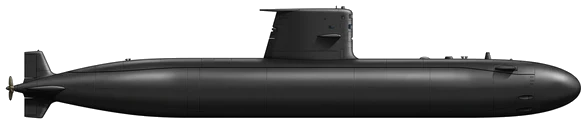
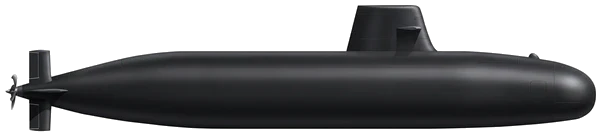
Description
The Chien Lung class, also designated the Hai Lung class, consists of two diesel-electric attack submarines operated by the Republic of China Navy. Ordered from the Dutch builder Wilton-Fijenoord in September 1981, the design is a modified version of the Netherlands' Zwaardvis class, which was based on the United States Barbel-class teardrop hull. Construction began in 1982, though financial instability at the shipyard delayed progress until 1983. The class comprises two vessels: Hai Lung (SS-793) and Hai Hu (SS-794). While the Republic of China sought to purchase additional units in 1983 and 1992, the Dutch government declined further orders following diplomatic pressure from China.
The design incorporates a teardrop hull and utilizes a false deck with spring suspension for noise-producing machinery to facilitate silent running. Electronic systems include the Elbit TIMNEX 4CH(V2) electronic support measures system. For armament, the class originally utilized AEG SUT 264 wire-guided torpedoes. A capability enhancement initiated in 2008 integrated the UGM-84 Harpoon Block II anti-ship missile, with deliveries taking place between 2013 and 2016. This integration allows for the engagement of both maritime and land-based targets.
Hai Hu was commissioned in October 1987, and Hai Lung followed in April 1988. The primary operational roles of the class include the protection of sea lanes and the deterrence of naval blockades. In 2018, a modernization program was authorized to extend the service life of the vessels into the late 2030s. This project, overseen by RH Marine, includes upgrades to the combat systems, electronic warfare suites, hull, and mechanical systems. The submarines are also being equipped with Mark 48 heavy torpedoes as part of this modernization. The Hai Lung class is scheduled to be replaced by the Hai Kun-class submarines currently under development through the Indigenous Defense Submarine program.
Frequently Asked Questions
What type of ship is the Hai Lung-class?
What is the displacement of the Hai Lung-class?
What is the maximum speed of the Hai Lung-class?
What is the range of the Hai Lung-class?
How many crew members serve on the Hai Lung-class?
How many Hai Lung-class ships have been built?
Which countries operate the Hai Lung-class?
How much does a Hai Lung-class cost?
- JUL 242026 Updated Cost updated
- APR 72026 Updated Description updated in a site-wide editorial pass
- JAN 182026 Updated Max depth and cost added; type, units and 5 more fields updated