EE-T1 Osório
Brazilian main battle tank developed by Engesa in the 1980s; two prototypes, with 105 mm and 120 mm guns, but no orders. Key figures: weight 39 t, top speed 70 km/h, range 500 km, unit cost $1.31M, built 1. In service with 1 army — Brazil.
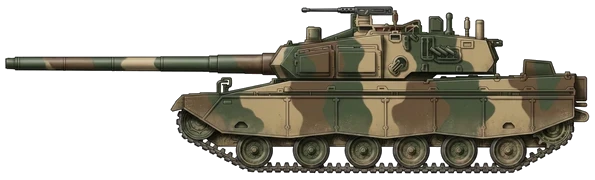
| Sub-type | Medium Main Battle Tank |
| Crew | 4 personnels |
| Range | 500 km |
| Mass | 39.0 tons |
| Height | 2.37 m (7.8 ft) |
| Width | 3.26 m (10.7 ft) |
| Length | 9.99 m (32.8 ft) |
| Max. speed | 70 km/h (43 mph) |
| Engine | 12-Cylinder Diesel Engine with 1000 hp |
| Weapon 1 | 1 L7A3 105mm rifled barrel (45 shells) gun |
| Weapon 2 | 1 7.62mm coaxial machine gun (7000 rounds) |
Description
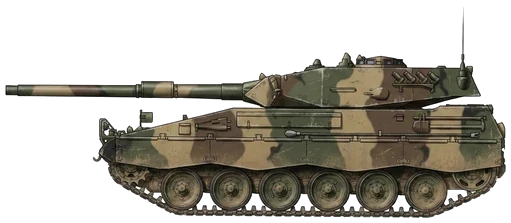
The Engesa EE-T1 Osório was a Brazilian main battle tank developed privately by Engesa in the 1980s. Two prototypes were built, one armed with a 105 mm rifled gun and one with a 120 mm smoothbore, and the tank was considered by several Middle Eastern and North African armies, but it won no orders and the programme ended at the prototype stage. Both vehicles survive in Brazil.
Development began in 1982 and the first prototype was completed in 1985. Engesa's strategy was to sell the tank to Arab and other Third World armies first, so that the Brazilian Army could later order it without having to fund the development itself. The company financed the work privately until a cash-flow crisis led the Brazilian National Development Bank to lend it $65 million in 1987. The production tank was expected to cost $1.5 to 2 million per unit, although the design drew heavily on imported components, including the turret. In 1990 its technical performance was reported to be comparable to that of contemporary main battle tanks, while its commercial prospects were already in doubt.
The two prototypes share a common layout with a crew of four, a commander, gunner, loader and driver, a length of about 10 m, a width of 3.26 m and a top speed of 70 km/h. The first prototype mounts a 105 mm L7A3 rifled gun with 45 rounds, weighs about 39 t and is powered by a 1,000 hp 12-cylinder diesel. The second prototype carries a 120 mm smoothbore gun with 38 rounds, weighs about 43 t and has a 1,040 hp engine.
The Osório was considered by Algeria, Iraq, Libya and Saudi Arabia, but none placed an order. The loss of the Saudi deal was particularly damaging. The flood of surplus main battle tanks released by the end of the Cold War, Engesa's bankruptcy filing in 1993 and the collapse of the Brazilian armoured vehicle industry in the late 1990s ended the project. Pre-series vehicles were scrapped and their components returned to the manufacturers.
The two prototypes were stored at the São Paulo War Arsenal in Barueri before being officially taken on strength by the 13th Mechanised Cavalry Regiment at Pirassununga in March 2003. They saw limited service until 2013 and were then placed on display: the 105 mm prototype at the Conde de Linhares Military Museum and the 120 mm prototype at the Armoured Instruction Centre, both in Rio de Janeiro.
Frequently Asked Questions
What type of vehicle is the EE-T1 Osório?
What is the weight of the EE-T1 Osório?
What is the maximum speed of the EE-T1 Osório?
What is the operational range of the EE-T1 Osório?
How many crew members does the EE-T1 Osório require?
How many EE-T1 Osório have been built?
What weapons does the EE-T1 Osório carry?
- OCT 52026 Updated Merged with the second prototype page: one EE-T1 Osório page covering both prototypes, description rewritten
- SEP 42026 Verified Weight verified against the published specifications
- AUG 42026 Updated Service entry year added
- JUL 272026 Updated Number built, cost and service status added
- APR 72026 Updated Description added
- JAN 172026 Updated Description added