Naval Air Station Whidbey Island
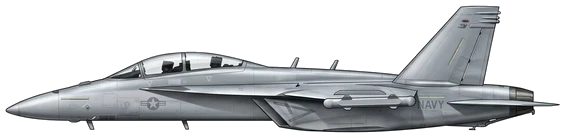
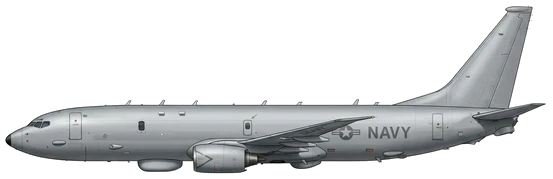
Naval Air Station Whidbey Island (ICAO KNUW) is an active military air base in Washington, United States, operated by the US Navy. It has 2 runways (longest 2,438 m). Home to Electronic Attack Wing Pacific, Patrol and Reconnaissance Wing Ten, flying EA-18G Growler, P-8 Poseidon.
Facility Details
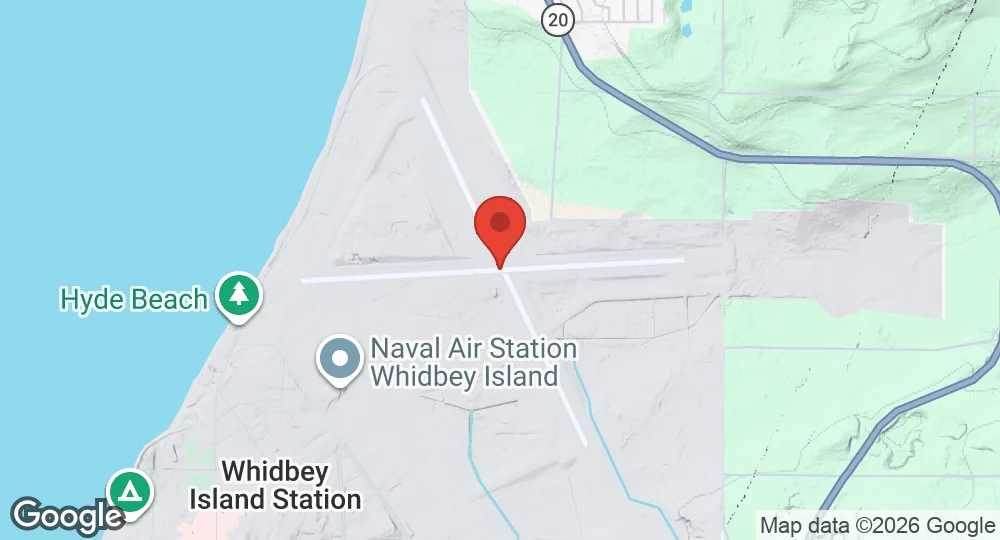
48.3519°N, 122.6558°W · 14 m elevation
| Operating Country | 🇺🇸 United States |
| Location | 🇺🇸 United States |
| Status | Active |
| Usage | Military only |
| Year built | 1942 |
| Operating Organization | US Navy |
| Units |
Electronic Attack Wing PacificPatrol and Reconnaissance Wing Ten
|
| Elevation | 14 m (46 ft) |
| IATA code | NUW |
| ICAO code | KNUW |
| Runways |
07/25 · 2,438 m (7,999 ft) · Concrete14/32 · 2,438 m (7,999 ft) · Concrete
|
| Website | cnrnw.cnic.navy.mil/Installations/NAS-Whidbey-Island/ |
Description
Naval Air Station Whidbey Island (NASWI) is a United States Navy installation located near Oak Harbor, Washington, on Whidbey Island. The facility was established following a 1941 survey to identify a location for re-arming and refueling naval patrol planes defending Puget Sound. The station was commissioned on September 21, 1942, and its land plane field was designated Ault Field in 1943 in memory of Commander William B. Ault.
The base is divided into two primary sections: Ault Field, located north of Oak Harbor, and the Seaplane Base on Crescent Harbor. NASWI also oversees Naval Outlying Landing Field (NOLF) Coupeville, located south of Ault Field, which serves as a site for field carrier landing practice.
Historically, the installation supported various aircraft types during World War II, including F4F Wildcats, F6F Hellcats, PV-1 Venturas, and PBY Catalina flying boats. After a period of reduced activity post-war, the base expanded during the Korean War to support P2 Neptune patrol squadrons. In the following decades, the station became the West Coast center for medium attack and electronic warfare operations, hosting squadrons of A-6 Intruders and EA-6B Prowlers.
NASWI is currently operated by the U.S. Navy under Navy Region Northwest. It serves as the primary station for the Navy's electronic attack and maritime patrol communities on the West Coast. The base hosts 20 active duty and three Navy Reserve squadrons. Major tenant commands include Electronic Attack Wing Pacific and Patrol and Reconnaissance Wing Ten.
The base infrastructure supports multiple aircraft types, including the EA-18G Growler, P-8A Poseidon, EP-3E Aries II, C-40A Clipper, and MQ-4C Triton. Specialized facilities include a P-8A training center and the Fleet Readiness Center Northwest. The station also maintains an organic search and rescue unit that operates MH-60S Seahawk helicopters for maritime and mountainous rescue operations. Resident units include multiple electronic attack squadrons (VAQ), patrol squadrons (VP), a fleet logistics support squadron (VR), and the 390th Electronic Combat Squadron, a United States Air Force administrative unit.
- OCT 52026 Updated EA-18G Growler and P-8 Poseidon recorded as based aircraft
- AUG 192026 Updated Elevation corrected
- AUG 132026 Updated Runway designations, surfaces and lengths recorded
- APR 112026 Updated Description updated in a site-wide editorial pass
- APR 102026 Updated Description added
- MAR 302026 Created Page created: Naval Air Station Whidbey Island