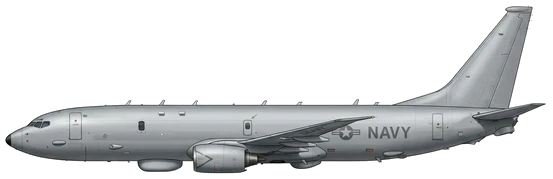
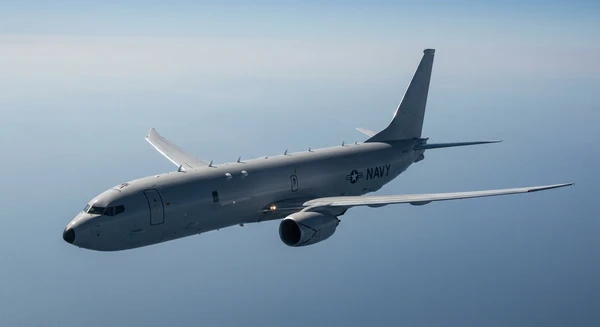
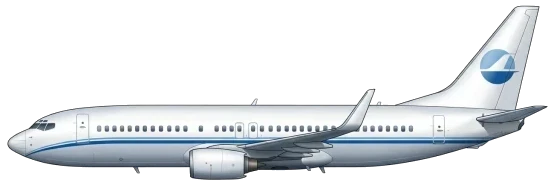
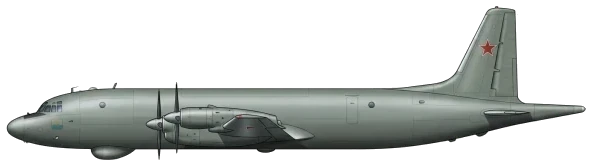
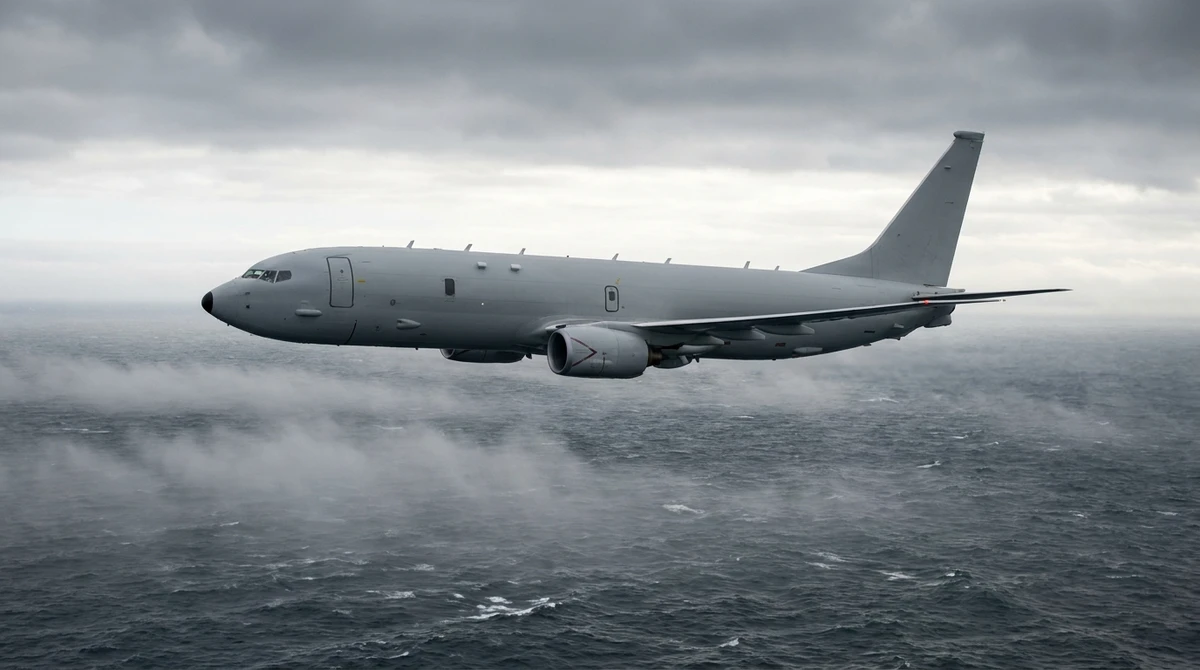
The Boeing P-8 Poseidon is a maritime patrol, reconnaissance, anti-submarine (ASW), and anti-surface (ASUW) warfare aircraft developed for the United States Navy (USN) to replace the Lockheed P-3 Orion. Developed by Boeing, the aircraft is a derivative of the civilian 737-800 utilizing wings from the 737-900. Subcontractors include Raytheon, Northrop Grumman, Spirit AeroSystems, and CFM International. The P-8 first flew on 25 April 2009, low-rate production was approved in August 2010, and full-rate production began in January 2014. As of October 2025, the USN had received 136 aircraft.
Design
Spirit AeroSystems strengthens the airframe for low-altitude maneuvers. The P-8 features raked wingtips, electro-mechanical expulsion deicing, and a flying boom refueling receptacle. Power is supplied by two CFM56-7B27A turbofans, each fitted with a 180 kVA electric generator to power onboard electronics. Onboard systems include five operator stations, the Raytheon AN/APY-10 surface search radar, the AN/ALQ-240 Electronic Support Measures Suite, and the AN/APS-154 Advanced Airborne Sensor. Unlike the P-3, most P-8 variants omit a magnetic anomaly detector (MAD), using a hydrocarbon sensor to detect diesel fumes instead.
Armament
The aircraft has 11 weapon hardpoints, including an internal five-hardpoint bomb bay and six external hardpoints. Supported munitions include AGM-84 Harpoon, AGM-84H/K SLAM-ER, AGM-88G AARGM-ER, and AGM-158C LRASM missiles, alongside Mark 54 and Sting Ray torpedoes, depth charges, and naval mines. It also deploys sonobuoys and the High Altitude Anti-Submarine Warfare Weapon Capability (HAAWC) system.
Operational History
The USN deployed the P-8 in February 2012, with its first operational deployment to Okinawa, Japan, in November 2013. USN operations have included search-and-rescue missions for Malaysia Airlines Flight 370 and the SS El Faro, patrols in the Taiwan Strait, and tanker interceptions during the 2026 blockade of Iran. Export operators include Australia, India, the United Kingdom, Norway, New Zealand, South Korea, and Germany, with orders placed by Canada and Singapore. Indian P-8Is conducted intelligence operations during the 2017 Doklam Standoff, monitored Pakistani units in 2019, and participated in Operation Sindoor. Australian P-8As have operated in the South China Sea, where they experienced intercepts by Chinese J-16 and Su-35 aircraft in 2022 and 2025.
Variants
- P-8A Poseidon: The standard production variant developed for the United States Navy.
- P-8I Neptune: An export variant for the Indian Navy equipped with a magnetic anomaly detector, an aft radar, and Indian-designed communication systems.
- Poseidon MRA1: The designation applied to the standard P-8A aircraft operated by the United Kingdom's Royal Air Force.
- P-8 AGS: A proposed airborne ground surveillance variant offered to the United States Air Force featuring a pod-mounted active electronically scanned array radar.