Naval Air Weapons Station China Lake
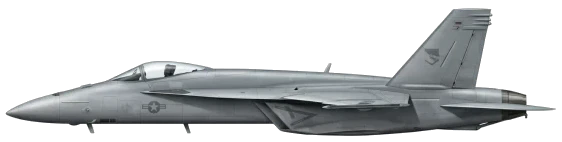
Naval Air Weapons Station China Lake (ICAO KNID) is an active military air base in California, United States, operated by the US Navy. It has 3 runways (longest 3,048 m). Home to NAWCWD, VX-9, VX-31, flying F/A-18 E/F Super Hornet.
Facility Details
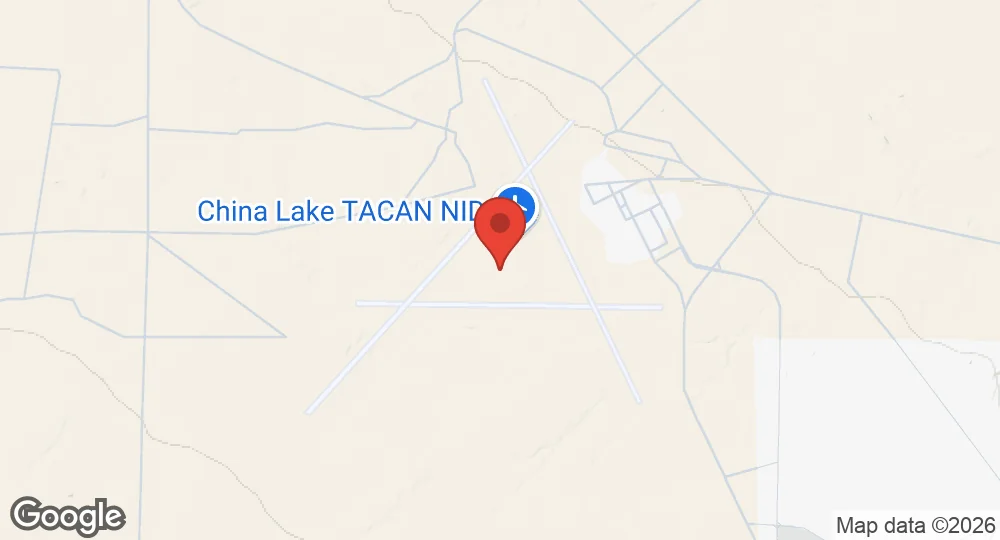
35.6856°N, 117.6919°W · 696 m elevation
| Operating Country | 🇺🇸 United States |
| Location | 🇺🇸 United States |
| Status | Active |
| Usage | Military only |
| Year built | 1942 |
| Operating Organization | US Navy |
| Units |
NAWCWDVX-9VX-31
|
| Elevation | 696 m (2,283 ft) |
| ICAO code | KNID |
| Runways |
03/21 · 3,048 m (10,000 ft) · Concrete14/32 · 2,747 m (9,012 ft) · Asphalt08/26 · 2,167 m (7,110 ft) · Concrete
|
| Website | www.cnic.navy.mil/Regions/cnrsw/installations/naws_china_lake/ |
- 88 km Edwards Air Force Base 412th Test Wing
- 204 km March Joint Air Reserve Base 452nd Air Mobility Wing
- 208 km Creech Air Force Base 432nd Wing
- 213 km Los Alamitos Army Airfield California Army National Guard
- 215 km Channel Islands Air National Guard Station 146th Airlift Wing
- 216 km Naval Air Station Lemoore Strike Fighter Wing Pacific
 VX-9
VX-9
 VX-31
VX-31
Description
Naval Air Weapons Station (NAWS) China Lake is a United States Navy installation located in the Western Mojave Desert region of California, spanning Kern, San Bernardino, and Inyo counties. Situated approximately 150 miles north of Los Angeles, the station occupies 1.1 million acres of land. It serves as the Navy's largest landholding for weapons and armaments research, development, acquisition, testing, and evaluation (RDAT&E).
The site originated as a civilian emergency landing field in 1935 before the U.S. Army Air Forces acquired it in 1942. In November 1943, it was transferred to the Navy and established as the Naval Ordnance Test Station (NOTS). Its mission was the research and testing of weapons, including rocket development for the California Institute of Technology. During World War II, the facility supported the Manhattan Project through Project Camel. In 1967, NOTS became the Naval Weapons Center, and in 1992, it was redesignated as NAWS China Lake to host the Naval Air Warfare Center Weapons Division (NAWCWD). A 7.1 magnitude earthquake in July 2019, centered within the station, caused damage to thousands of structures and resulted in a temporary "not mission capable" designation.
Current operations are under the direction of Navy Region Southwest. The station hosts several tenant units, including Air Test and Evaluation Squadron 9 (VX-9) and Air Test and Evaluation Squadron 31 (VX-31). These units operate aircraft such as the F/A-18E/F Super Hornet, E/A-18G Growler, F-35C Lightning II, F/A-18C/D Hornet, and MH-60S Seahawk. Other stationed organizations include a Marine Aviation Detachment, Explosive Ordnance Disposal Mobile Unit 3 Detachment, and a Naval Construction Training Center detachment.
Infrastructure at the station consists of 2,132 buildings and facilities. Air operations are conducted at Armitage Field, which supports approximately 20,000 annual military sorties. The installation manages 19,600 square miles of restricted airspace as part of the R-2508 Special Use Airspace Complex, coordinated with Edwards Air Force Base and Fort Irwin. The site also contains the Coso Geothermal Field, which has produced electricity from thermal energy since 1987. Historical assets within the boundaries include the Coso Rock Art District and the remains of the Epsom Salts Monorail.
- AUG 192026 Updated Elevation corrected
- AUG 142026 Updated Based aircraft recorded: F/A-18 E/F Super Hornet
- AUG 132026 Updated Runway designations, surfaces and lengths recorded
- APR 112026 Updated Description updated in a site-wide editorial pass
- APR 102026 Updated Description added
- MAR 302026 Created Page created: Naval Air Weapons Station China Lake