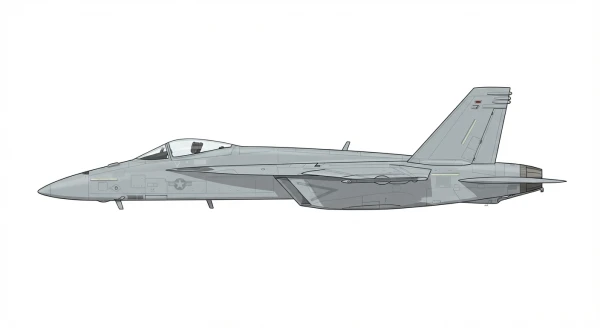
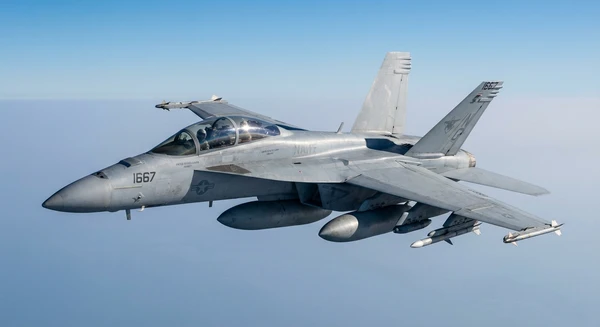
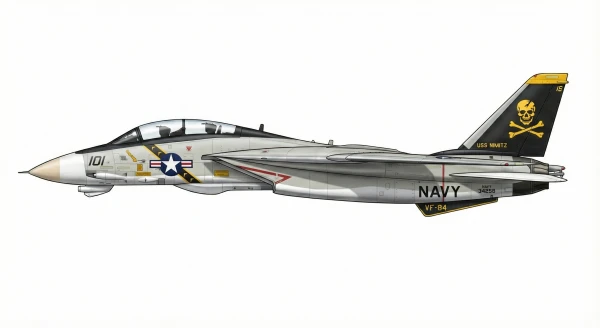
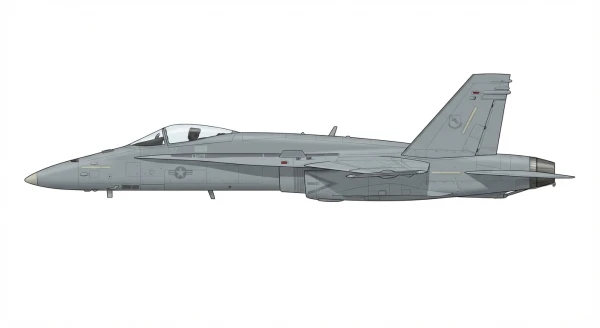
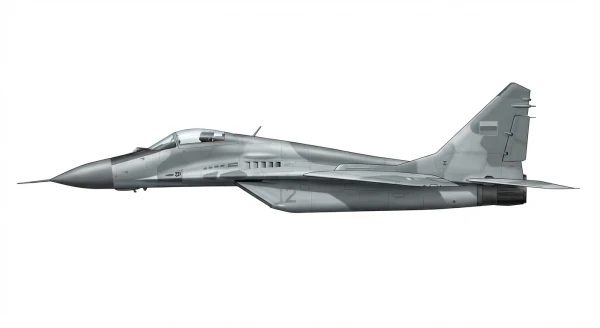
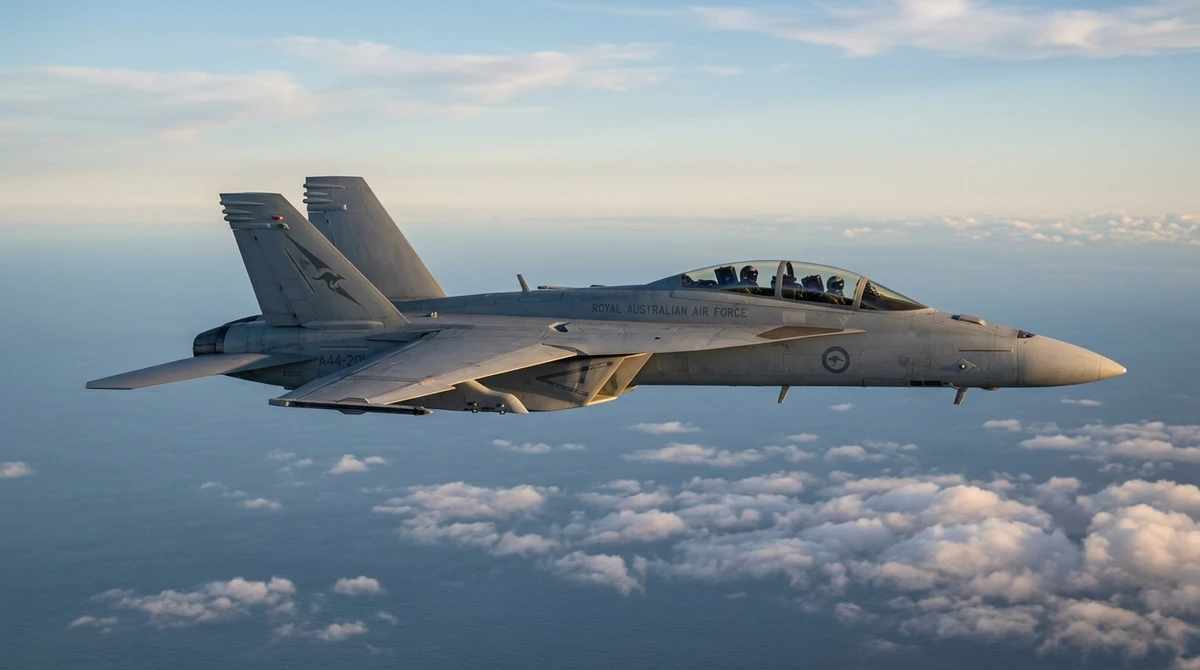
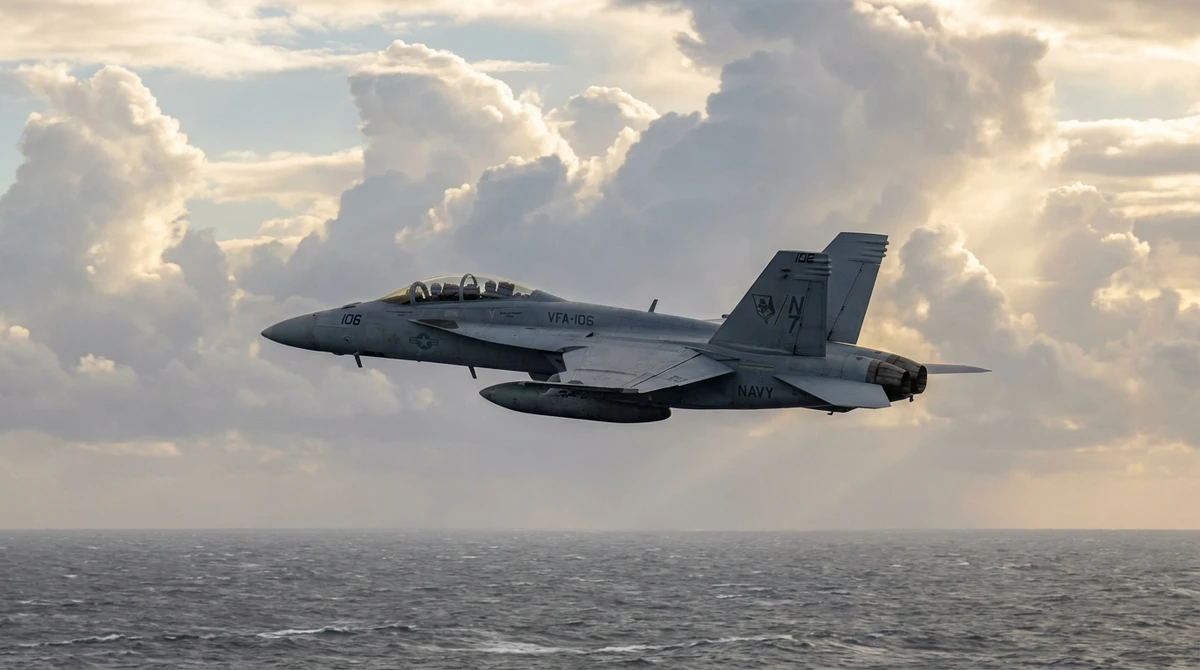
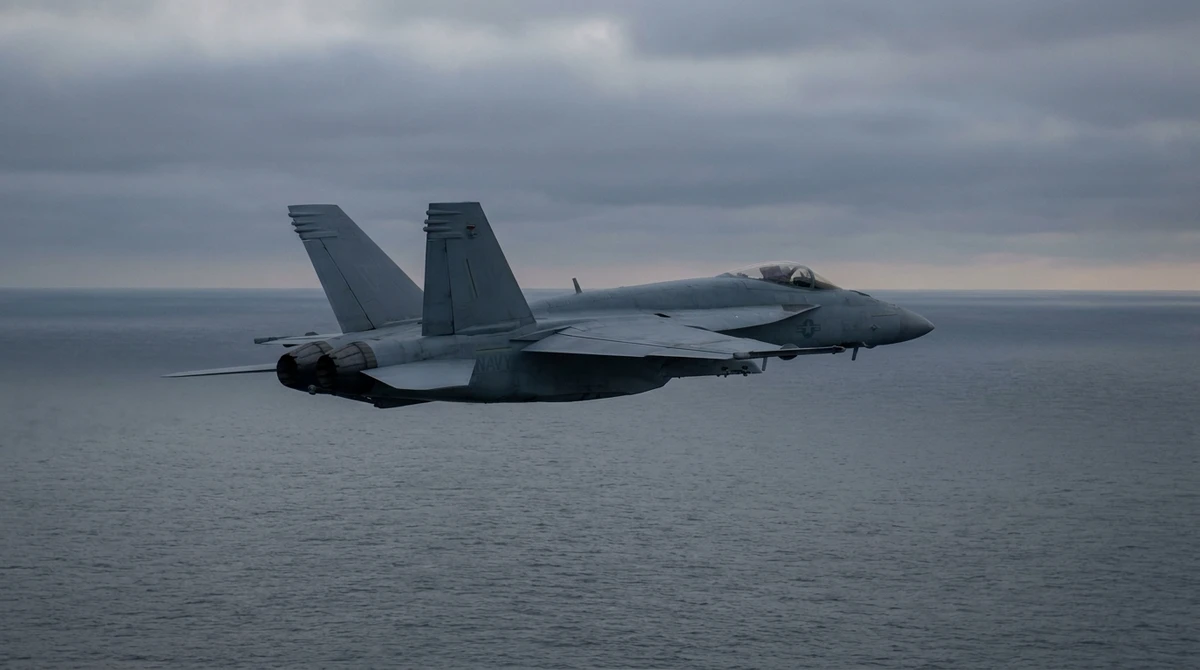
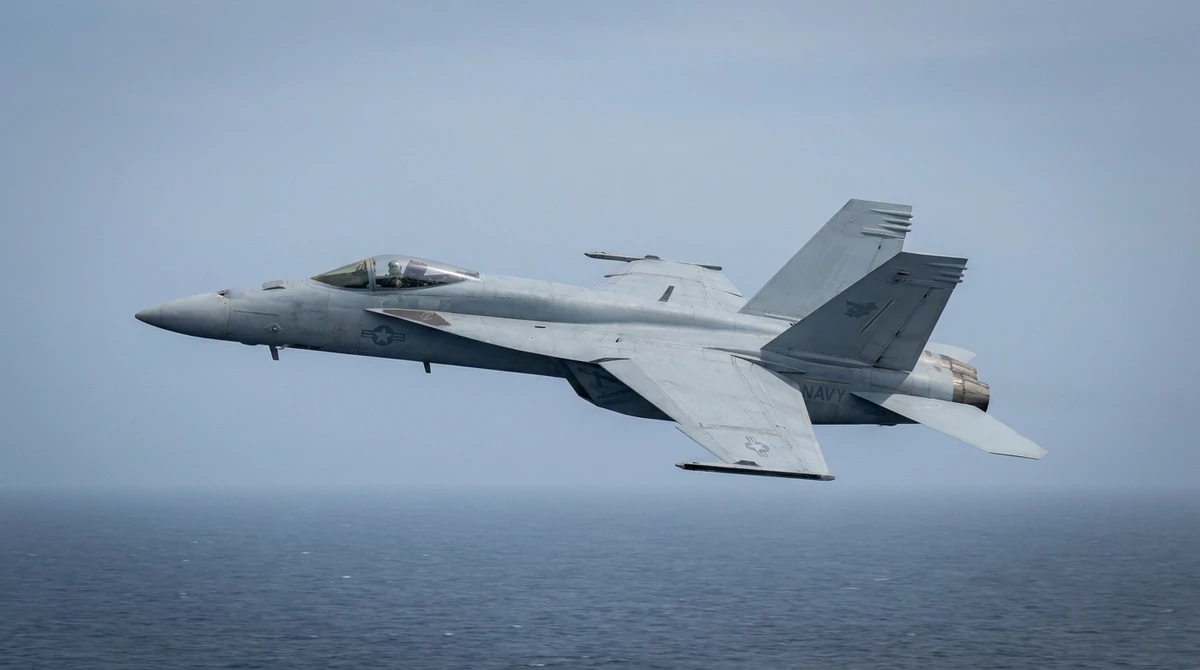
The Boeing F/A-18E and F/A-18F Super Hornet are American twin-engine, carrier-capable multirole strike fighters derived from the McDonnell Douglas F/A-18 Hornet. Originally designed by McDonnell Douglas, the aircraft entered United States Navy fleet service in 1999, where it is informally called "Rhino." The Super Hornet conducts air-to-air, air-to-ground, and airborne tanker missions, serving as the primary fighter of U.S. carrier air wings following the retirement of the Grumman F-14 Tomcat.
Development
The Super Hornet was developed from McDonnell Douglas's "Hornet 2000" concept. In 1992, the U.S. Navy ordered the aircraft as a low-risk alternative following the cancellation of the A-12 Avenger II and post-Cold War budget reductions. First flight occurred on 29 November 1995. Low-rate production began in March 1997, reaching full-rate production in September 1997 following the merger of McDonnell Douglas and Boeing. Navy operational evaluations concluded in 2000, with production planned through 2027.
Design
The airframe is 20 percent larger and 7,000 pounds heavier empty than the legacy Hornet, featuring a 34-inch fuselage extension and 25 percent greater wing area with 42 percent fewer structural parts. Powered by two General Electric F414-GE-400 turbofans rating 22,000 lbf of thrust each in afterburner, it incorporates rectangular caret inlets and serrated panel joints to reduce frontal radar cross-section. Avionics include quadruplex digital fly-by-wire, AN/APG-73 or AN/APG-79 AESA radar, an AN/ASQ-228 ATFLIR targeting pod, and an AN/ASG-34(V)1 IRST sensor.
Armament
Armament includes an internal 20 mm M61A2 Vulcan rotary cannon with 412 rounds and 11 external hardpoints carrying up to 17,750 pounds (8,050 kg) of payload. Air-to-air munitions comprise AIM-120 AMRAAM, AIM-9 Sidewinder, AIM-7 Sparrow, and AIM-174B missiles. Air-to-surface weapons include AGM-65 Maverick, AGM-84 Harpoon, AGM-88 HARM, AGM-154 JSOW, AGM-158 JASSM, JDAM series guided bombs, Paveway laser-guided bombs, and unguided Mk 80 series bombs.
Operational History
The aircraft achieved initial operating capability with VFA-115 in September 2001 and first engaged in combat during Operation Southern Watch in November 2002. It deployed in Operation Iraqi Freedom, Operation Enduring Freedom, operations against Islamic State forces, and 2023–2024 Red Sea counter-Houthi actions. On 18 June 2017, a U.S. Navy F/A-18E shot down a Syrian Su-22 fighter-bomber. Export operators include Australia, which received 24 F/A-18Fs by 2011, and Kuwait, which ordered 28 aircraft in 2018.
Variants
-
F/A-18E: Single-seat variant of the Super Hornet strike fighter.
-
F/A-18F: Two-seat tandem variant of the Super Hornet strike fighter.
-
EA-18G Growler: Airborne electronic warfare variant developed from the F/A-18F airframe.
-
F/A-18E/F Block II: Upgraded variant fitted with AN/APG-79 AESA radar and updated IDECM defensive systems.
-
Advanced Super Hornet: Prototype concept incorporating conformal fuel tanks, an enclosed weapons pod, and reduced radar cross-section measures.