Soesterberg Air Base (Camp New Amsterdam)
Soesterberg Air Base (also Camp New Amsterdam; ICAO EHSB) is a closed military air base in the Netherlands, operated by the Royal Netherlands Air Force. It has 1 runway (3,075 m). Home to the 512th Fighter-Day Squadron, the 32d Fighter-Interceptor Squadron, the 32d Tactical Fighter Squadron, the 32d Tactical Fighter Group and 5 other units.
Facility Details
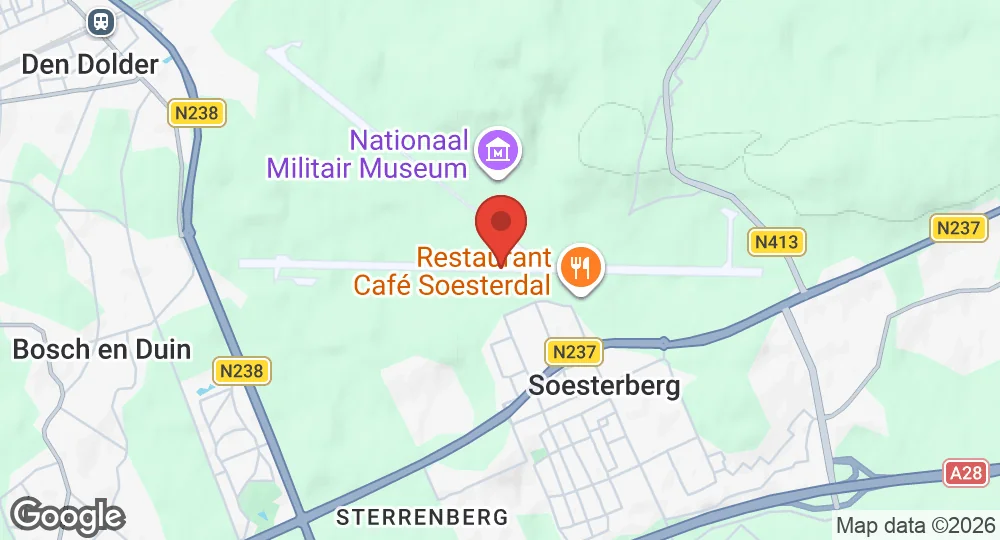
52.1272°N, 5.2764°E · 12 m elevation
| Operating Country | 🇳🇱 Netherlands • 🇺🇸 United States |
| Location | 🇳🇱 Netherlands |
| Status | Closed |
| Usage | Military only |
| Year built | 1911 |
| Year closed | 2008 |
| Operating Organization | Royal Netherlands Air Force |
| Units |
512th Fighter-Day Squadron32d Fighter-Interceptor Squadron32d Tactical Fighter Squadron32d Tactical Fighter Group325 Squadron334 Squadron298 Squadron300 Squadron336 Squadron
|
| Elevation | 12 m (39 ft) |
| IATA code | UTC |
| ICAO code | EHSB |
| Runways |
09/27 · 3,075 m (10,089 ft) · Asphalt
|
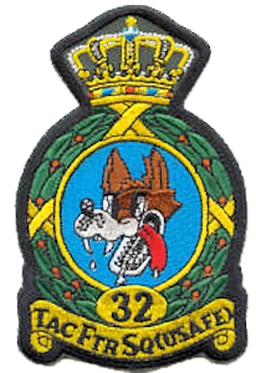 32d Tactical Fighter Squadron
Description
Soesterberg Air Base is located 14 kilometres east-northeast of Utrecht. Established as an airfield in 1911, the site was acquired by the Dutch Army in 1913 to establish the Army Aviation Division. During World War I, the facility supported border patrol and pilot training. In May 1940, the base was occupied by the German Luftwaffe, which utilized the site for anti-ship, bombing, and air defense operations. Following Allied bombardment that rendered the field inoperable by 1944, the site was liberated by Canadian forces in May 1945.
The Royal Netherlands Air Force (RNLAF) reactivated the base for air defense in 1951. From 1954 to 1994, the United States Air Force (USAF) operated from a section of the base designated Camp New Amsterdam. Initial USAF units included the 512th Fighter-Day Squadron, followed by the 32nd Fighter-Interceptor Squadron. Aircraft types hosted at the base during the Cold War included the F-86F Sabre, F-100 Super Sabre, F-102 Delta Dagger, F-4 Phantom II, and F-15 Eagle. RNLAF flying units also operated from the base, including 325 Squadron with Hawker Hunters, 334 Squadron with Fokker F27s, and helicopter squadrons 298 and 300, which operated the Alouette III, CH-47 Chinook, and AS 532 U2 Cougar.
Following the withdrawal of USAF forces in 1994, Soesterberg served as an RNLAF transport helicopter base. Flying operations officially ceased in November 2008, and the base was formally closed in December 2008. The Ministry of Defence currently retains the Camp New Amsterdam facilities for use by Dutch military ground units. Notable remaining infrastructure includes aircraft shelters and the Zulu Hangar. The north-eastern portion of the former base hosts the Nationaal Militair Museum, while other areas are maintained as a protected natural landscape. The site also houses the Monument for Fallen Aviators and a memorial dedicated to resistance fighters.
- AUG 132026 Updated Runway designations, surfaces and lengths recorded
- APR 102026 Created Page created: Soesterberg Air Base