A1-CM Furia
Ukrainian hand-launched reconnaissance unmanned aerial vehicle, developed in the early 2010s, used extensively in the 2022 Russian invasion of Ukraine for target designation and artillery correction. Key figures: top speed 130 km/h, range 200 km, max takeoff weight 6 kg.
| Wingspan | 2 m (6.6 ft) |
| Max. takeoff weight | 6 kg (13 lbs) |
| Powerplant | 1 × electric motor |
| Maximum speed | 130 km/h (81 mph) |
| Operational range | 200 km (124 mi) |
| Endurance | 3 hours |
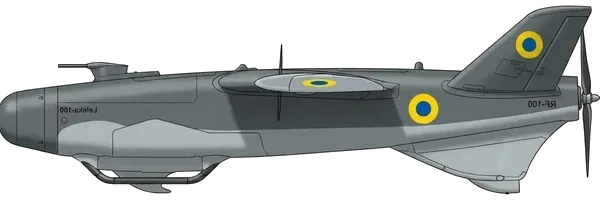
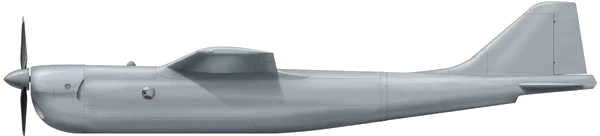
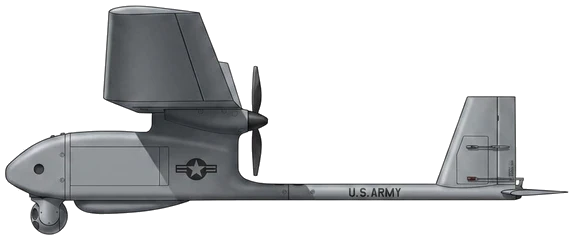
Description
The A1-CM Furia (Ukrainian: Фурія) is a Ukrainian hand-launched unmanned aerial vehicle built for aerial reconnaissance and artillery observation. It is operated from a dedicated portable ground control station roughly the size of a guitar case, and entered service with the Air Guard of Ukraine in 2015 and the Armed Forces of Ukraine in 2020. It is known chiefly for its laser designation capability, which in the A1-CMX variant is used to provide terminal guidance correction for M982 Excalibur artillery projectiles.
Development
The Furia made its first flight in 2014 and was commissioned by the Air Guard of Ukraine the following year. Adoption by the Armed Forces of Ukraine followed in 2020. The system has been in continuous use since the 2022 Russian invasion of Ukraine. The A1-CMX modification is the latest iteration.
Design
The airframe is derived from the RVJet radio-controlled aircraft produced by RangeVideo. Examination of wreckage photographed and circulated on the Russian social network VK in late August 2023 identified custom FPGA and NVIDIA processors mounted on purpose-built motherboards and daughterboards, industrial-grade ball bearings, multiple 830/905 nm laser rangefinders and laser designators, and electric and stepper motors sourced from Northrop Grumman, Honeywell International, L-3 Technologies and ABB. Other features included a multi-band long-range digital radio, backup gyroscopes, dedicated satellite reception chipsets and a secondary high-resolution infrared camera. Nearly all electronic components were housed in individual shock-proof casings with Mu-metal EMI and RFI shielding. Members of the Russian hacker group Killnet described the construction as being of "high quality" and attributed to it "an obvious technological advantage".
According to the Ukrainian Ministry of Defence, the A1-CMX correlates visual map data with GPS and GLONASS coordinates in real time and can place a laser designator spot on a 2 x 2 m area at ranges of up to 7 km, including in poor weather.
Operational History
The type has been employed throughout the 2022 Russian invasion of Ukraine. The A1-CMX is claimed to have supported precision strikes that destroyed more than 43 Russian tanks and 181 armoured and support vehicles in the Robotyne sector alone during the first half of the counter-offensive. General Yevhen Moisiuk stated that use of the system "leads to spotted targets getting destroyed in under 15 minutes at a 95% probability". Ukrainian sources have referred to the CMX version as a new "Wunderwaffe" on account of its Excalibur guidance role.
Variants
- A1-CM Furia: Baseline hand-launched reconnaissance UAV, first flown in 2014 and commissioned by the Air Guard of Ukraine in 2015.
- A1-CMX: Latest modification adding real-time GPS/GLONASS map correlation, laser designation to 7 km, and terminal guidance correction for M982 Excalibur artillery shells.
Frequently Asked Questions
What type of aircraft is the A1-CM Furia?
What is the maximum speed of the A1-CM Furia?
What is the range of the A1-CM Furia?
When did the A1-CM Furia first fly?
Which countries operate the A1-CM Furia?
- AUG 152026 Created A1-CM Furia UAV page created (specs, description, 1 operators)