RQ-11 Raven
American unmanned aerial vehicle, renowned for extensive service since 1990s, widely deployed in Iraq and Afghanistan. Key figures: top speed 95 km/h, range 10 km, service ceiling 4,500 m, max takeoff weight 2 kg, unit price $0.17M, built 19,000.
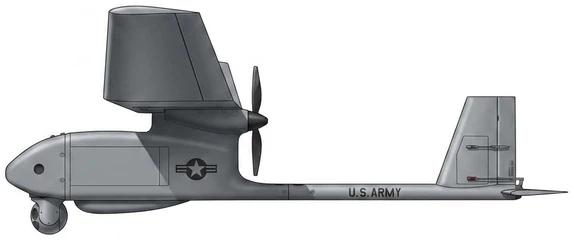
| Length | 0.9 m (3.0 ft) |
| Wingspan | 1.4 m (4.5 ft) |
| Empty weight | 2 kg (4 lbs) |
| Max. takeoff weight | 2 kg (4 lbs) |
| Powerplant | 1 × Electric motor |
| Maximum speed | 95 km/h (59 mph) |
| Operational range | 10 km (6 mi) |
| Endurance | 2 hours |
| Service ceiling | 4,500 m (14,764 ft) |

Description
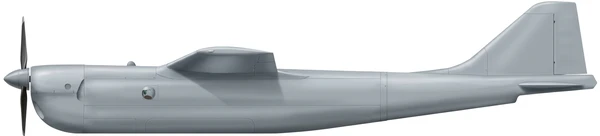
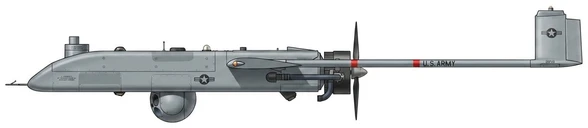
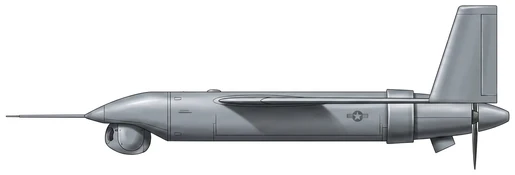
The AeroVironment RQ-11 Raven is a hand-launched small unmanned aerial vehicle (SUAV) built by AeroVironment of the United States for intelligence, surveillance, target acquisition and reconnaissance. Introduced as the FQM-151 in 1999 and reworked into its present configuration in 2002, it entered full-rate production in 2006 and is deployed by the U.S. Army at company level. With more than 19,000 airframes delivered worldwide, it is the most widely fielded UAV system in service.
Development
The design originated as the FQM-151 in 1999 and was developed into the current airframe in 2002, resembling an enlarged FAI class F1C free-flight model aircraft. AeroVironment won the U.S. Army SUAV programme in 2005 with the RQ-11B, and full-rate production began in 2006. The U.S. Marine Corps and the U.S. Air Force adopted it shortly afterwards, the latter under the FPASS programme. A Digital Data Link-enabled version with increased endurance is in production for U.S. forces and allied customers. Over 19,000 airframes had been delivered as of 2012.
Design
The Raven has a 1.37 m wingspan, is 0.91 m long and weighs 1.9 kg. Propulsion is by an Aveox 27/26/7-AV electric motor in pusher configuration, giving a cruising speed of about 30 km/h and a speed range of 32–81 km/h. Endurance is 60–90 minutes with an operational radius of roughly 10 km, at altitudes of 100–500 m above ground level and over 4,200 m above mean sea level. The aircraft is thrown into the air by hand and recovers by auto-piloting to a pre-defined landing point before executing a 45-degree "Autoland" descent. It can be flown from the ground control station or autonomously via GPS waypoint navigation, with a single command button ordering an immediate return to the launch point. Standard payloads are a CCD colour video camera and an infrared night camera; from August 2015 selected units received the Raven Gimbal, a 360-degree rotating camera that allows switching between day and night settings without landing to swap sensors. In mid-2015 the U.S. Marine Corps tested the Harris Small Secure Data Link, a nose-mounted radio of 410 cm³ and 510 g certified to 'Secret' level, providing beyond line-of-sight communications relay down to squad level.
Operational History
British forces used Raven equipment in Iraq. The Royal Danish Army acquired 12 systems in September 2007, split between the Huntsmen Corps and the Artillery Training Center, and Danish operations with the type in Helmand province appear in the 2010 documentary Armadillo. The Netherlands acquired 72 systems worth $23.74 million for Army reconnaissance units, the Marine Corps and the KCT special forces. The United States supplied 85 Raven B systems to the Pakistan Army in April 2011 and four systems to Ugandan and Burundian forces in Somalia in June 2011. Ukrainian operators criticised the analogue control link as vulnerable to jamming and hacking. Iran claimed the capture of two Ravens, in 2011 and 2012. Belgium ordered 32 aircraft and Luxembourg 16 in August 2017. The U.S. Marine Corps retired the RQ-11B in January 2023 in favour of the FLIR R80 SkyRaider.
Variants
- RQ-11A Raven A: Initial production version, no longer manufactured.
- RQ-11B Raven B: Principal production variant with Digital Data Link and improved endurance.
- CU-173 Raven B: Designation for aircraft operated by the Canadian Armed Forces.
- Solar Raven: Air Force Research Laboratory demonstrator of November 2012 fitting 20 cm² flexible solar panels into the wing sections, increasing endurance by 60 percent.
Frequently Asked Questions
What type of aircraft is the RQ-11 Raven?
What is the maximum speed of the RQ-11 Raven?
What is the range of the RQ-11 Raven?
When did the RQ-11 Raven first fly?
How many RQ-11 Raven have been built?
Which countries operate the RQ-11 Raven?
How much does a RQ-11 Raven cost?
What is the service ceiling of the RQ-11 Raven?
- AUG 302026 Updated Description updated
- APR 72026 Updated Sources and cross-references refreshed
- FEB 72026 Updated Endurance updated