Aerosonde
American small unmanned aerial vehicle, developed in the late 20th century, utilized for meteorological data collection and military intelligence, surveillance, and reconnaissance. Key figures: range 150 km, service ceiling 4,000 m, max takeoff weight 13 kg.
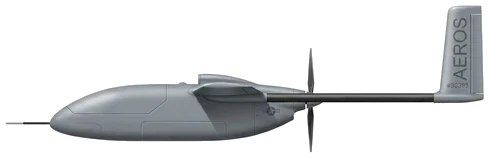
| Wingspan | 2.9 m (9.5 ft) |
| Empty weight | 8 kg (18 lbs) |
| Max. takeoff weight | 13 kg (29 lbs) |
| Powerplant | 1 × Enya R120 |
| Operational range | 150 km (93 mi) |
| Endurance | 30 hours |
| Service ceiling | 4,000 m (13,123 ft) |
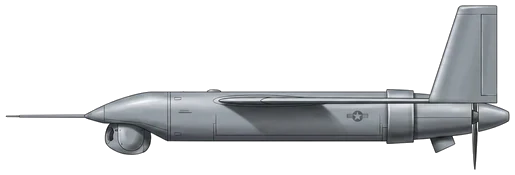
Description
The Aerosonde is a small unmanned aerial vehicle (UAV) designed for weather data collection and intelligence, surveillance, and reconnaissance (ISR) missions. Originally developed by Insitu, the aircraft is manufactured by Aerosonde Ltd, a strategic business of AAI Corporation. The system was designed to collect temperature, atmospheric pressure, humidity, and wind measurements over remote areas and oceans, and was later adopted by the United States Armed Forces for military ISR.
Design
The aircraft is powered by a modified Enya R120 model aircraft engine and carries an onboard computer, meteorological instruments, and a GPS receiver. It lacks an undercarriage, requiring launch from catapults or vehicle roof racks. A typical deployed system consists of four air vehicles, two ground control stations housed in tents or vehicles, and optional remote video terminals that allow users to transmit waypoints and receive sensor data via ruggedized tablets. Engine reliability issues initially affected the platform, but manufacturer Textron later resolved these problems.
Operational History
In its operational history, an Aerosonde named "Laima" completed the first transatlantic UAV flight on August 21, 1998, flying 2,031 miles (3,270 km) from Newfoundland, Canada, to Scotland in 26 hours and 45 minutes. The platform also performed the first unmanned penetrations of tropical cyclones in 2001 and 2005. In March 2012, the U.S. Special Operations Command (SOCOM) selected the catapult-launched Aerosonde-G for the Mid-Endurance UAS II program. Designated MQ-19 by SOCOM and the U.S. Naval Air Systems Command (NAVAIR), the aircraft operates under service-provision contracts where customers pay for sensor hours rather than purchasing hardware. By November 2015, the platform was active in eight or nine countries—with users including the U.S. Marine Corps, U.S. Air Force, SOCOM, and commercial oil and gas operators—and had accumulated over 110,000 flight hours.
Variants
- Aerosonde Mk 1: This variant has a 2.9-meter wingspan, is powered by a 20cc gasoline engine, uses GPS and VHF radio, and has a 30-hour maximum flight time.
- Aerosonde Mk 3: This variant is configured to support Iridium satellite communications.
- Aerosonde Mk 4.7G: Designated MQ-19, this military variant has a strengthened 3.8-meter wing and a 4-horsepower engine.
- Aerosonde Mk 4.7 HQ: This variant is a vertical takeoff and landing (VTOL) version of the Mk 4.7.
- Aerosonde Mk 4.8 HQ: Designated YRQ-10A, this VTOL variant was designed for the United States Army's Future Tactical Uncrewed Aircraft Systems program.
Frequently Asked Questions
What type of aircraft is the Aerosonde?
What is the range of the Aerosonde?
When did the Aerosonde first fly?
Which countries operate the Aerosonde?
What is the service ceiling of the Aerosonde?
- JUL 62026 Created Page created: Aerosonde