IAI Heron
Israeli MALE unmanned aerial vehicle, utilized globally since 1994 for reconnaissance, surveillance, and intelligence missions. Key figures: top speed 207 km/h, range 1,000 km, service ceiling 10,000 m, max takeoff weight 1,270 kg, unit price $9.5M. In service with 5 air forces as of 2026 — India (23), Azerbaijan (5), Greece (3) and 2 others.
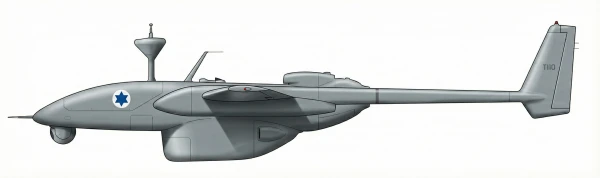
| Length | 8.5 m (27.9 ft) |
| Wingspan | 16.6 m (54.5 ft) |
| Max. takeoff weight | 1,270 kg (2,800 lbs) |
| Powerplant | 1 × Rotax 914 engine |
| Maximum speed | 207 km/h (129 mph) |
| Operational range | 1,000 km (621 mi) |
| Endurance | 52 hours |
| Service ceiling | 10,000 m (32,808 ft) |
| Climb rate | 2.5 m/s (8.2 ft/s) |
Recent Events — IAI Heron
6 events →-
JUN 142026
 Israel
Shot down by Hezbollah over the Beqaa Valley in northeastern Lebanon.
Shot down
Israel
Shot down by Hezbollah over the Beqaa Valley in northeastern Lebanon.
Shot down
-
MAR 282026
Israel
Shot down by IRGC Aerospace Force air defences east of Hormuz during a combat sortie.
Shot down
-
MAR 92026
Israel
Shot down over Markazi province in central Iran.
Shot down
-
MAR 62026
Israel
Heron serial 285 shot down over Lorestan province.
Shot down
-
MAR 62026
Israel
Shot down at Andika in Khuzestan province.
Shot down
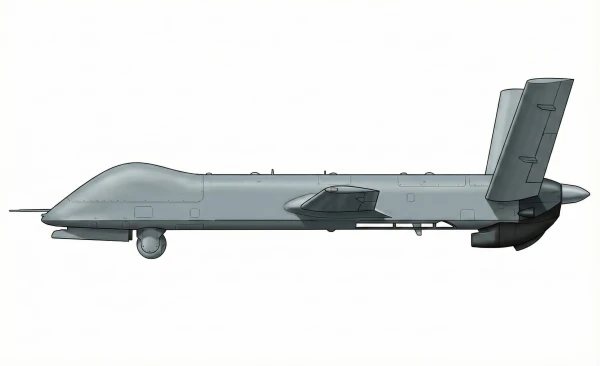
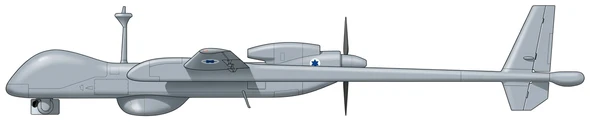
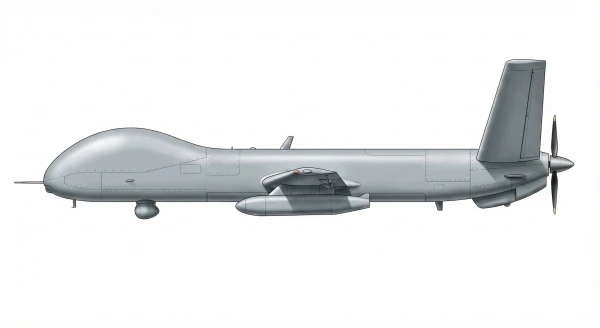
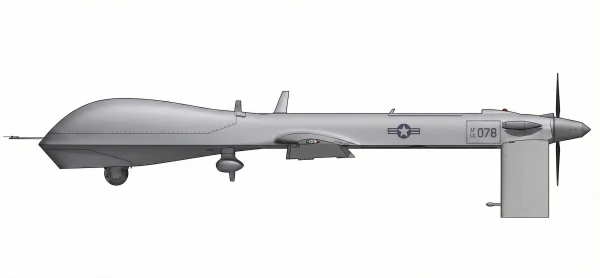
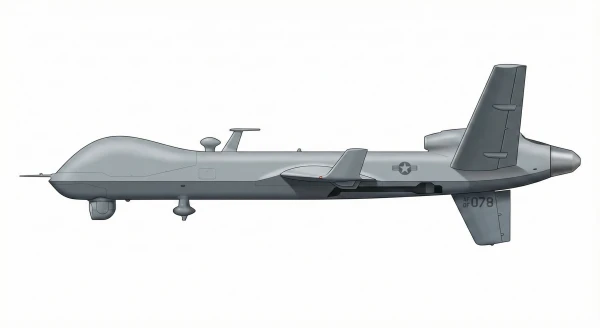

Description
The IAI Heron (Machatz-1) is a medium-altitude long-endurance (MALE) unmanned aerial vehicle (UAV) developed by the Malat division of Israel Aerospace Industries in Israel. Designed for reconnaissance and surveillance, the aircraft entered service in 2002 with India and was purchased by the Israel Defense Forces in 2005. It is capable of flight endurance up to 52 hours at altitudes up to 10,500 m (35,000 ft).
Development
IAI's Malat division designed the Heron for reconnaissance, target acquisition, and intelligence gathering. The Israel Defense Forces purchased US$50 million worth of Heron systems in September 2005. India approved Project Cheetah in July 2021 to upgrade roughly 90 Herons with satellite communications and sensors, though plans to arm the fleet were dropped in 2023.
Design
The aircraft has a wingspan of 16.6 m, a length of 8.5 m, an IAI SA-21 airfoil, and a maximum takeoff weight of 1,150 kg. Power is supplied by a 210 hp Rotax 916 four-cylinder engine driving a three-bladed pusher propeller. Flight control uses internal GPS navigation with pre-programmed autonomous flight paths, manual ground station control, or a combination of both. Systems include all-weather capability, fully automatic launch and recovery, autonomous return-to-base functions, and a 250 kg sensor payload supporting COMINT, ELINT, thermographic cameras, and radar linked via direct line-of-sight or satellite relay.
Armament
All export versions of the Heron are delivered unarmed. India planned potential additions of air-launched Spike NLOS anti-tank missiles to its Army units following 2025 procurement plans.
Operational History
The Israel Defense Forces deployed the Heron during Operation Cast Lead (2008–2009) in Gaza, assigning UAV squadrons directly to brigade combat teams; one aircraft was reported shot down during the conflict. The Indian Armed Forces acquired 12 Herons in 2002 following the Kargil Review, deploying them for search and rescue, maritime surveillance, and border monitoring along the Line of Actual Control. The Royal Australian Air Force operated two leased Herons in Afghanistan from 2009 to 2014, completing 27,000 flight hours before retiring them in June 2017. Frontex has operated Malta-based Herons since 2021 for Mediterranean maritime surveillance. Other operators include Singapore, Turkey, Germany, France, Brazil, Ecuador, Greece, Malta, Morocco, South Korea, and Vietnam.
Variants
- Super Heron: Unveiled in 2014, this variant features a 200-horsepower diesel engine, a top speed over 150 knots, and a 1,000 km satellite-controlled range.
- Heron TP: Also known as the IAI Eitan, this variant features automatic taxi-takeoff and landing functions alongside satellite communication systems.
- Heron Mk2: An updated variant equipped with automatic takeoff and landing systems, satellite communications, and operated by Indian forces.
- Turkish Heron: An export variant fitted with a stronger engine and Turkish-designed ASELSAN ASELFLIR-300T thermal targeting systems.
- EADS Harfang: A French operational derivative of the Heron, also designated as the Eagle.
Frequently Asked Questions
What type of aircraft is the IAI Heron?
What is the maximum speed of the IAI Heron?
What is the range of the IAI Heron?
When did the IAI Heron first fly?
Which countries operate the IAI Heron?
How much does a IAI Heron cost?
What is the service ceiling of the IAI Heron?
- AUG 62026 Updated Description updated
- AUG 52026 Updated Climb rate added
- JUL 272026 Updated Name updated
- JUL 232026 Updated Sources and cross-references refreshed
- APR 72026 Updated Sources and cross-references refreshed
- FEB 72026 Updated Endurance updated
- JAN 122026 Updated Range updated in a site-wide editorial pass