EMB 121 Xingu
Brazilian twin-turboprop utility aircraft, developed in the late 1970s, used for passenger transport, liaison and multi-engine training duties. Key figures: top speed 467 km/h, range 1,230 km, service ceiling 8,534 m, max takeoff weight 5,670 kg, built 106. In service with 1 air force as of 2026 — France (30).
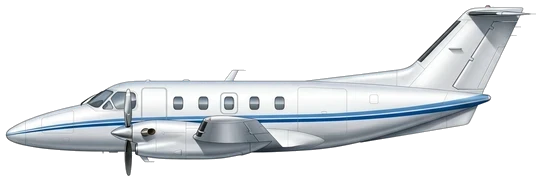
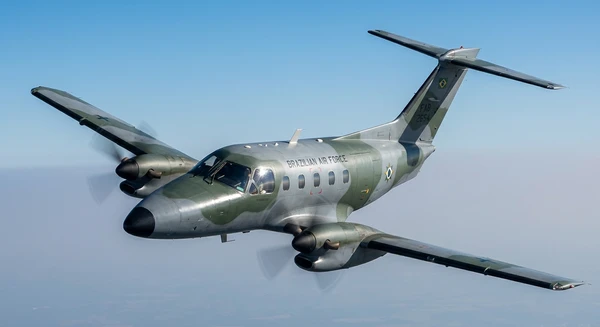
| Crew | 1–2 |
| Length | 12.3 m (40.2 ft) |
| Wingspan | 14.1 m (46.1 ft) |
| Height | 4.8 m (15.9 ft) |
| Wing area | 27.5 m² (296.0 sqft) |
| Empty weight | 3,710 kg (8,179 lbs) |
| Max. takeoff weight | 5,670 kg (12,500 lbs) |
| Powerplant | 2 × turboprops Pratt & Whitney Canada PT6A-135 559 kW each |
| Maximum speed | 467 km/h (290 mph) |
| Operational range | 1,230 km (764 mi) |
| Service ceiling | 8,534 m (27,999 ft) |
| Climb rate | 9.14 m/s (30.0 ft/s) |

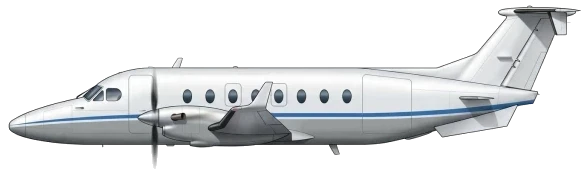
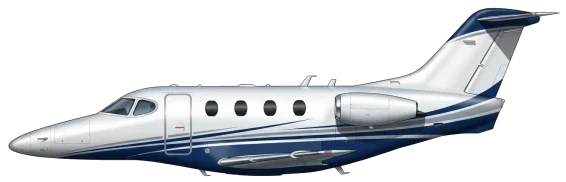
Description
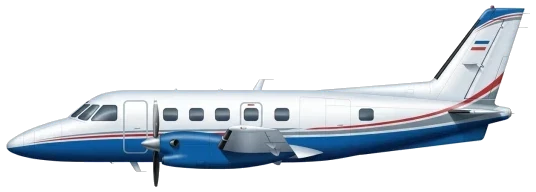
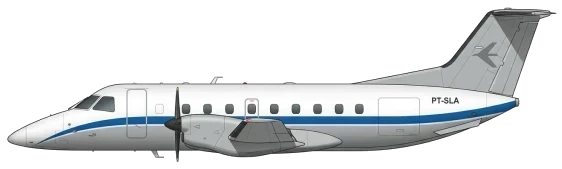
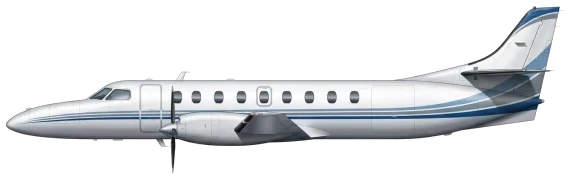
The Embraer EMB 121 Xingu is a twin-turboprop pressurised utility and light transport aircraft built in Brazil by Embraer. Derived from the EMB 110 Bandeirante, it first flew on 10 October 1976 and entered service on 20 May 1977. It is used mainly as a multi-engine trainer, liaison and VIP transport aircraft, and remains best known for its long service with the French Air and Space Force and French Naval Aviation.
Development
In 1975 Embraer began work on a family of three pressurised, T-tailed derivatives of the Bandeirante. The smallest and first launched was the EMB-121 Xingu, laid out for six passengers in a typical cabin and a maximum of nine. The prototype, registered PP-ZXI, flew from the São Paulo factory on 10 October 1976. Testing led to a 0.4 m increase in wingspan through swept wingtips, the fitting of a yaw damper and the addition of a large ventral fin. The first production aircraft flew on 20 May 1977 and was shown at that year's Paris Air Show; Brazilian type certification followed in May 1977 and British Civil Aviation Authority certification in July. A stretched version with 850 shp PT6A-42 engines flew on 26 July 1980 but was abandoned by 1984 as Embraer concentrated on the Tucano, Brasilia and AMX. The interim Xingu II first flew on 4 September 1981 and replaced the original model after 29 had been built. Production ran to 1987, with 106 aircraft completed, 51 of them exported.
Design
The Xingu is a low-wing cantilever monoplane with a circular-section pressurised fuselage, T-tail and retractable tricycle undercarriage. Its wing is derived from that of the Bandeirante with reduced span. The EMB 121A1 is powered by two Pratt & Whitney Canada PT6A-135 turboprops of 559 kW each, driving four-blade Hartzell HC-B4TN-3C/T9212B constant-speed metal propellers of 2.36 m diameter with auto-feathering and full reverse pitch. Maximum take-off weight is 5,670 kg, maximum speed 252 kt, cruise 205 kt at 3,050 m, range 1,230 km and service ceiling 28,000 ft. Payload is nine passengers or 770 kg of cargo with one pilot.
Operational History
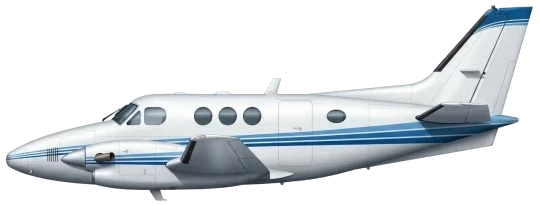
Early deliveries went mainly to Brazilian civil operators and the armed forces, with the Brazilian Air Force taking six in 1978 for VIP transport under the designation VU-9. In September 1980 the French Ministry of Defense selected the Xingu as a multi-engine trainer for the Armée de l'Air and the Aéronavale, also for naval liaison work, in preference to the Beechcraft King Air and Cessna 425. France ordered 41 aircraft, 25 for the Air Force and 16 for the Navy, with deliveries completed by the end of 1983. Brazilian Air Force Xingus served until 2010. In 2022 France still operated 22 with the Air Force and 10 with the Navy.
Variants
- EMB 121A Xingu I: Initial production version with two 680 shp Pratt & Whitney Canada PT6A-28 engines.
- EMB 121A1 Xingu II: Revised production version with 750 shp PT6A-135 engines, increased seating and greater fuel capacity.
- EMB 121B Xingu III: Projected stretched development with 850 shp PT6A-42 engines; one prototype converted, no production.
- EMB 123 Tapajós: Proposed 10-seat derivative with new wings and 1,120 shp PT6A-45 engines, abandoned in favour of the Xingu III.
- EC-9: Brazilian Air Force designation for an electronic warfare variant.
Frequently Asked Questions
What type of aircraft is the EMB 121 Xingu?
What is the maximum speed of the EMB 121 Xingu?
What is the range of the EMB 121 Xingu?
When did the EMB 121 Xingu first fly?
How many EMB 121 Xingu have been built?
Which countries operate the EMB 121 Xingu?
What is the service ceiling of the EMB 121 Xingu?
- AUG 202026 Created Page created with specifications, overview, origin and operators