Kowsar
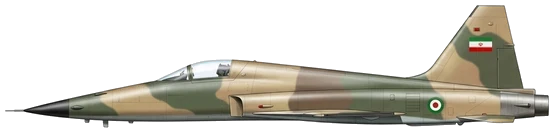
Iranian fighter jet based on the Northrop F-5, developed in the early 21st century and utilized for combat and pilot training. Key figures: top speed 1,700 km/h, range 2,900 km, service ceiling 15,800 m, max takeoff weight 9,312 kg, built 7. In service with 1 air force as of 2026 — Iran (5).
| Crew | 2 |
| Length | 14.5 m (47.4 ft) |
| Wingspan | 8.1 m (26.7 ft) |
| Height | 4.1 m (13.4 ft) |
| Wing area | 17.3 m² (186.0 sqft) |
| Empty weight | 4,349 kg (9,588 lbs) |
| Max. takeoff weight | 9,312 kg (20,529 lbs) |
| Powerplant | 2 × Owj 22 kN each |
| Maximum speed | 1700 km/h (Mach 1.6) |
| Operational range | 2,900 km (1,802 mi) |
| Service ceiling | 15,800 m (51,837 ft) |
| Climb rate | 175.0 m/s (574.1 ft/s) |

- Air-to-Air Short-Range Fatir
- Unguided Bomb 250 kg bomb
- Unguided Bomb 450 kg bomb
- Unguided Bomb 900 kg bomb
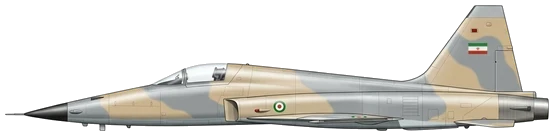
Description
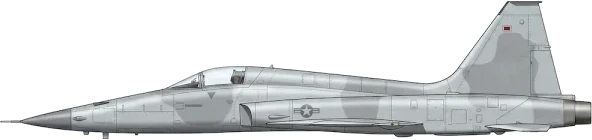
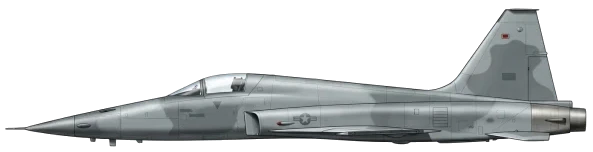
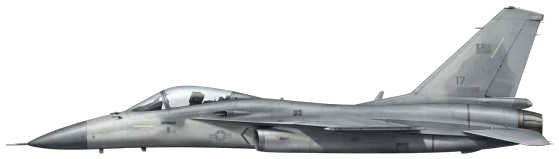
The HESA Kowsar is an Iranian fighter jet based on the airframe of the American Northrop F-5. Manufactured by the Iran Aircraft Manufacturing Industries Company (HESA), the assembly line for the aircraft was inaugurated on 3 November 2018, with at least seven aircraft initially produced.
Design
The aircraft is powered by two Owj turbojet engines, each generating 15.5 kN of dry thrust and 22 kN in full afterburner. The Kowsar's avionics suite features digital data networks, a glass cockpit, a heads-up display (HUD), ballistic computers, and smart mobile mapping systems. Its primary sensor is a multipurpose radar based on the Italian Grifo design—reportedly either a Chinese model or a domestic production—which Iranian sources state has a detection range of 93 km and the capability to engage two targets simultaneously. Western analysts have generally described the Kowsar as of limited value as a frontline combat aircraft but useful for training a new generation of Iranian pilots.
Armament
The Kowsar has a maximum payload capacity of 3,200 kg distributed across seven hardpoints, supplemented by an internal 20 mm cannon. The aircraft can carry up to four Fatir air-to-air missiles, which are reverse-engineered Sidewinder missiles. Its bomb load configurations include up to twelve 250 kg bombs, five 450 kg bombs, or two 900 kg bombs.
Operational History
The Iran Aviation Industries Organization announced its readiness to export the Kowsar on 26 November 2018. On 25 June 2020, the Islamic Republic of Iran Air Force accepted delivery of three Kowsar aircraft in non-combat colors during a ceremony in Isfahan.
Variants
-
Single-seater: A single-seat configuration of the aircraft.
-
Two-seater: A dual-seat configuration of the aircraft.
Frequently Asked Questions
What type of aircraft is the Kowsar?
What is the maximum speed of the Kowsar?
What is the range of the Kowsar?
When did the Kowsar first fly?
How many Kowsar have been built?
Which countries operate the Kowsar?
What is the service ceiling of the Kowsar?
- AUG 122026 Updated Range corrected to the ferry range with 3 external tanks
- AUG 62026 Updated Thrust updated
- JUL 12026 Created Page created: Kowsar