HH-60 Pave Hawk
American medium-lift utility military helicopter, derived from the S-70 and UH-60, designed for combat search and rescue and special operations in hostile environments since the late 1980s. Key figures: top speed 357 km/h, range 691 km, service ceiling 4,300 m, max takeoff weight 9,979 kg, built 112. In service with 2 air forces as of 2026 — United States (76), South Korea (17).
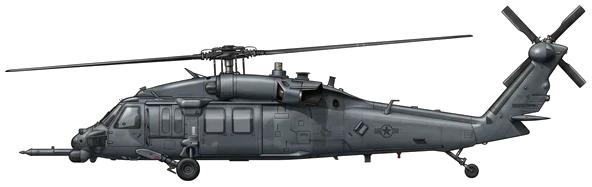
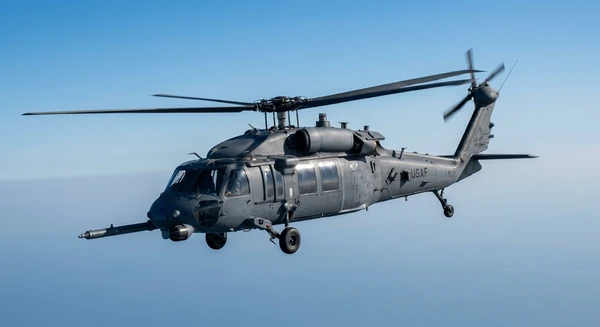
| Crew | 4 (2 pilots, 2 special mission aviators) |
| Length | 19.8 m (64.8 ft) |
| Wingspan | 16.1 m (52.7 ft) |
| Height | 5.1 m (16.7 ft) |
| Empty weight | 7,257 kg (15,999 lbs) |
| Max. takeoff weight | 9,979 kg (22,000 lbs) |
| Powerplant | 2 × General Electric T700-GE-700 / -701C 1,450 kW each |
| Maximum speed | 357 km/h (222 mph) |
| Operational range | 691 km (429 mi) |
| Service ceiling | 4,300 m (14,108 ft) |


Recent Events — HH-60 Pave Hawk
1 event →
Description
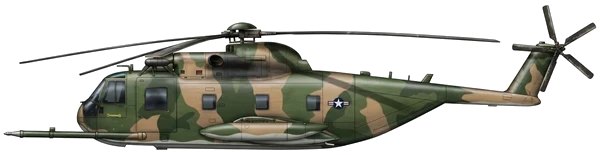
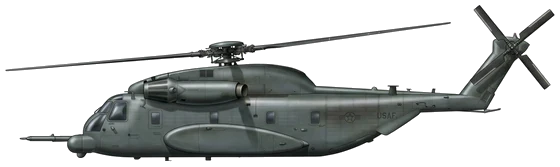
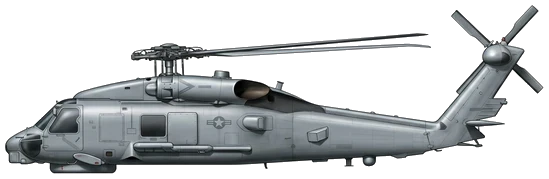
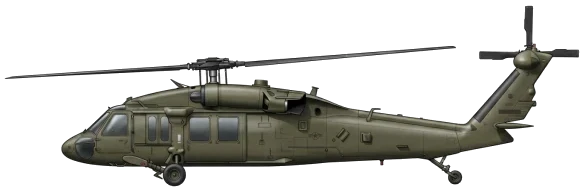
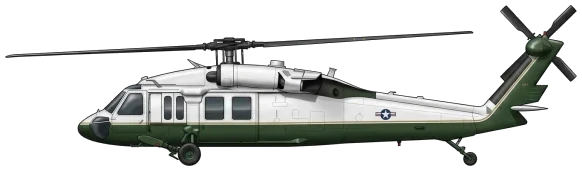
Manufactured by Sikorsky Aircraft, the HH-60 Pave Hawk and HH-60W Jolly Green II are twin-engine, medium-lift helicopters derived from the S-70 and UH-60 Black Hawk. In 1981, the US Air Force selected the UH-60A to replace the HH-3E Jolly Green Giant. Initial modified versions, known as "Credible Hawks," entered service in 1987 equipped with air refueling probes and internal fuel tanks. These were subsequently upgraded to MH-60G Pave Hawk specifications. In 1991, 82 units were redesignated HH-60G for combat search and rescue (CSAR) missions. To replace the aging HH-60G fleet, the USAF initiated the Combat Rescue Helicopter program, selecting the UH-60M-based HH-60W. The HH-60W first flew on May 17, 2019, with the 41st Rescue Squadron receiving its first aircraft in November 2020. The USAF plans to field 102 HH-60Ws, and the last operational HH-60G made its final flight with the California Air National Guard's 129th Rescue Wing at Moffett on 10 September 2026, completing the transition to the HH-60W.
Design
The HH-60 features a four-blade rotor system with folding blades for shipboard operations and air transport. The Precision Avionics Vectoring Equipment (PAVE) suite includes integrated inertial navigation, GPS, Doppler navigation, SATCOM, and Have Quick secure voice communications. Mission equipment consists of a retractable in-flight refueling probe, an 8,000-pound capacity cargo hook, and a rescue hoist capable of lifting 600 pounds from 200 feet. Sensors include forward-looking infrared (FLIR) and automatic flight control systems for night low-level operations, with some airframes utilizing color weather radar. Defensive systems comprise a radar warning receiver, infrared jammer, and flare/chaff countermeasure dispensers. Armament consists of two 7.62 mm miniguns or 0.50-caliber machine guns (GAU-18/A) mounted in crew-served or pilot-controlled positions.
Operational History
Operational deployments include Operation Desert Storm, where Pave Hawks provided CSAR coverage and supported Navy SEAL teams in Kuwait. During Operation Allied Force, the aircraft recovered two NATO pilots behind enemy lines. The type has supported operations in Iraq and Afghanistan, including Operation Iraqi Freedom and Operation Enduring Freedom. In April 2026, HH-60Ws participated in Operation Epic Fury to rescue a downed F-15E pilot in Iran. Non-combat missions include Mozambique flood relief in 2000, 2005 tsunami relief in Sri Lanka, and Hurricane Katrina recovery operations. Domestic operators include Air Combat Command, Air National Guard, and Air Force Reserve Command. South Korea operates the HH-60P variant, and Norway received approval for a potential sale of nine HH-60Ws in 2025.
Variants
- HH-60G Pave Hawk: A combat search and rescue helicopter upgraded from the UH-60A Credible Hawk.
- MH-60G Pave Hawk: A special operations variant equipped with long-range fuel tanks, FLIR, and T-700-GE-700/701 engines.
- HH-60W Jolly Green II: A combat rescue variant derived from the UH-60M featuring increased payload and cabin capacity.
- HH-60P Pave Hawk: A combat search and rescue variant of the UH-60P in service with the Republic of Korea Air Force.
- HH-60U: A designation for four modified "M" variants operated by the US Air Force for flight testing at Area 51.
Frequently Asked Questions
What type of aircraft is the HH-60 Pave Hawk?
What is the maximum speed of the HH-60 Pave Hawk?
What is the range of the HH-60 Pave Hawk?
When did the HH-60 Pave Hawk first fly?
How many HH-60 Pave Hawk have been built?
Which countries operate the HH-60 Pave Hawk?
What is the service ceiling of the HH-60 Pave Hawk?
- SEP 252026 Updated USAF retirement of the HH-60G in September 2026 recorded; planned HH-60W fleet updated
- AUG 212026 Updated Recorded the HH-60W Jolly Green II variant among the type designations
- AUG 142026 Updated Air force inventory entries linked to this aircraft page
- MAY 102026 Created Page created: HH-60 Pave Hawk