F-15E Strike Eagle
American all-weather multirole strike fighter, prominent in the Gulf War for precision strike and deep interdiction missions. Key figures: top speed 2,655 km/h, range 3,889 km, service ceiling 18,288 m, max takeoff weight 36,741 kg, unit price $31M, built 525. In service with 4 air forces as of 2026 — United States (334), Saudi Arabia (127), South Korea (59) and 1 other.
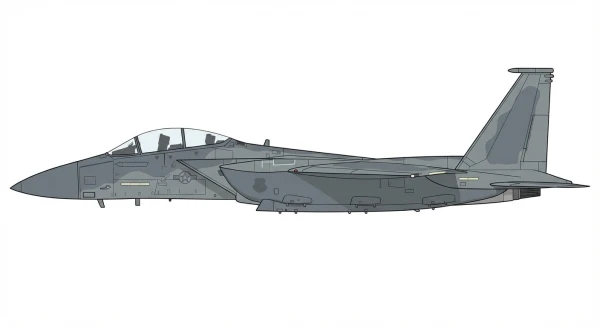
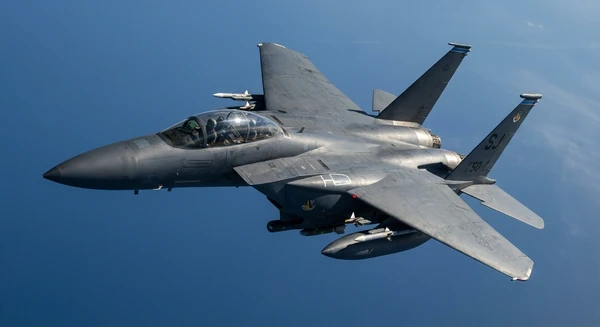
| Crew | 2 (pilot, WSO) |
| Length | 19.4 m (63.7 ft) |
| Wingspan | 13.1 m (42.8 ft) |
| Height | 5.6 m (18.5 ft) |
| Wing area | 56 m² (602.8 sqft) |
| Empty weight | 14,379 kg (31,700 lbs) |
| Max. takeoff weight | 36,741 kg (81,000 lbs) |
| Powerplant | 2 × turbofans Pratt & Whitney F100-PW-229 13,200 kgf each |
| Ejection seat | McDonnell Douglas ACES II |
| Maximum speed | 2655 km/h (Mach 2.65) |
| Operational range | 3,889 km (2,417 mi) |
| Service ceiling | 18,288 m (60,000 ft) |
| Climb rate | 254.0 m/s (833.3 ft/s) |
-
 United States
334
United States
334
-
 Saudi Arabia
127
Saudi Arabia
127
-
 South Korea
59
South Korea
59
-
 Singapore
40
Singapore
40
-
 Indonesia
0 +24
Indonesia
0 +24
- Air-to-Surface AGM-65 Maverick
- Air-to-Surface AGM-84 Harpoon
- Air-to-Surface AGM-130
- Air-to-Surface AGM-158 JASSM
- Air-to-Air Medium-Range AIM-7 Sparrow
- Air-to-Air Medium-Range AIM-120 AMRAAM
- Air-to-Surface Raytheon AGM-154 JSOW
- Air-to-Air Short-Range Raytheon AIM-9 Sidewinder
- Cluster Aerojet CBU-87/B CEM
- Thermonuclear B61
- Guided Boeing GBU-31/B JDAM
- Guided Boeing GBU-38/B JDAM
- Guided Boeing GBU-39/B SDB
- Guided Boeing GBU-54
- Cluster CBU-89/B Gator
- Cluster CBU-170
- Guided GBU-72/B
- Cluster Lockheed-Martin CBU-103/B WCMD
- Cluster Lockheed-Martin CBU-104/B WCMD
- Low-Drag Mk 82
- Low-Drag Mk 84
- Laser-Guided Raytheon GBU-10 Paveway II
- Laser-Guided Raytheon GBU-12
- Laser-Guided Raytheon GBU-51/B Paveway II
- Guided Rockwell GBU-15(V)1/B MGWS
- Cluster Textron CBU-97/B SFW
- Cluster Textron CBU-105/B WCMD
Recent Events — F-15E Strike Eagle
8 events →-
SEP 92026
 United States
Around eight F-15E lightly damaged in the Iranian missile barrage on Muwaffaq Salti AB and returned to service, CBS News and a US official cited by Reuters reported.
Damaged
United States
Around eight F-15E lightly damaged in the Iranian missile barrage on Muwaffaq Salti AB and returned to service, CBS News and a US official cited by Reuters reported.
Damaged
-
JUL 172026
United States
F-15E damaged in the Iranian missile attack on Muwaffaq Salti Air Base, Azraq.
Damaged
-
APR 32026
United States
Shot down by Iranian air defense over southwest Iran during strike mission; both crew members rescued after two-day CSAR operation.
Shot down
-
MAR 22026
United States
Third F-15E Strike Eagle shot down over Kuwait by a Kuwaiti F/A-18 Hornet in friendly fire incident during Operation Epic Fury; crew ejected safely.
Shot down
-
MAR 22026
United States
Second F-15E Strike Eagle shot down over Kuwait by a Kuwaiti F/A-18 Hornet in friendly fire incident during Operation Epic Fury; crew ejected safely.
Shot down
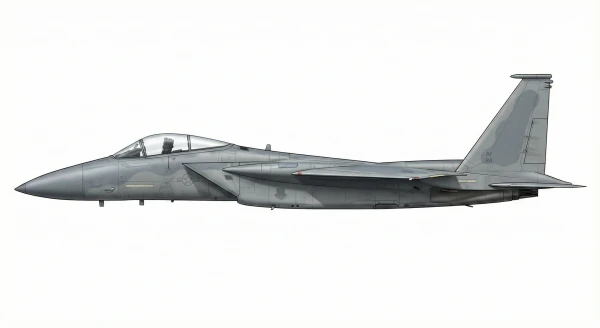
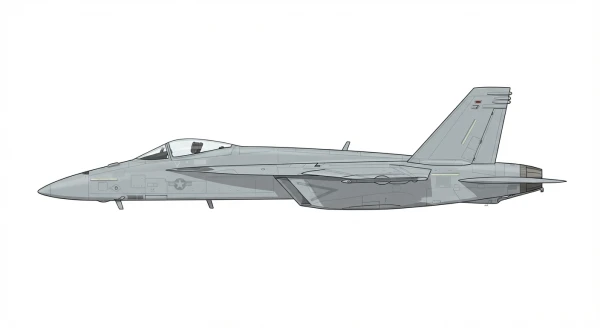
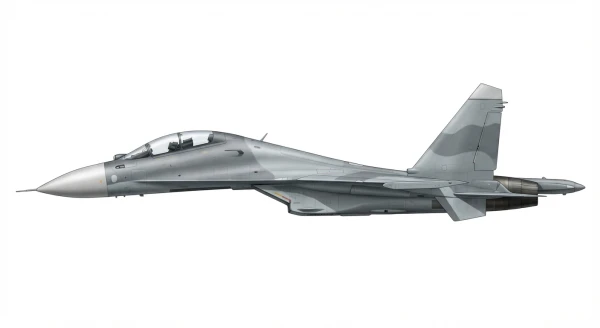
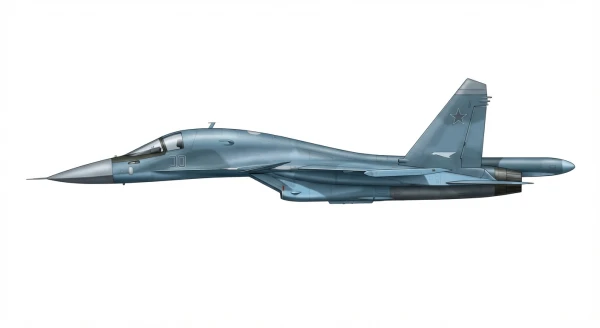
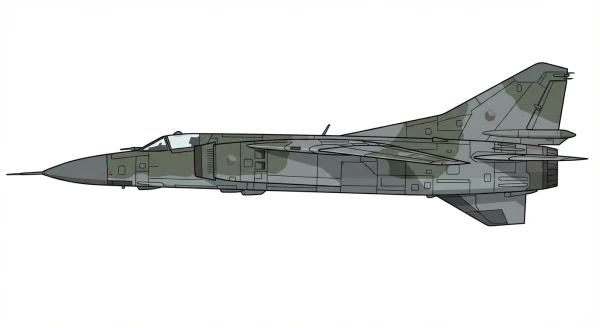
Description
The McDonnell Douglas (now Boeing) F-15E Strike Eagle is an American two-seat, all-weather multirole strike fighter derived from the F-15 Eagle. Designed for long-range interdiction without fighter escort or dedicated jamming support, it entered US Air Force service in 1988 and replaced the F-111 Aardvark. It is distinguished by conformal fuel tanks, LANTIRN pods under the intake ramps and a tandem cockpit. As of 2026 it is the USAF's principal tactical nuclear delivery aircraft, able to carry up to five B61 Mod 12 bombs.
Development
McDonnell Douglas retained a secondary ground-attack capability in the F-15 design and flew the Advanced Fighter Capability Demonstrator (modified TF-15A 71-0291) on 8 July 1980. The USAF announced the Enhanced Tactical Fighter programme in March 1981, later renamed the Dual-Role Fighter competition, pitting the F-15E against the General Dynamics F-16XL. Evaluation ran to 30 April 1983, with the F-15E logging over 200 flights and validating 16 weapons configurations. The USAF selected the F-15E on 24 February 1984, citing lower development cost (US$270 million versus US$470 million), growth potential and twin-engine redundancy. The first aircraft, 86-0183, flew on 11 December 1986, and deliveries to the 405th Tactical Training Wing at Luke AFB began in April 1988. A total of 236 were built for the USAF through 2001. Later upgrades include the AN/APG-82(V)1 AESA radar (IOC 2014) and the AN/ALQ-250 EPAWSS, first fitted in 2022.
Design
The airframe derives from the two-seat F-15B with a redesigned aft fuselage and a common engine bay using superplastic forming and diffusion bonding. The rear cockpit is equipped for a weapon systems officer with multiple displays and its own stick and throttle. Two conformal fuel tanks carry 750 US gallons and house six hardpoints in two rows of three. Early aircraft used Pratt & Whitney F100-PW-220 engines of 23,770 lbf; later batches use the F100-PW-229 at 29,160 lbf, while F-15K, F-15SG and F-15SA aircraft use the General Electric F110-GE-129. Sensors include the AN/APG-70 or APG-82 radar, a ring-laser gyro INS, the AN/AAQ-13 navigation pod with terrain-following radar, and AN/AAQ-14, Litening or Sniper targeting pods.
Armament
Fixed armament is one 20 mm M61A1 cannon with 500 rounds. Four wing pylons, fuselage pylons and CFT bomb racks carry 23,000 lb of fuel and ordnance. Air-to-air weapons include the AIM-7 Sparrow, AIM-9 Sidewinder and AIM-120 AMRAAM; air-to-surface weapons include the AGM-65 Maverick, AGM-84 Harpoon, AGM-84H/K SLAM-ER, AGM-130, AGM-154 JSOW and AGM-158 JASSM. Bombs range from Mk 82 and Mk 84 to GBU-10/12/24/28 Paveways, GBU-31/38 JDAM, GBU-39 SDB and the B61.
Operational History
The F-15E reached initial operational capability on 30 September 1989 with the 336th Tactical Fighter Squadron at Seymour Johnson AFB. Twenty-four aircraft struck Scud installations in western Iraq on 17 January 1991; two were lost during Desert Storm, and one scored an air-to-air kill against a Mi-24 with a GBU-10 on 14 February. Subsequent operations included Southern Watch, Northern Watch, Desert Fox, Deny Flight, Deliberate Force, Allied Force, Enduring Freedom, Iraqi Freedom, Odyssey Dawn and Inherent Resolve. On 13 April 2024, F-15Es shot down over 70 Iranian one-way attack UAVs. Export customers are Israel, South Korea, Saudi Arabia and Singapore.
Variants
- F-15E: Two-seat all-weather strike and ground-attack aircraft for the USAF; 236 built 1985–2001.
- F-15I Ra'am: Israeli Air Force variant with Elisra ASPS electronic warfare suite, DASH helmet-mounted sight and APG-70I radar; 25 built 1996–1998.
- F-15K Slam Eagle: Republic of Korea Air Force variant with AAS-42 IRST, APG-63(V)1 radar and Taurus KEPD 350; 59 in service.
- F-15S: Royal Saudi Air Force variant with reduced APG-70 synthetic aperture performance; 72 built 1996–1998, being upgraded to F-15SR standard.
- F-15SG: Republic of Singapore Air Force variant with AN/APG-63(V)3 radar; 40 delivered by 2018.
Frequently Asked Questions
What type of aircraft is the F-15E Strike Eagle?
What is the maximum speed of the F-15E Strike Eagle?
What is the range of the F-15E Strike Eagle?
When did the F-15E Strike Eagle first fly?
How many F-15E Strike Eagle have been built?
Which countries operate the F-15E Strike Eagle?
How much does a F-15E Strike Eagle cost?
What is the service ceiling of the F-15E Strike Eagle?
- AUG 302026 Updated Description updated
- AUG 272026 Updated Unit price re-based (flyaway cost of the most-produced variant, then-year USD convention)
- AUG 142026 Updated Per-engine thrust corrected against the engine variant the entry names
- AUG 122026 Updated Range corrected to the ferry range with conformal and external tanks
- AUG 62026 Updated Description updated
- AUG 52026 Updated Powerplant and thrust updated
- JUL 232026 Updated Sources and cross-references refreshed