Y-7
Chinese twin turboprop transport and passenger aircraft, developed in the late 20th century, used for military transport and civil aviation. Key figures: top speed 503 km/h, range 1,982 km, service ceiling 8,750 m, max takeoff weight 21,800 kg. In service with 9 air forces as of 2026 — China (75), Angola (2), Cambodia (2) and 6 others.
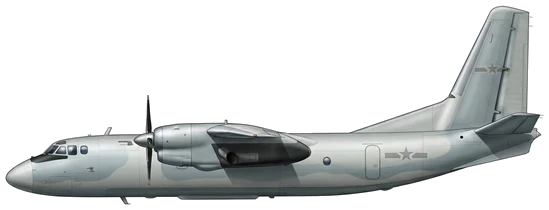
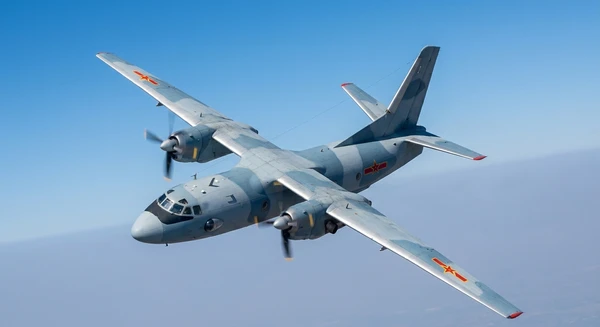
| Crew | 3 |
| Length | 24.2 m (79.5 ft) |
| Wingspan | 29.7 m (97.3 ft) |
| Height | 8.6 m (28.1 ft) |
| Wing area | 75.3 m² (810.1 sqft) |
| Empty weight | 14,988 kg (33,043 lbs) |
| Max. takeoff weight | 21,800 kg (48,061 lbs) |
| Powerplant | 2 × Dongan WJ-5A 1,800 kW each |
| Maximum speed | 503 km/h (313 mph) |
| Operational range | 1,982 km (1,232 mi) |
| Service ceiling | 8,750 m (28,707 ft) |


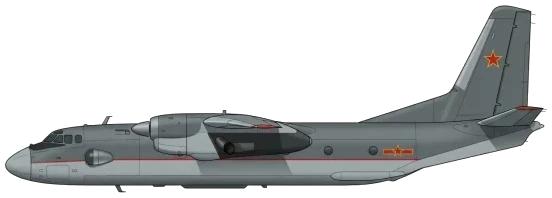
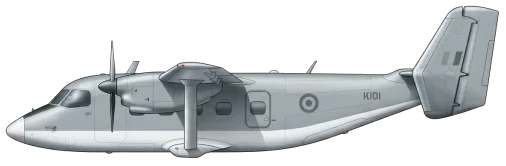
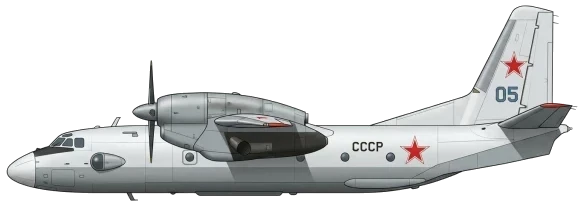
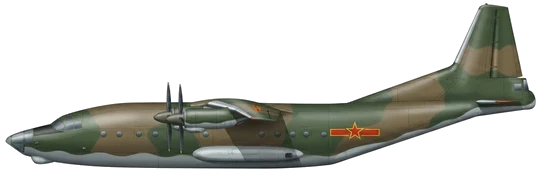
Description
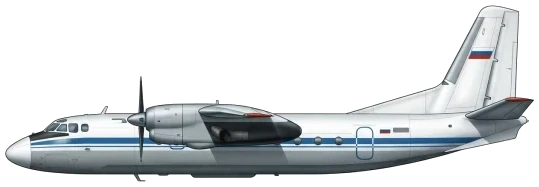
The Xi'an Y-7 is a Chinese twin-turboprop transport and passenger aircraft developed as a license-produced version of the Soviet Antonov An-24 family. The Xi'an aircraft factory initiated the project in 1966, leading to the first flight of a Chinese-assembled An-24T on 25 December 1970. Serial production began in 1977, though progress was slowed by the Cultural Revolution. A pre-production aircraft was displayed at Nanyuan air base on 17 April 1982, and the first production model completed its initial flight in February 1984. Early production variants utilized the WJ-5A1 turboprop engine. Later developments proceeded independently of the An-24, including the reverse-engineered Y-7H tactical transport, which was copied from the Antonov An-26.
Design
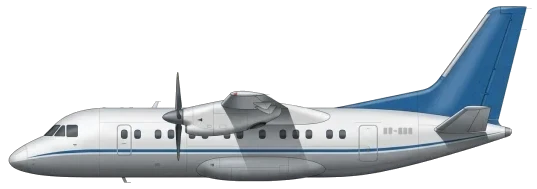
The Y-7 design matches the Antonov An-24RV, utilizing a full set of passenger windows and a booster jet engine. In the Y-7-100 configuration, the aircraft features a wing area of 75.26 square meters, an aspect ratio of 11.69, and TsAGI S-5-18 root and TsAGI S-3-13 tip airfoils. Power is provided by two Dongan WJ-5A turboprop engines driving four-bladed constant-speed feathering propellers. The Y-7-100 variant incorporates winglets, a redesigned cabin accommodating 52 passengers, western-sourced avionics, and a reduced crew of three. For training, the HYJ-7 variant incorporates specialized systems including a stabilized HM-1A bombsight, bomb-aiming radar, and a TNL-7880 combined navigation system.
Operational History
Initial Y-7 deliveries went to the People's Liberation Army Air Force (PLAAF) as transports and to the Civil Aviation Administration of China (CAAC) as 52-seat airliners. Current military operators include the PLAAF, PLA Ground Force Aviation, and PLA Naval Air Force. Former international operators include military and civil entities in Cambodia, Iran, Laos, Mauritania, and Zimbabwe, alongside multiple Chinese domestic airlines. On 22 June 2000, a Wuhan Airlines Y-7 crashed near Sitai after a lightning strike, resulting in 49 fatalities. A PLAAF Y-7 crashed near Hengshui on 19 October 2006, causing two fatalities.
Variants
- Xi'an Y-7-100: An upgraded version developed with HAECO featuring western avionics, winglets, a redesigned cockpit and cabin, and a three-person flight crew.
- Xi'an Y-7H: A reverse-engineered tactical transport variant based on the Antonov An-26, featuring a rear loading ramp and military equipment.
- Xi'an HYJ-7: A specialized pilot and crew trainer for H-6 heavy bombers, equipped with a stabilized bombsight and radar.
- Xi'an MA60: A westernized 60-seat variant designed to meet Joint Airworthiness Requirements and target export markets.
- Xi'an JZY-01 / Y-7 AWACS: A carrier-based airborne early warning and control variant featuring four rudders, used as a testbed for the KJ-600.
Frequently Asked Questions
What type of aircraft is the Y-7?
What is the maximum speed of the Y-7?
What is the range of the Y-7?
When did the Y-7 first fly?
Which countries operate the Y-7?
What is the service ceiling of the Y-7?
- JUL 232026 Updated Sources and cross-references refreshed
- JUN 302026 Created Page created: Y-7