An-26 Curl
Soviet twin-engined transport aircraft, widely utilized in both civilian and military roles since the 1960s. Key figures: top speed 540 km/h, range 2,500 km, service ceiling 7,500 m, max takeoff weight 24,000 kg, unit price $22M, built 1,403. In service with 32 air forces as of 2026 — Russia (115), China (19), Mongolia (6) and 29 others.
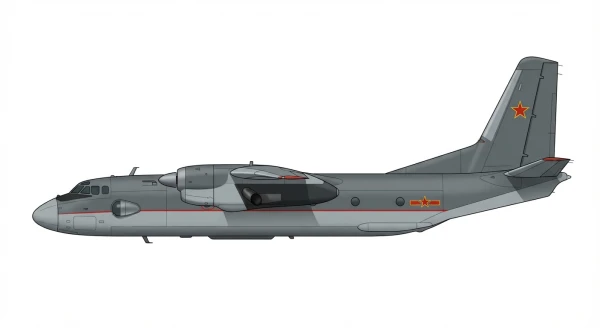
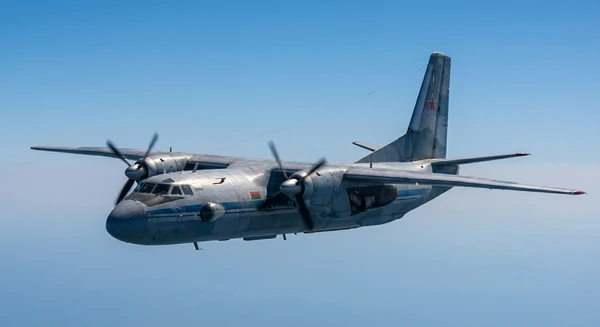
| Crew | 4 |
| Length | 23.8 m (78.1 ft) |
| Wingspan | 29.3 m (96.1 ft) |
| Height | 8.6 m (28.1 ft) |
| Wing area | 75.0 m² (807.1 sqft) |
| Empty weight | 15,020 kg (33,113 lbs) |
| Max. takeoff weight | 24,000 kg (52,911 lbs) |
| Powerplant | 2 × turboprops Progress AI-24VT 2,103 kW each |
| Maximum speed | 540 km/h (336 mph) |
| Operational range | 2,500 km (1,553 mi) |
| Service ceiling | 7,500 m (24,606 ft) |
| Climb rate | 8.0 m/s (26.2 ft/s) |
-
 Russia
115
Russia
115
-
 China
19
China
19
-
 Mongolia
6
Mongolia
6
-
 Nicaragua
4
Nicaragua
4
-
 Uzbekistan
4
Uzbekistan
4
-
 Angola
3
Angola
3
- 🇨🇩 Congo Democratic Republic 3
-
 Cuba
3
Cuba
3
-
 Serbia
3
Serbia
3
-
 Syria
3
Syria
3
-
 Chad
3
Chad
3
-
 Belarus
2
Belarus
2
-
 Ivory Coast
2
Ivory Coast
2
-
 Djibouti
2
Djibouti
2
-
 Kyrgyzstan
2
Kyrgyzstan
2
-
 Cambodia
2
Cambodia
2
- 🇱🇦 Laos 2
-
 Malawi
2
Malawi
2
- 🇸🇸 South Sudan 2
-
 Ukraine
2
Ukraine
2
-
 Vietnam
2
Vietnam
2
-
 Afghanistan
1
Afghanistan
1
-
 Cameroon
1
Cameroon
1
-
 Moldova
1
Moldova
1
-
 Mali
1
Mali
1
-
 Mozambique
1
Mozambique
1
-
 Namibia
1
Namibia
1
-
 Romania
1
Romania
1
-
 Sudan
1
Sudan
1
-
 Tajikistan
1
Tajikistan
1
-
 Turkmenistan
1
Turkmenistan
1
-
 Zambia
1
Zambia
1
Recent Events — An-26 Curl
12 events →-
SEP 172026
 Russia
×2
Two An-26 transports destroyed in the same SBU drone strike on the Rostov-on-Don Tsentralny apron.
Destroyed
Russia
×2
Two An-26 transports destroyed in the same SBU drone strike on the Rostov-on-Don Tsentralny apron.
Destroyed
-
MAR 312026
Russia
Crashed into cliff in Bakhchisarai mountains during scheduled flight over Crimea; all 29 on board killed.
Destroyed
-
DEC 112025
Russia
An-26KPA RF-46873, Blue 54, of the 318th Composite Aviation Regiment destroyed by drones during takeoff at Kacha air base, Crimea. At least one crew member died.
Destroyed
-
SEP 242025
Russia
An-26 Blue 30 destroyed on the ground during a Ukrainian drone attack on Kacha air base, Crimea.
Destroyed
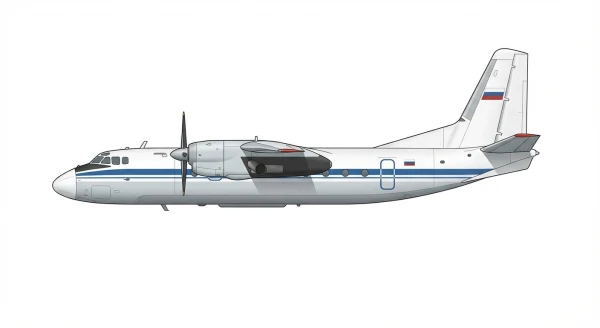
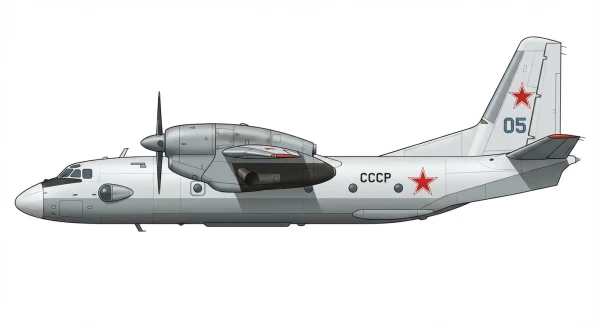
Description
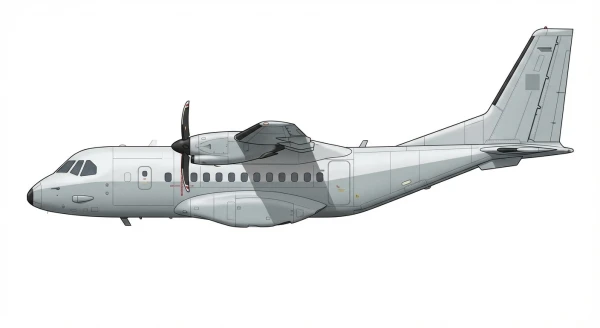
The Antonov An-26 (NATO reporting name: Curl) is a Soviet twin-engined turboprop regional airliner and military transport aircraft produced from 1969 to 1986. Derived as the third member of the Antonov An-24 family, the aircraft was primarily delivered to Soviet Military Transport Aviation (VTA). It is recognized for its retractable cargo ramp that allows pressurized flight and direct loading from vehicle beds, as well as its secondary application as an improvised bomber.
Development
Antonov initiated development of the An-26 in 1966 to resolve cargo handling limitations inherent to the ventral hatch of the preceding An-24T. The design bureau received official authorization to proceed in March 1968, prioritizing military transport requirements. The second prototype (CCCP-26184) made its public debut at the 27th Paris Air Show. The aircraft was produced in the Soviet Union until 1986, and was also manufactured in China without a licensing agreement as the Y-14, later designated under the Xi'an Y-7 series.
Design
The An-26 utilizes a high-set cantilever wing and long main undercarriage legs while sharing most of its airframe with the An-24. Main propulsion consists of two wing-mounted Progress AI-24VT turboprop engines, augmented by a Tumansky Ru19A-300 turbojet booster in the starboard nacelle for additional takeoff thrust and auxiliary power. The fuselage incorporates a specialized rear ramp that lowers for vehicles, slides underneath for loading from truck beds, and seals the cargo hold to enable flight pressurization. Military equipment includes tip-up canvas paratroop seats, an overhead traveling hoist, static line cables, and bulged observation windows. The interior can be reconfigured within 30 minutes to accommodate 24 stretchers for medical evacuation.
Armament
The aircraft features external bomb racks mounted on the fuselage fore and aft of the main landing gear legs. During the Cambodian–Vietnamese War, the Vietnam People's Air Force modified the interior with a release system to roll captured Mark 82 bombs out of the cargo bay. Total payload capacity for military cargo or ordnance is 5,500 kg.
Operational History
The Afghan Air Force acquired the An-26 in 1977, operating 36 units by 1986 for commando drops and tactical transport. The aircraft saw combat as an improvised bomber with the Vietnam People's Air Force in Cambodia and the Sudanese Air Force in Darfur and the Second Sudanese Civil War. In 1995, an An-26 was used in the Purulia arms drop incident over West Bengal, India. Export customers include Angola, Cuba, East Germany, Hungary, Peru, Poland, and Vietnam.
Variants
- An-26: Baseline twin-engine tactical transport aircraft designated "Curl-A" by NATO.
- An-26B: Civil cargo version featuring stowable cabin-side ramps and higher-thrust Progress AI-24VT engines.
- An-26RT: Battlefield communications relay and electronic intelligence variant equipped with radio relay systems.
- An-26Sh: Navigator training variant built in Kyiv for the Soviet Air Force.
- Xian Y-7H: Chinese military transport version based on the An-26 design.
Frequently Asked Questions
What type of aircraft is the An-26 Curl?
What is the maximum speed of the An-26 Curl?
What is the range of the An-26 Curl?
When did the An-26 Curl first fly?
How many An-26 Curl have been built?
Which countries operate the An-26 Curl?
How much does a An-26 Curl cost?
What is the service ceiling of the An-26 Curl?
- AUG 62026 Updated Description updated
- AUG 52026 Updated Range, wingspan and 6 more fields updated
- APR 72026 Updated Sources and cross-references refreshed
- JAN 242026 Updated Price updated