Cyprus Army
The Cypriot Army fields 858 active armoured vehicles and artillery systems in 2026 — 134 main battle tanks, 43 infantry fighting vehicles, 329 armoured personnel carriers, 138 light armoured vehicles, 8 protected mobility vehicles, 56 self-propelled guns, 116 towed artillery pieces, 34 rocket launchers. It ranks #79 of 90 armies on the ARMS Index.
Full inventory in 2026
23 equipment types| Equipment | Variant | Active | Stored | Ordered | |
|---|---|---|---|---|---|
| Main Battle Tank | |||||
|
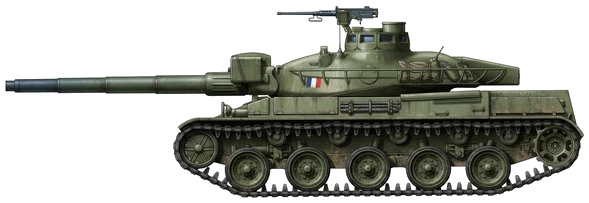
AMX-30 | AMX-30B2 | 52 | — | — |
|
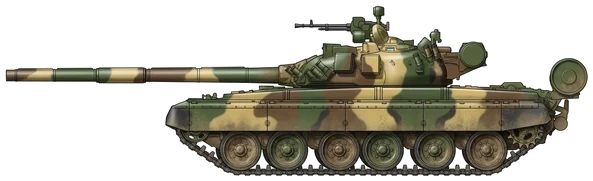
T-80 | T-80U | 54 | — | — |
|
|
T-80 | T-80UK | 28 | — | — |
| Infantry Fighting Vehicle | |||||
|
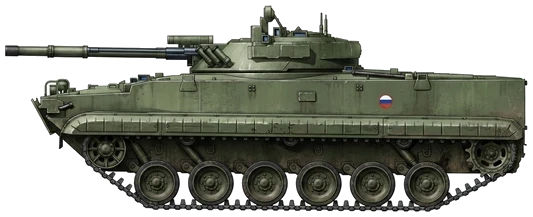
BMP-3 | — | 43 | — | — |
| Armored Personnel Carrier | |||||
| Leonidas II | Leonidas-2 | 197 | — | — | |
| Tatrapan | artillery command vehicle | 3 | — | — | |
|
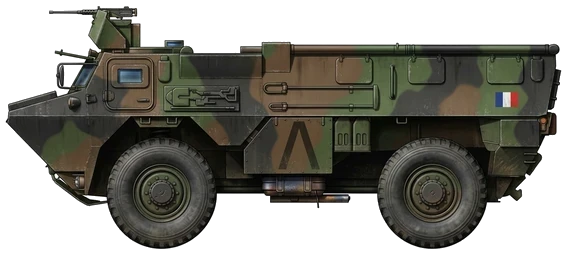
VAB | VAB VTT | 98 | — | — |
|
|
VAB | VAB VCI (20 mm turret) | 27 | — | — |
|
|
VAB | VAB PC (command post) | 4 | — | — |
| Light Armoured Vehicle | |||||
| EE-3 Jararaca | scout car (MILAN-armed vehicles excluded) | 12 | — | — | |
|
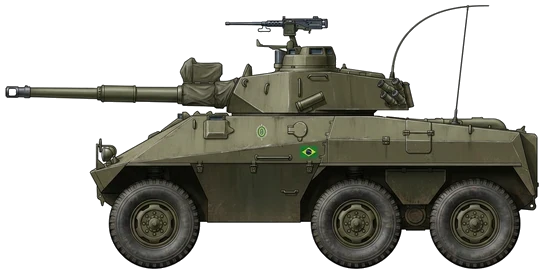
EE-9 Cascavel | Mk IV/V | 126 | — | — |
| Protected Mobility Vehicle | |||||
| BOV M16 Miloš | artillery reconnaissance and battery command vehicle | 8 | — | — | |
| Self-Propelled Artillery | |||||
|
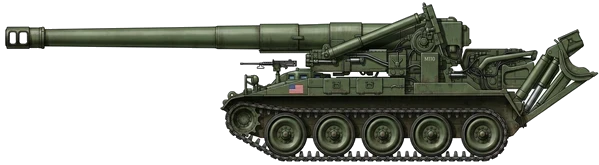
M110 | M110A2 203mm | 8 | — | — |
| Mk F3 | 155mm | 12 | — | — | |
| Nora B-52 | 155mm | 24 | — | — | |
| Zuzana | 155mm | 12 | — | — | |
| Towed Artillery | |||||
| BS-3 | 100mm M1944 | 20 | — | — | |
| M-56 | 105mm | 72 | — | — | |
|
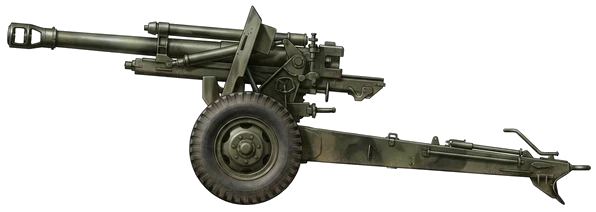
M114 | 155mm | 12 | — | — |
| TRF1 | 155mm | 12 | — | — | |
| Multiple Launch Rocket System | |||||
|
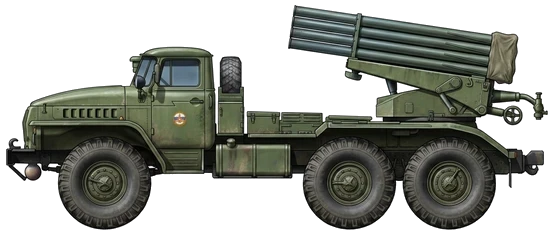
BM-21 Grad | 122mm | 4 | — | — |
| M-63 Plamen | 128mm towed | 24 | — | — | |
| Tamnava | 122mm | 6 | — | — | |
Overview
The ground forces of the Republic of Cyprus are the land component of the Cypriot National Guard (Ethniki Froura), which also includes the Naval Command and the Air Command. The National Guard General Staff in Nicosia directs the force under the Ministry of Defence, and its chief is by tradition a Hellenic Army general. Manpower comes from Greek Cypriot male conscripts serving 14 months, a cadre of career officers and non-commissioned officers, contract professional soldiers, and a large reserve that fills out most formations on mobilisation.
The land forces consist of infantry and mechanised infantry brigades holding defensive sectors along the United Nations buffer zone, a support brigade, and the 20th Armoured Brigade, the main armoured formation. Special Forces Command controls the commando units (Lochoi Oreinon Katadromon), and Artillery, Engineers and Signal Commands provide support. The Hellenic Force in Cyprus (ELDYK), a Greek Army mechanised formation of battalion-plus size, is stationed near Nicosia under bilateral arrangements but remains outside the National Guard's chain of command.
Armoured units operate T-80U and T-80UK main battle tanks bought from Russia, with older AMX-30B2 tanks retained pending replacement. Mechanised infantry uses BMP-3 infantry fighting vehicles and Leonidas-2 armoured personnel carriers built in Greece on an Austrian Steyr design. Motorised units use VAB wheeled vehicles, some armed with HOT missiles. Reconnaissance units field EE-9 Cascavel armoured cars and EE-3 Jararaca scout vehicles. Infantry anti-armour weapons include Milan missiles and Spike LR2 missiles mounted on Enok light vehicles. The artillery operates Nora B-52 and Zuzana 155 mm self-propelled gun-howitzers, Mk F3 155 mm and M110A2 203 mm self-propelled guns, TRF1 and M114 155 mm towed howitzers, 105 mm M-56 guns, and M-63 Plamen and BM-21 Grad rocket launchers, as well as 120 mm mortars.
In air defence, the Israeli Barak MX, fully delivered in 2025, forms the backbone of the network, while Tor-M1 and Buk-M1-2 systems remain in a supplementary role. Aspide missiles and Oerlikon 35 mm guns operate with Skyguard fire control, and Mistral missiles cover short range. The Air Command flies helicopters in support of land forces, including H145M helicopters armed with Spike missiles, which replaced Mi-35P gunships sold to Serbia.
The primary mission is territorial defence against the Turkish forces stationed in the northern third of the island. Formed in 1964 during the intercommunal crisis, the National Guard fought at Tillyria that year and during the 1974 Turkish invasion, when Turkish forces took northern Cyprus despite National Guard and ELDYK resistance. It has no expeditionary role.
Modernisation is moving the force away from Russian equipment, which became hard to support after European Union sanctions on Russia. The United States has suspended its arms embargo on Cyprus year by year, most recently in September 2026, opening access to American military sales and surplus equipment. Cyprus also buys from France, Israel and Greece, and in 2026 signed a loan agreement under the European Union's SAFE instrument to fund air defence, armoured vehicles, drones and counter-drone systems, with replacement of the T-80 fleet under study.
Frequently Asked Questions
How many armoured vehicles does Cyprus have?
How many tanks does Cyprus have?
How much artillery does Cyprus have?
How does Cyprus's army rank globally?
How many active soldiers does Cyprus have?
- SEP 252026 Updated Army overview added: organisation, equipment, operations and modernisation
- SEP 232026 Updated Army inventory added: T-80U tanks, BMP-3 IFVs, EE-9 Cascavel armoured cars, Nora B-52 howitzers, Tamnava rocket launchers and more.