AW169 vs Z-9 Haitun
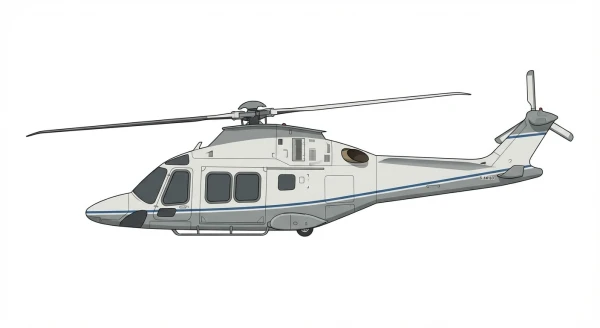
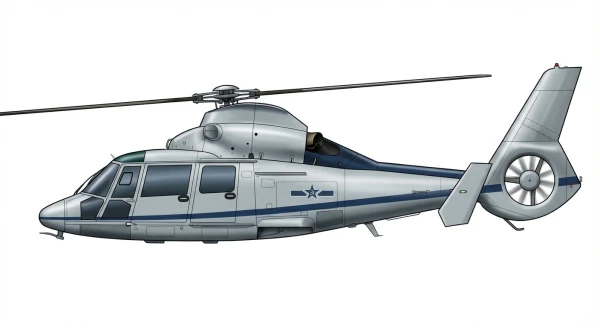
AW169 vs Z-9 Haitun at a glance — top speed 306 vs 315 km/h, range 820 vs 1,000 km, max takeoff weight 4,500 vs 4,100 kg, built 130 vs 200 units.
| AW169 | Z-9 Haitun | |
|---|---|---|
| Origin country | 🇬🇧 United Kingdom🇮🇹 Italy | 🇨🇳 China |
| Category | Military Training Aircraft | Military Helicopters |
| Manufacturer | AgustaWestland | Harbin |
| First flight | 10 May 2012 | 1 January 1981 |
| Year introduced | 2015 | 1994 |
| Number produced | 130 units | 200 units |
| Average unit price | $9 million | -- |
| Wingspan | 12.1 m | 11.9 m |
| Height | 4.5 m | 3.5 m |
| Length | 14.7 m | 13.7 m |
| Maximum speed | 306 km/h | 315 km/h |
| Operational range | 820 km | 1,000 km |
| Service ceiling | 5,000 m | 6,000 m |
| Max. takeoff weight | 4,500 kg | 4,100 kg |
| Empty weight | 2,850 kg | 2,050 kg |
| Total thrust | 2 x 750 kW | 2 x 544 kW |
Detailed Comparison
The Harbin Z-9 Haitun and Leonardo AW169 occupy the same light-intermediate weight class but originate from different design eras and philosophies. The Z-9 is a Chinese military workhorse derived from the 1970s-era French AS365 Dauphin, progressively indigenized and adapted for combat over decades. In contrast, the AW169 is a 21st-century clean-sheet design, leveraging modern technology for performance, efficiency, and system commonality with a larger family of helicopters.
Development and Design
The Z-9's development is a story of strategic license-production and incremental modernization. Beginning as a direct copy of the AS365N1, China moved to domestic production with the Z-9B, featuring 70% local content and a modified 11-blade Fenestron tail rotor. Its design is classic Dauphin: a teardrop-shaped fuselage, retractable gear, and side-by-side engines. Later variants incorporate more composite materials and specialized mission systems.
The AW169 was conceived from the outset as a technologically advanced platform. It shares cockpit configurations and components with the larger AW139 and AW189, reducing training and logistics burdens for fleet operators. Key innovations include a Rockwell Collins glass cockpit with three touchscreen displays enabling single-pilot IFR operation, a variable-speed main rotor to reduce noise and improve efficiency, and an APU-mode that allows one engine to power systems on the ground with the rotors stopped.
Specifications and Performances
While both are twin-engine helicopters with similar maximum takeoff weights—4100 kg for the Z-9 and 4500 kg for the AW169—their powerplants reveal a significant performance gap. The AW169’s two Pratt & Whitney PW210A engines deliver a combined output of approximately 1500 kW, substantially more than the Z-9’s two WZ-8A engines, which produce a total of 1088 kW. This superior power-to-weight ratio grants the AW169 a significant advantage in hot-and-high conditions and provides a greater power margin for aggressive maneuvering or carrying heavy mission equipment. The Z-9 has a stated maximum speed of 315 km/h and a service ceiling of 6000 m, establishing a benchmark for the class. The AW169's advanced digital avionics represent a generational leap over the more conventional systems found on baseline Z-9s, though specialized Chinese variants like the Z-9WA feature modern electro-optical systems.
Deployment and Usage
The Z-9 is a combat-proven, versatile asset integral to all branches of China's People's Liberation Army. It serves as a light troop transport, a naval anti-submarine (ASW) and search-and-rescue (SAR) platform (Z-9C), and a dedicated attack helicopter (Z-9W/WA). Its armament options are extensive, including HJ-8/10 anti-tank missiles and TY-90 air-to-air missiles. Its widespread export to over a dozen nations highlights its value as a cost-effective, multi-role military helicopter.
The AW169 is a newer entrant to the military market, with its militarized variant, the AW169M, gaining traction. It has been adopted by nations like Italy and Austria for roles including utility transport, armed reconnaissance, and training. Its initial success was in demanding parapublic roles like Helicopter Emergency Medical Services (HEMS) and law enforcement, which has validated its reliability and advanced capabilities for potential military customers.
Conclusion
The Z-9 Haitun is the product of sustained, evolutionary development, turning a licensed foreign design into a versatile, domestically produced, and combat-tested military tool. The AW169 represents the current state-of-the-art in its class, prioritizing advanced avionics, powerplant efficiency, and operational flexibility. While the Z-9 offers a long record of diverse military service, the AW169's superior performance characteristics and modern architecture position it as a highly capable platform for nations seeking next-generation light utility and reconnaissance capabilities.